Annette John-Hall: North Philly storekeepers build community
Jesse Harris, Robert Williams, and James Gillard didn't become North Philly corner-store operators for name recognition. They already had it.
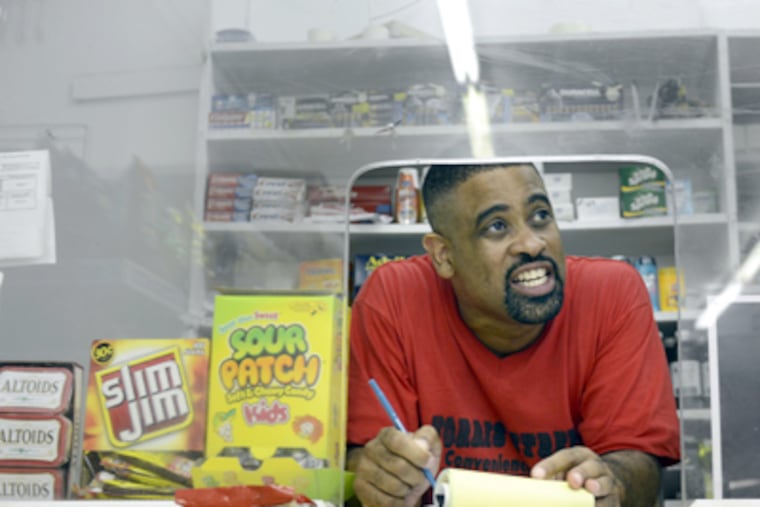
Jesse Harris, Robert Williams, and James Gillard didn't become North Philly corner-store operators for name recognition. They already had it.
Especially Harris and Gillard, who have gone from notorious to much-needed in the 30-plus years since they put their thuggish ways behind them.
Once members of the ruthless 21st and Norris Street gang, Harris and Gillard, along with Williams, now feed senior citizens during Thanksgiving, host block parties, and offer financial assistance for neighbors in need through their 14-year-old nonprofit, the Norris Street Community Committee.
Talk about a turnaround. And now, as new proprietors of the Norris Street Convenience Store, the trio is simply taking the logical next step in their mission to, as Williams says, "take back our neighborhood."
"There were a lot of businesses owned by African Americans when we were growing up - and then the ball was dropped," says Williams, 46. "It was time to do something about it."
Before the men shared their screenplay-worthy story, I had to clear up one thing. Why is the store called the Norris Street Convenience Store when it's at 19th and York?
"Oh," replies Harris, 58, with a slight grin. "You don't know the history then."
Code of ethics
Back in the late '60's and early '70's when gang rumbles were the only way to establish neighborhood turf, the 21st and Norris gang served as the umbrella group for almost a dozen corners in North Philadelphia - 20th and Susquehanna, Gratz and Norris, 20th and York, 18th and Cumberland, to name a few.
The neighborhood kids played basketball at Jones Tabernacle A.M.E. Church at 20th and Diamond and the Church of the Advocate at 18th and Diamond.
"That was actually the only recreation we had," says Gillard, 56, who was a nationally ranked junior welterweight boxer before the streets sucked him in. "We only had one boxing gym, at 22d and Ridge, but we couldn't go up there because we were fighting guys from up there - that was their turf."
And they fought, all right. With fists, knives, and sometimes guns.
"Only, we had a code of ethics," Gillard says. "If somebody's mom came down the street carrying bags, we would break our necks to help her get home. You see how people are standing around drinking and smoking blunts on corners? We didn't do that. We respected the elderly and we respected kids. Our parents knew we were bad, they just didn't know how bad we were."
They were bad enough to make headlines. A 1970 Bulletin clip headlined "18 Shot or Knifed by Roving Gangs in North Phila." detailed both Harris' and Gillard's involvement in a brawl with the 25th and Diamond gang. Harris, only 16 at the time, took shotgun pellets to the chest and abdomen and underwent surgery at Temple University Hospital while Gillard, then 14, was treated for pellet shots in a hand.
Both later did six years in prison for assault. But since their release in the late '70's, they've done more than make up for their teenage transgressions. Both family men, Harris has worked as a cook at Temple for 34 years, and Gillard has spent the last 15 years as a steward at the Philadelphia Marriott Downtown.
"These guys have integrity, they're well-liked, and they're smart," says Williams, a Temple-trained accountant who has never gang-warred but obviously doesn't judge the ones who did. "What better partners can I have?"
Grueling business
While we chat outside of the store, which currently has four employees, several motorists wave as they drive by. One resident stops for a $2 veggie burger, one of the store's specialty items, cooked by Harris. They have a menu of over 20 items, including burgers, hoagies, cheesesteaks, wings, and fries.
The corner-store business can be grueling, with long hours and small profit margins. But because it requires little capital to lease one of the 600 stores in Philadelphia, new immigrants - particularly Koreans, Mexicans and Dominicans - use them as stepping-stones to better opportunities, says John Weidman of the Food Trust.
But Harris, Williams and Gillard are staying. In fact, they want to open more stores.
After all, this is home.
"We aren't just another corner store," Williams says. "We want to create community and make sure other people are doing the same."