Law Review: Big Law's foreign offices a pretty good hedge
Little more than a year ago, after the collapse of Bear Stearns but just before the implosion of Lehman Bros. and the ensuing shock to the credit markets, Michael Pollack sat in a conference room high atop Reed Smith L.L.P.'s Center City offices and ventured a few educated guesses about near-term prospects for Big Law.
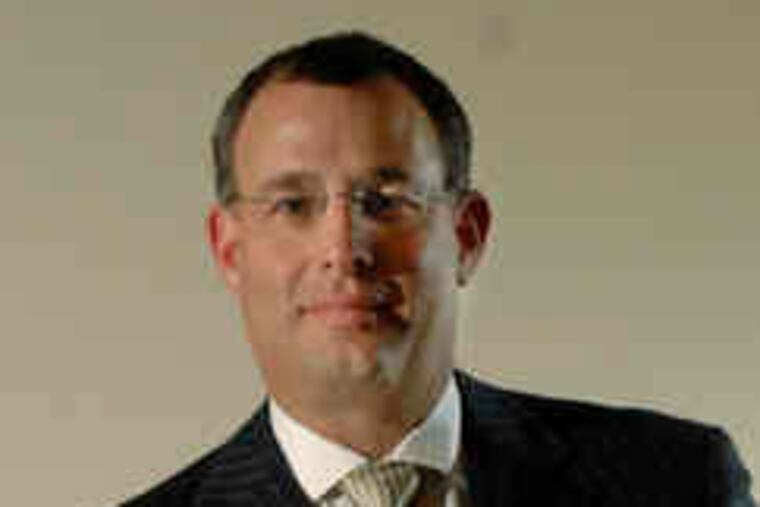
Little more than a year ago, after the collapse of Bear Stearns but just before the implosion of Lehman Bros. and the ensuing shock to the credit markets, Michael Pollack sat in a conference room high atop Reed Smith L.L.P.'s Center City offices and ventured a few educated guesses about near-term prospects for Big Law.
Reed Smith, a 1,600-lawyer firm, was finishing an extraordinary growth spurt. Since 2000, the firm had catapulted from the ranks of a modest regional player with 600 lawyers to a global firm with nearly half its lawyers outside the United States.
The gathering storm clouds in the United States were cause for worry, said Pollack, the firm's head of global strategy. But he said it was the firm's belief that its business in Asia, Europe, and the Middle East would be a cushion against the economic turmoil.
Within a few short months, the legal services market in the United States had crashed, and law firms, particularly those that relied heavily on the financial markets, took an enormous hit. Layoffs came in waves.
But it turns out that the international business has been a pretty good hedge.
Business has rebounded powerfully in China - people are actually doing IPOs there - and Reed Smith is looking to add an office in Shanghai to ones in Hong Kong and Beijing. The firm has 130 lawyers in China.
Reed Smith's hedging strategy involved lots of international business, a powerful surge of bankruptcy work, and a new hyper-attentiveness to client concerns.
"We are not going to pull back," Pollack said in a recent interview. "We are committed to being an international law firm."
About overall conditions facing law firms, he added: "A lot of the talk now is about trying to align the interests of the firm with the client. It is like any other economic situation. The buyer has become more powerful today than he was 18 months ago."
For all the doomsday scenarios circulating in the legal world, there are myriad firms in Philadelphia and around the nation that have employed their own strategies to compensate for a sluggish economy.
If these firms share one core trait, it is that they have broad ranges of practice areas. They don't have a huge reliance on a single area of expertise.
If financial services or real estate plummets, then bankruptcy and, in some cases, litigation often compensate. Firms that have the resources to wait out the bad times can gobble up business when things turn around.
Small- to mid-size firms, such as Schnader Harrison Segal & Lewis L.L.P., have gotten business from hard-to-crack companies by marketing high-end legal services at lower hourly rates, at least compared with larger firms.
Morgan, Lewis & Bockius L.L.P. has huge, and relatively recession-proof, energy and employment practices.
Others, like Cozen O'Connor P.C., have exploited core practice areas such as higher-end insurance work and litigation as a recession backstop. Cozen and several other firms also benefited from the unraveling of Wolf, Block, Schorr & Solis-Cohen L.L.P., scooping up dozens of its best lawyers along with their clients.
The firm started the year with about 500 lawyers and is now at 550. Lately, it has been prospecting for additional office space in New York City, checking out the digs of failed law firms there to accommodate its plans to grow and benefit when the capital markets recover.
One barometer of the relative optimism at Cozen: The firm said yesterday that it had made job offers to three-quarters of its small summer associate class.
A similar dynamic has been playing out in London, also a financial-services center pummeled by the downturn.
Reed Smith's London office, which has 300 lawyers, is the firm's largest, bigger even than its headquarters in Pittsburgh or its Philadelphia branch with about 150 attorneys.
The economy is more problematic in the United Kingdom than in the United States because of the outsize impact of London's financial-services industry on the nation.
Many U.S. law firms there are retrenching, but Pollack expects that Reed Smith will continue to have a large U.K. presence in anticipation of an eventual recovery.
"A lot of U.S. firms are downsizing. People are leaving," Pollack said. "We're getting a lot of resumes."