Never-before-published photos of the 1963 March on Washington
Harold Rosenthal boarded a bus from Philadelphia in 1963 and captured one of the country's most important moments.
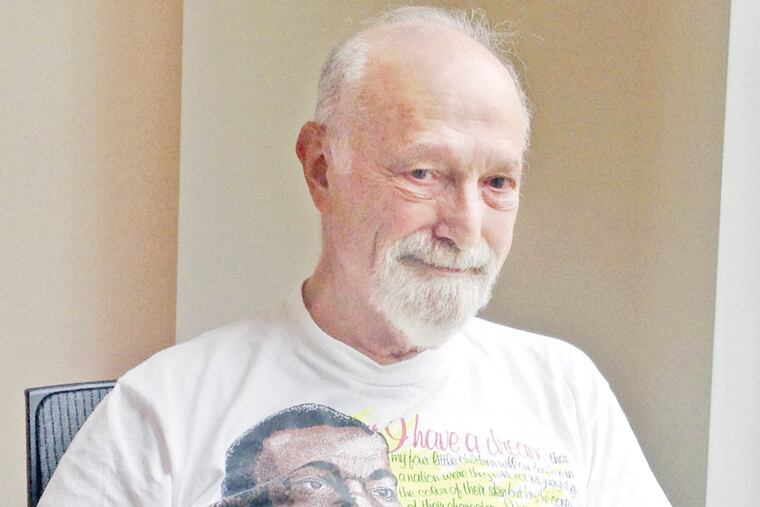
HAROLD ROSENTHAL wanted a better view of 1963's March on Washington.
So the Philadelphia lawyer, activist and amateur photographer bought a lanyard that looked a lot like the ones worn by reporters to hold their credentials. He strategically covered it with his cameras and waltzed past security and onto the stage.
Easy-peasy. Until, just as the Rev. Dr. Martin Luther King Jr. was about to speak, a security guard noticed him in the second row. Without a word, the guard moved Rosenthal's cameras aside to see there was no press card and just as silently showed him off the stage.
Wah-wah. But it wasn't all bad. The now 83-year-old ended up in the media tent, where there was air conditioning, free hot dogs and drinks, and plenty of black-and-white TVs to watch King's speech.
Rosenthal didn't know much about King then, but as he chowed down on the free eats and listened to the charismatic pastor, he recalled thinking that he made a lot of sense.
"It was a very sensible statement of what is and what ought to be," Rosenthal said of the words King spoke 50 years ago.
"It spoke to the issue of bringing people together," something Rosenthal and his equally socially conscious wife, Sue, have long been passionate about.
By the time Rosenthal boarded one of the many buses from Philadelphia to D.C., he had already lived through the 1944 transit workers strike against the hiring and promotion of African-Americans. And, as a lawyer and activist, he often helped African-American clients access housing and venues from which they were unlawfully blocked.
He hoped the march could help the cause. "I knew it was important. I knew that something had to change."
At the very least, Rosenthal thought he had a duty to show up.
He was floored by the throng of marchers he saw when he got off of the bus.
"I thought, 'Wow!' It was more than I could hope for, more than I could allow myself to envision. It was different than any of the marches I'd been to before and any of the marches I've been to after," he said.
While all eyes were on the speakers, Rosenthal was most taken by the crowds.
"It was anybody and everybody. Every shape, size, color, creed. In relation to what had been going on in society, these people were comfortable just being together. I was tremendously impressed by that."
And that's clear in many of the 150, never-before-published photos he took that day. Black and white marchers side-by-side. White and black marchers listening to speakers near the Lincoln Memorial. Black and white marchers, together, demanding equality.
Other than showing the slides to friends and family, Rosenthal hadn't thought much about them until he was part of a panel discussion about race earlier this month at a West Philadelphia barbershop.
The panel followed the controversial verdict in the 2012 death of Trayvon Martin, an unarmed Florida teen shot by a neighborhood watchman. Rosenthal was blunt: "If we just bitch about what should be, nothing will change."
"There are two elements to true action: frustration and anger," Rosenthal said. "If you're frustrated enough to get angry, you get angry enough to do something. Bitching doesn't even get you to frustration. And too many people stop at bitching."
Looking back at the march, Rosenthal said it did what needs to continue today: It moved people to act.
"You wouldn't find many people who said we shouldn't be equal at that time. But they didn't do anything about it. After the march, it became the thing not just to talk about, but to do something about."
DN Members only: Read our full package of stories from today's special section.
Phone: 215-854-5943
Twitter: @NotesFromHel