PhillyDeals: Delay of State Office Building sale costly
Two years after Pennsylvania announced the sale of the State Office Building at 1400 Spring Garden St. to developer Bart Blatstein's Tower Investments, delays have cost both sides.
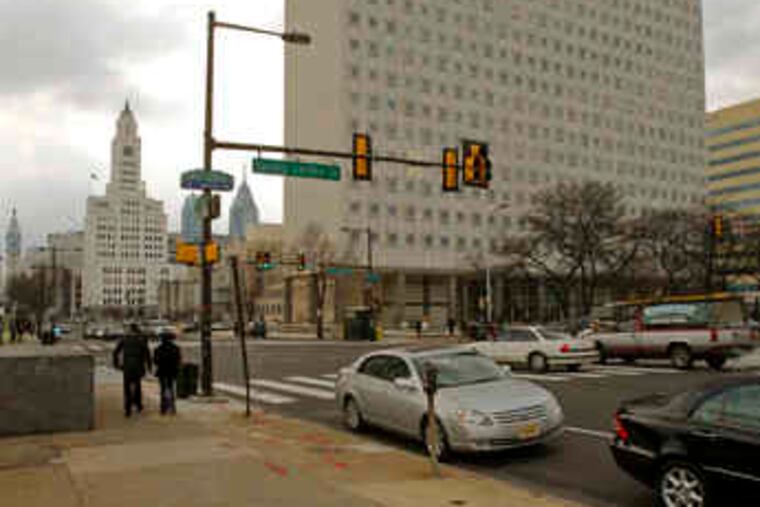
Two years after Pennsylvania announced the sale of the State Office Building at 1400 Spring Garden St. to developer Bart Blatstein's Tower Investments, delays have cost both sides.
The sale is now scheduled to close by July, for around $23.4 million, down from the original price of $25.2 million, according to James P. Creedon, secretary of the state's Department of General Services.
That's because the state took longer than expected to negotiate replacement rental offices at 801 Market St., owned by Pennsylvania Real Estate Investment Trust.
"We bid the building first. We got a great price. Then we bid the leases, [which] took longer than planned," said Creedon. When the state couldn't leave on time, he said, it was easier to cut the sale price than to pay Blatstein rent.
But when Pennsylvania was finally ready last fall, Blatstein didn't have financing in place. He asked
for a delay, and since January he's been paying General Services $40,000 a month, Creedon said. Blatstein's firm has also made a $2.8-million down payment.
"The initial delay was the state," Blatstein told me. "They weren't prepared to close because the space they were moving to wasn't completed. The state's delay pushed me into the depths of the real estate depression. Otherwise I would have [financed the deal] already."
Blatstein said city zoning officials have approved his plans for 204 apartments in the office tower, renting for "around $2,000 a month" (two-bedroom) or "in the teens" (one-bedroom). The conversion would take about eight months, once it's funded.
Future and as-yet unscheduled plans call for a two-story, 70,000-square-foot retail building along Broad Street, and a 20-story, 100-home tower across the lot at 15th and Buttonwood.
Where's SunGard?
We hadn't heard anything about the 2009 earnings report from SunGard, the Wayne-based software and data-recovery company, so I called yesterday to ask. SunGard promptly announced it will report March 15. No explanation.
The last three years, SunGard put out year-end numbers in mid-February, notes SunGard veteran Jeff Wagner, now head of Waypoint Advisory in Thornton.
The delay follows changes at the top of SunGard. In January, chief financial officer Mike Ruane, whose office produced the corporate numbers, moved over to take the CFO job at SunGard Availability Services, the company's data-recovery unit.
Last month, Ruane's boss, Availability chief executive Eric Berg, left, and SunGard CEO Cristobal Conde moved temporarily into that job.
When I asked, SunGard spokeswoman Valeria Maltoni had told me SunGard will have a statement on its 2009 earnings when it's ready.
Wagner says SunGard-watchers expect the company is talking to potential buyers for the Availability Services unit, which has cut costs as business slowed.
Like who? "Hewlett Packard has deep pockets, and they have their own small disaster-recovery business," Wagner said. Dell and EMC are also "potential acquirers," he added. Verizon and Comcast, which are trying to build their corporate clientele, could also be attracted, said Wagner.
Card chief out
Richard K. "Ric" Struthers "decided to leave the company" after Bank of America Corp. eliminated his job as head of the nation's biggest credit-card business, based in Wilmington, the bank said yesterday.
Susan Faulkner, a 25-year BofA veteran based at the company's Charlotte, N.C., headquarters, will combine Struthers' duties with her job as head of deposit banking, reporting to consumer-lending boss Joe Price.
BofA has cut thousands of the 25,000 formerly employed by MBNA at Wilmington and other sites.
Struthers had helped land one of MBNA's biggest and earliest clients, Pennsylvania State University, his alma mater. MBNA issued credit cards for tens of thousands of Penn State students and graduates, profiting from their fees and interest rates, in exchange for small cash grants each year.
MBNA made big profits from similar deals with hundreds of colleges, sports leagues, and professional groups.
But BofA's credit card business "lost more money in 2009 than it earned in the previous three years" since the takeover, Rochdale Securities analyst Richard X. Bove told clients in a report yesterday. "The main problem is that the business is saturated."