An intimate way to see Shakespeare's 'Tempest'
Act II Playhouse must be feeling very brave right now. Not only is the company putting Shakespeare on its intimate little stage for the first time since its opening 12 years ago, it's doing The Tempest - mere weeks before an enormous, special-effects-laden, star-studded version featuring Dame Helen Mirren as Prospera splashes down on a movie screen near you.
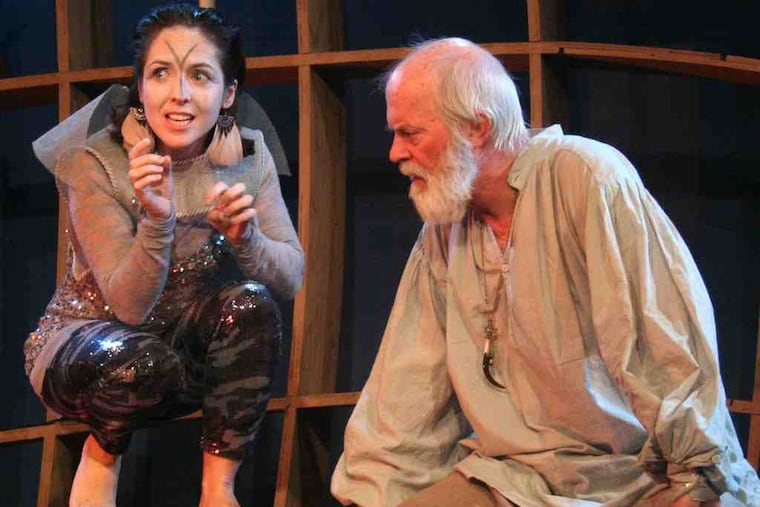
Act II Playhouse must be feeling very brave right now. Not only is the company putting Shakespeare on its intimate little stage for the first time since its opening 12 years ago, it's doing
The Tempest
- mere weeks before an enormous, special-effects-laden, star-studded version featuring Dame Helen Mirren as Prospera splashes down on a movie screen near you.
Well, good for them. As directed by Harriet Power, the production doesn't bring much new insight to this comedy about shipwreck, romance, monsters, and magic, but it does provide an up-close and personal look at the characters from a vantage point that, say, outdoor Shakespeare festival offerings generally do not.
An authoritative but never overbearing Dan Kern hosts the festivities as Prospero - magician-in-chief, father to Miranda, and unlawfully deposed duke of Milan. Nicole Erb's lovely Miranda balances her innocence with high-spirited enthusiasm. Thus, Prospero's stern fatherly warning to suitor Ferdinand (Griffin Stanton-Ameisen) to stay away from her, you know, "virgin-knot," until everything's official, is met with barely stifled snorts and giggles. It's a funny bit, though not funny enough to warrant Power's using a hand-puppet version of the same scene to replace what is usually Prospero's spirit- and nymph-led floor show.
There's also the uncomfortable business of Prospero's slave ownership. Sarah Doherty's sprite Ariel sprinkles mischief and trills her spells in ethereal song; Tom Byrn's Caliban snarls and crouches to everyone's amusement. They don't seem particularly miserable with their lot. Power has them hesitate before leaving Prospero, and though Byrn's final sniff at his master's neck is heartbreakingly feral, there are several possible conclusions for this interpretation: Stockholm syndrome, genuine attachment, or colonial fantasy. I'm still undecided.
While Dirk Durossette's set, a wide swath of wood, curved on either side like the interior of a ship, gives the illusion of space, Charlotte Cloe Fox Wind's costumes take that windswept, sun-dried color scheme too far. There's so much sand and tan, burnt umber and ochre, the eye begs for a spin to the color wheel's opposite side. But the greatest problem with Wind's work is in Ariel. She's an air spirit, but so much gray (even spangled top-to-bottom with sequins) combined with color-draining gray face paint are an unfair handicap. Luckily, Doherty, assisted by composer/sound designer John Stovicek, conjures up enough stage magic of her own.