Colleges say no to U.S. News
A group of liberal-arts schools is rebelling against the popular annual rankings survey.
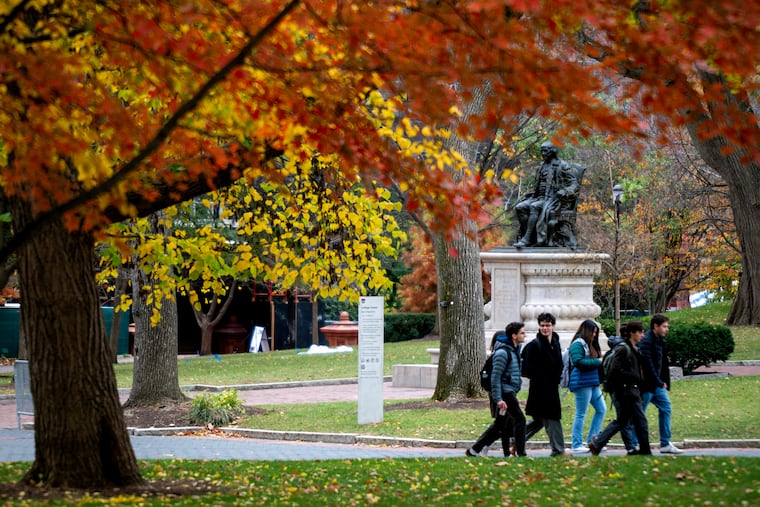
Gettysburg College, within firing distance of the famed battlefield, has a strong commitment to public service with many students joining the Peace Corps and the former heads of UNICEF and Lutheran World Relief among its graduates.
But nowhere is that mentioned in U.S. News & World Report's annual ranking of colleges that puts the 2,600-student school at a respectable 45 among 215 liberal arts institutions.
"What people need is information about schools," said Gettysburg president Katherine Haley Will. "The No. 1, though a great school, is not good for everybody."
As head of the Annapolis Group, a clutch of 125 liberal arts colleges, Will is leading the charge against the magazines's widely-read annual survey, which they say is misleading and not a true measure of a school's unique strengths.
So far, 46 schools have signed a letter agreeing to boycott next year's peer survey and to not use their college's rank in promotiontal materials.
The schools will still show up in the survey but they hope the letter will eventually force U.S. News to make changes.
What really has the colleges agitated is the part of the survey that asks administrators to rate other institutions on a scale of one to five. The results account for 25 percent of the overall ranking, with quantitative data about selectivity, enrollment and graduation rates, among other things, making up the rest.
Will and others say they might know five to 10 schools well enough to rank them. "Otherwise you're just going on hearsay," she said.
Not doing well in this category hurts their ranking, they say. The group plans to come up with its own comparative chart next year and publish it on the Internet.
Not surprisingly, colleges that don't make the list's elite top-20 cut seem more dismayed by the issue than others.
In today's supercompetitive college market, a lot is at stake for small, liberal-arts schools, which charge as much as $45,000 a year: U.S. News has an audience of 11 million, and its college issue is a must-read for prospective students and parents.
Prestigious schools such as Swarthmore, Haverford, and Bryn Mawr Colleges, 3, 9 and 20 respectively in the 2007 standings, say they'll continue to fill out the survey.
"I didn't think colleges should be immune from press coverage. The public has a right to know," said Greg Kannerstein, dean of Haverford, who will examine the college's future participation in the magazine survey this fall.
Layafette, Dickinson and Ursinus Colleges, No. 30, No. 41 and No. 69, however, have joined the revolt. But the boycott will only be effective if the top-ranked institutions come on board, and they probably never will, Ursinus president John Strassberger said.
"None of the top 10 colleges are here," he said. "If I was [President] Al Bloom at Swarthmore, I think I would have other things to worry about."
Rankings hurt colleges like Ursinus by implying there are vast differences among schools, he said, but "most students wouldn't know if they are at an institution that is 35, 55, or 135."
Critics also say rankings encourage schools to offer more merit scholarships to attract high achieving students - and up their academic standings - rather than needs-based grants, for candidates who may have lower SAT scores.
U.S. News has published the annual report since the 1980s. The survey breaks out 1,357 schools into 10 divisions. The 2008 college issue will be on the Internet Aug. 17 and on newsstands on Aug. 20.
Editor Brian Kelly defended the peer survey, saying it was a fairly standard technique and measured a school's intangible qualities.
"It doesn't make sense to me. I'm not saying you should know 200 schools but you ought to know 30," Kelly said. "It's part of their job. It's almost like they have their head in the sand."
If respondents don't know a school, they can indicate that on the survey.
He said the rankings were important to families paying $40,000 a year for a private college education. However if enough colleges join the boycott, the magazine may eventually change the weight given the peer data and include other information.
"We would love more success-outcome data," Kelly said.
Jenny Richard, dean of admissions at Bryn Mawr, said she generally rates 30 to 40 schools, although she agrees with the Annapolis Group's complaints.
"We'd love to have an alternative system that factors in information that we feel is more relevant" such as how well students do after they graduate, she said.
Despite the fuss, Glenside higher education consultant Jim Paskill said the survey isn't that influential since nearly every school can brag about some type of award. Students, he said, are more concerned about programs and location.
But supporters of the boycott argue that rankings contribute to the commercialization of college admissions.
"Ranksters have created a crisis by undermining educational values and have distorted the way education is perceived and pursued among students, families and even among colleges," said Lloyd Thacker of the Education Conservancy, a college-admission reform group that shares the Annapolis Groups' concerns and sent out the protest letter to hundreds of schools.
Still, many schools that are philosophically opposed do not want to risk a seditious attitude.
"We're perfectly aware that the American public wants to have some objective measure of quality," said Brian Mitchell, president of Bucknell University, No. 29, which will continue to participate.
For U.S. News' 2007 rankings, go to www.usnews.com/collegeEndText