Schools wait to make cuts to close $160M budget gap
School district officials yesterday released a few more details on how they plan to deal with a $160 million drop in funding while preserving a multimillion dollar, five-year school-reform plan.
School district officials yesterday released a few more details on how they plan to deal with a $160 million drop in funding while preserving a multimillion dollar, five-year school-reform plan.
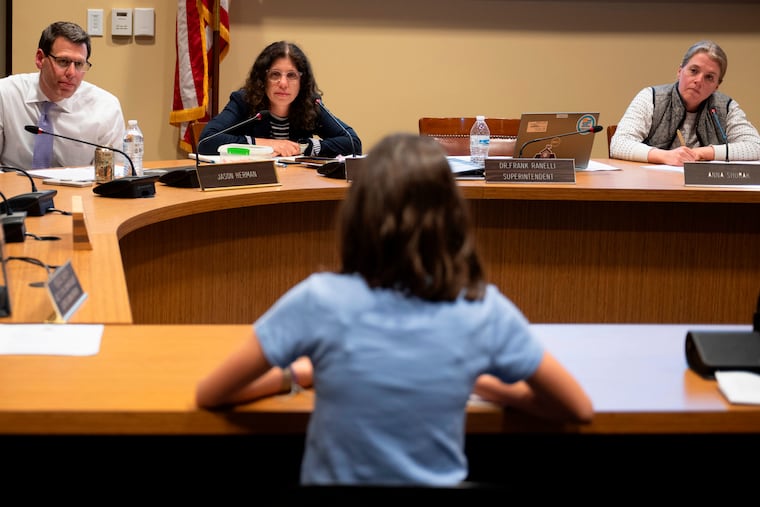
During a presentation to the School Reform Commission, Michael Masch, the district's chief business officer, said the district would balance the budget without abandoning its reform effort.
"Our spending is under control," he said, adding that the district has not stopped providing services like student busing and has cut monthly nonpersonnel expenses from $110 million to $70 million since August.
But last week, the district blamed the state budget impasse for its slashing more than 600 seats in accelerated diploma programs, which serve overage students and high-school dropouts.
Education advocates urged the commission to re-examine those cuts.
"We hope budget considerations do not result in cuts to initiatives that are making a qualitative difference - smaller class sizes, increased counselors . . . ," said Sheila Simmons, education director for Public Citizens for Children and Youth.
District officials have maintained that funding for the accelerated diploma programs likely will be restored pending the outcome from Harrisburg, noting that even with the cuts, seats in alternative programs were up 44 percent over last school year.
"I wouldn't call that a decrease," Masch said.
He added that it was still too early to say what other district programs would be affected, or if any cuts would be made, but conceded that the district had more flexibility with some budget expenses than others.
Thirty percent of its budget - $737 million - is tied up in legally mandated payments, including to charter schools, treatment facilities for students and debts and temporary loans, he said.
Masch also has said that reforms called for in Superintendent Arlene Ackerman's "Imagine 2014" plan, such as funding for English-language learning, counselors and special education, would not be affected.
That means that most of the cuts to the $3.2 billion budget would likely come from funding for schools' operating budgets, which could affect salaries of teachers, administrators, security personnel and nurses.
Other portions of the budget, including grants and federal food funding, offer little to no flexibility with cuts, Masch said.
Masch said that by October he should have a more concise plan, but said nothing was certain until legislators finalize the state budget.
Also a priority, he said, is realizing the first phase of Ackerman's $126 million reform plan.
"It is our intention to maintain lower class sizes . . . counselor-student ratio, to implement, we hope all, but we hope, most of Imagine 2014 initiatives," he said.
The state budget deal tentatively reached last week gives the district $144 million less in basic-education subsidy and federal stimulus funding. The remaining $16 million is an estimate and comes from cuts to line items in the budget.
Under Gov. Rendell's original proposal, the district would have received $223 million of the $737 million allocated to the state in federal stimulus education funding. But in a plan by Democratic leaders of the House and of both parties in the Senate, the district would get just $79 million, according to Masch's report.
In other news, district officials say they anticipate deciding whether to keep members of the Board of Revision of Taxes on the district's payroll.
Meanwhile, October has been designated "Parent Appreciation Month."
The district has sponsored daylong activities for caregivers in the past.
This year, as a part of a push for more parent involvement, Ackerman has expanded the spotlight on the parent-school-school district partnership with the first monthlong observance.