Twists and turns over new Pa. standards and tests leave districts in limbo
Last of three parts. In the beginning, Pennsylvania was to be like most other states, following a new set of national education standards and administering new national standardized tests.
Last of three parts.
In the beginning, Pennsylvania was to be like most other states, following a new set of national education standards and administering new national standardized tests.
But a lot has happened since 2010, when the state signed on to participate in what's known as Common Core, an initiative designed to make the United States more globally competitive by ensuring students' ability to meet basic benchmarks.
A Democratic administration was followed by a Republican one, and Gov. Corbett took seriously conservatives' concern about the federal government infringing on states' rights. In March 2012, Pennsylvania officials released their own document, known as the Pennsylvania Core Standards, which they call a hybrid between the national Common Core and the state's own guidelines.
They halted plans to participate in one of two national assessments, keeping Pennsylvania's existing elementary tests and creating new ones for high school. The Pennsylvania standards were to have gone into effect July 1, but last spring, Corbett asked the state Board of Education to wait on a final vote. The vote finally occurred Sept. 12, when the board approved the state standards as well as "Keystone exams" in algebra, literature, and biology that will be a requirement for high school graduation.
"We have to stop being so schizophrenic about what we do with our kids," state Board of Education member Mollie O'Connell Phillips said moments before the vote that day.
But the policy isn't set in stone until it makes its way through Pennsylvania's regulatory review process. And opponents of the standards on the right are still fighting to halt them in the House and Senate education committees. So are Keystone exam opponents on the left, worried about imposing high stakes on students without adequate resources to prepare them. The business community is advocating on behalf of the standards and exams.
All the twists and turns have left Pennsylvania's 501 school districts in limbo.
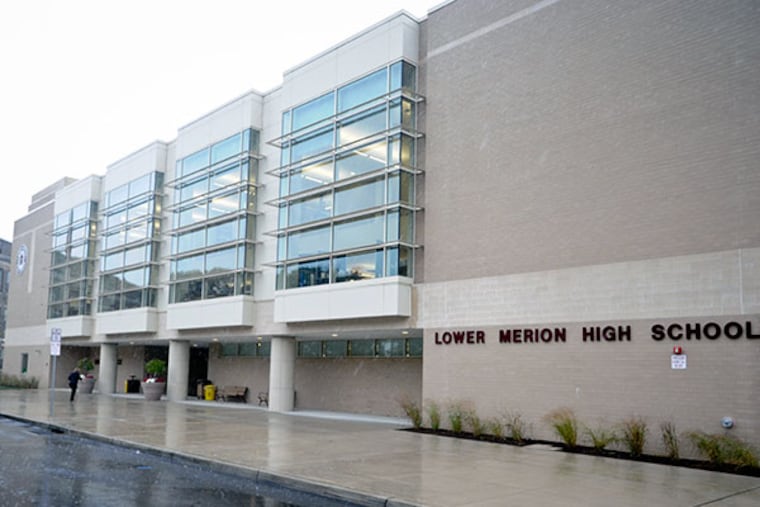
"Instructionally, it's very difficult for us as administrators," said Wagner Marseille, assistant superintendent of the Lower Merion School District. "You're caught with, what do you share with teachers? 'We really don't have the final map or layout of what you're going to do, but let me explain what we're going to do so far.' "
With 7,990 students, Lower Merion is one of the state's wealthiest and highest-performing districts. But even there, educators need time to prepare for a major instructional change; Marseille estimates three to four years for all teachers to become proficient in the standards. "A new administration comes in, and we're asked to stop, pivot, turn," he said. "It causes a tremendous amount of anxiety for teachers - rightfully so."
The district also must update textbooks and instructional materials. "There's so much information out there. You have to vet through what's really quality," said Marseille, a former Olympic hurdler, who represented his native Haiti in the 1996 Games. "Every textbook, every resource paper, has 'Common Core' written somewhere on it."
Now that training and curriculum changes are underway, he said, "we hope they don't do a 180 and go back."
The Pennsylvania State Education Association, the union representing teachers in 483 of the state's 501 districts, reports that different schools are at different stages of implementation. Some districts immediately began to phase in the Common Core after Pennsylvania's 2010 adoption; others took a wait-and-see approach. "There is a great deal of confusion and uncertainty," spokesman Wythe Keever said.
Even before the vote to adopt the state's standards, the state Department of Education had instructed districts to proceed as though they were in effect. School was starting, and they had nothing else to go on.
In math, there are substantive differences between the national and Pennsylvania versions of Common Core. English has fewer significant differences, prompting some critics to call the state document a political ploy.
Critics were in abundance last month at the Living Faith Church in West Chester for a presentation organized by the West Chester Tea Party. About 50 people, mostly concerned grandparents, gathered to hear Peg Luksik, a former Republican candidate for governor and the Senate who had a long career in education. Luksik now travels the state and country campaigning against Common Core.
She worries about privacy violations with a major federal initiative to track students from elementary school until after graduation, using, in part, data from Common Core-related tests, which could be sold to educational researchers.
Like many in Pennsylvania, she is concerned about the cost of standards implementation and does not believe state claims that it won't cost anything more than schools already spend to train teachers and periodically adopt new instructional materials. Unlike many others, she has pored through state documents online trying to pinpoint the cost.
Standing before a large screen, the white-haired mother of six walked the audience through the state's 2010 application for the federal Race to the Top competition. The application, signed by Gov. Ed Rendell, asked the federal government for $400 million over three years. It said the state would supplement the money with $140 million and $2.6 billion from separate pots of its own funding.
That brought Luksik to estimate a three-year implementation cost of $3.14 billion. (The application encompassed reforms beyond Common Core. The group Pennsylvanians Against Common Core estimates an implementation cost of $645 million based on a 2012 report by the Pioneer Institute and American Principles Project.)
Luksik asked everyone to stand. Only sit down, she said, if you can meet the standard named.
"Sing like Pavarotti," Luksik began. When no one sat, she lessened the challenge: Sing for the Metropolitan Opera. Next: Sing for a church choir. At "sings in the shower and enjoys it," most of the attendees sat. Her point: The state sets standards everyone can meet, and there's no reward for going beyond them. "What about the student for whom the standard should have been Pavarotti?" she asked. (Defenders of the standards say nothing should stop a student from excelling far beyond basic benchmarks, necessary to bring up the legions falling short.)
The state Board of Education's vote was to occur the next day. Luksik knew it wouldn't go their way, but she urged the audience to continue fighting with her in the General Assembly, where she has found more sympathy. "Let me tell you a little thing about politics," she said. "It's never over, unless you give up."