Another tuition hike looming for Pa. state university students?
The system's interim chancellor will make her case for more state funding before legislators in Harrisburg this week.
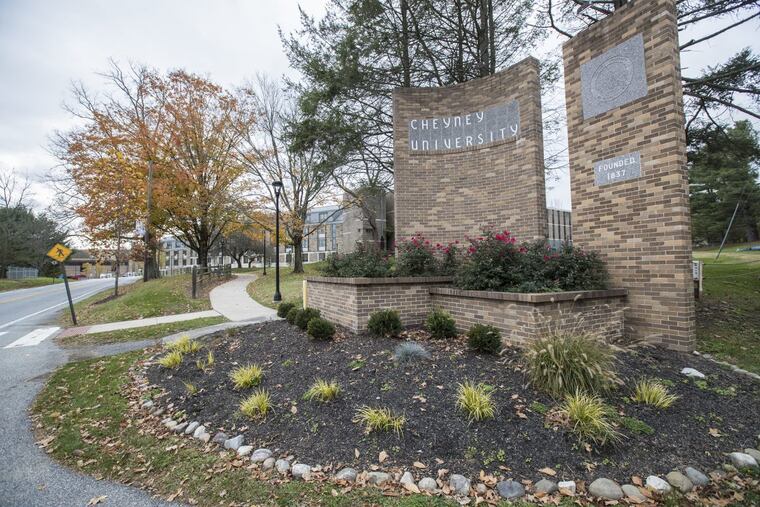
Students who attend the 14 universities in the Pennsylvania State System of Higher Education saw tuition jump 3.5 percent this school year — and next year might not be any better.
Karen M. Whitney, interim chancellor of the 102,000-student system, said she likely will be recommending another tuition hike — students currently pay $7,492 annually in base tuition — even if the system does get the $15 million funding increase proposed by Gov. Wolf. The system had requested $73 million more next fiscal year, or about a 16 percent bump.
Whitney will make her case for more funding in Harrisburg before the House Appropriations Committee on Wednesday and the Senate Appropriations Committee on Thursday. Students and professors plan to visit legislative offices on Thursday and rally for more funding on the steps of the state Capitol.
Whitney said she's not sure how much of a hike is necessary to cover the system's rising costs, much of it fixed by labor contracts.
"We're very appreciative of the governor and the $15 million," Whitney said in an interview last week, but that allocation "does not meet those essential obligations."
Kenn Marshall, a spokesman for the school system, said it will likely need a combination of budget cuts and tuition increase next year to balance its budget.
The breakdown of each will be proposed by Whitney later this spring and approved by the system's board of governors, likely after state funding is locked in.
The colleges included in the system are Bloomsburg, California, Cheyney, Clarion, East Stroudsburg, Edinboro, Indiana, Kutztown, Lock Haven, Mansfield, Millersville, Shippensburg, Slippery Rock, and West Chester.
The system has faced scrutiny in the past for tuition hikes in excess of inflation. A 2015 report by Pennsylvania Auditor General Eugene DePasquale found that the system had raised tuition 27 percent over six years, during a stretch of declining or flat increases in state funding. A 2016 report by the Center on Budget and Policy Priorities, a Washington think tank, showed that per-student funding for public colleges and universities in Pennsylvania had fallen 33 percent from 2007-08 when adjusted for inflation.
But the schools also have been serving fewer students. Enrollment has dropped nearly 17,000 students, or about 14 percent, since 2010.
The system has seen its share of state money tick up under Wolf, although the allocation still falls short of what it got in 2008.
While Wolf's budget proposal recommends a 3.3 percent increase in funding for state system universities, he included no funding increase for the four so-called state-related universities — Pennsylvania State University, Temple University, the University of Pittsburgh, and Lincoln University.
The contract obligations Whitney cited stem in part from a pact the system reached with its faculty union, the Association of Pennsylvania State College and University Faculties, after a three-day strike in fall 2016 — and extended last fall through June 2019. Under that contract, professors have received raises and are scheduled to get another 2.5 or 5 percent increase next fall depending on where they are on the pay scale and another 2.5 percent in spring for 2019. Other labor unions also are scheduled to receive increases.
Colleges in the New Jersey State Association of State Colleges and Universities, unlike Pennsylvania's schools, each set their own tuition increase. The average increase among the schools, including Kean, Montclair, New Jersey City University, Ramapo, Rowan, Stockton and William Paterson, averaged 2.3 percent for the current school year, according to the association. No information was available on proposed increases for 2018-19.
Whitney became interim chancellor last year after former Chancellor Frank T. Brogan resigned; the system is conducting a search for a new chancellor, and Whitney is not a candidate.
During her appearance, Whitney also will be updating legislators on an ongoing redesign of the system. While much is still under consideration by nine task forces looking at different aspects of operation, she said the universities will begin to operate more like a cohesive system, with each school emphasizing its strengths and students having more options to take courses on different campuses.
The system also wants to reduce the amount of time it takes from developing a concept for a new degree or program and launching it to respond more nimbly to industry needs, she said.
No mergers or closures of campuses are being considered, she said.