Down to 'The Wire'
The justly acclaimed HBO series returns tonight for its final gritty season of looking unblinkingly at urban life.
Talk about stupid.
For years, my wife and I ignored the urgent counsel of friends and colleagues, exhorting us to check out The Wire. We shrugged off the laudatory magazine stories, the shining reviews heralding it as one of the greatest TV shows ever - ever!
Sure, we watched The Sopranos, but who had time for another dark, bloody, multicharacter HBO thing, and the hype that comes with it?
And who needed to see a grim reenactment of life in urban America - kids selling crack, cops stymied by institutional dysfunction, broken schools, corrupt unions, homelessness - when all we had to do was step outside our door in beautiful Philadelphia, a mere 100 miles up the road from The Wire's Baltimore?
And then we finally did rent Season One sometime last year, to see what the fuss was about. I think we got the first Wire disc from Netflix, and the next day we were at the video store grabbing the second batch of episodes, and then it was a frantic relay between a couple of video shops and the mailbox, watching two or three episodes a night, with weekend marathons, until we had blazed through three seasons and knew Detectives Jimmy McNulty and "Bunk" Moreland of the Baltimore Po-lice, the sad-eyed junkie Bubbles, the unstoppable stickup artist Omar Little, the ambitious assistant D.A. Rhonda Pearlman, the entrepreneurial drug dealers Avon Barksdale and Stringer Bell, and Bodie and his corner boys - knew the whole tragic, funny, sick, twisted, beautiful, foul-mouthed lot of them.
The Wire could well be, as more than a few critics have opined, the best show in the history of American television. Created by David Simon - who did great things for Baltimore's image with his previous blood-soaked-streets foray, NBC's Homicide: Life on the Street - the HBO series begins its fifth and (don't let it be true!) final season tonight at 9.
Simon was a newspaper guy - a reporter for the Baltimore Sun - and one of his key collaborators on The Wire is Ed Burns, who was a Baltimore cop for 20 years, and then a Baltimore teacher for seven.
Season Four, which originally ran in the fall of 2006, addressed the plight of public education in the city. Roland "Prez" Pryzbylewski (Jim True-Frost) was a policeman who couldn't hack it, messed up royally, and went to work as a middle-school teacher. He started the year full of lofty ideas and dreams - scraping the gum off the classroom desks, looking to make a difference. And then the kids rumble in - kids raised in the projects, some without parents, all of them with friends running dope, most of them able to identify the type of weapon blasting from around the corner just by the sound the gun makes.
Prez finds out fast that he can't even start to teach these kids - he's too busy breaking up fights, negotiating with 12-year-olds who take murder for granted.
"I don't think an audience could handle going into a school in Baltimore just for a week and seeing it," Burns, the ex-cop and ex-teacher, told NPR last year. But the genius of The Wire is that he and Simon do get audiences to go in there - and come out with an understanding of the daunting problems facing teachers and students alike.
And it's an understanding that doesn't come wrapped in a statistical government study, or from a couple of segments of a local TV news report. By drawing characters - teachers, administrators, politicians and kids, especially the kids - who are fully formed, likable and unlikable, well-meaning and some just plain mean, we come to know them, feel their pain (and their glimmers of hope), and quickly find ourselves caring deeply about them, and the crisis, the educational crisis, they're mired in.
The Wire has done the same thing, and taken a similarly specific, human approach, through all of its seasons, with the police and the drug lords; with port workers in a last-gasp port town; with backroom movers and politicians trying to implement change in a system bogged down in fiduciary panic, racial division, graft and self-interest. If our incoming Mayor Nutter hasn't been watching The Wire, he should: Tommy Carcetti (Aiden Gillen) who makes an improbable run for the mayor's job and lands it, faces the realities of running a big, crumbling American city, and tries his best not to get cynical about it.
One of the plot skeins in Season Five, certainly, will be how His Honor stands up in the face of soaring homicide rates and threadbare budgets for the police and the schools.
With Simon and Burns overseeing the operation, episodes of The Wire have been scripted and directed by an impressive team of crime writers (Dennis Lehane, George Pelecanos and Richard Price among them) and filmmakers (Ernest Dickerson, Agnieszka Holland and Homicide's Clark Johnson - who also has a key role, as the Sun's city editor, in Season Five).
It's hard to even know where to begin with the actors. A kind of in-joke in an early episode of the new season comes when someone in the Sun newsroom throws around the term Dickensian with a mix of innocence and pretense. The word is often employed by TV critics to describe the series. It certainly applies.
The Wire is Dickensian in the best sense: sprawling, many-peopled, full of interconnected events and dramas, all of it set on a big, colorful, noisy canvas pockmarked with poverty and wealth, greed and graft, luck and licentiousness.
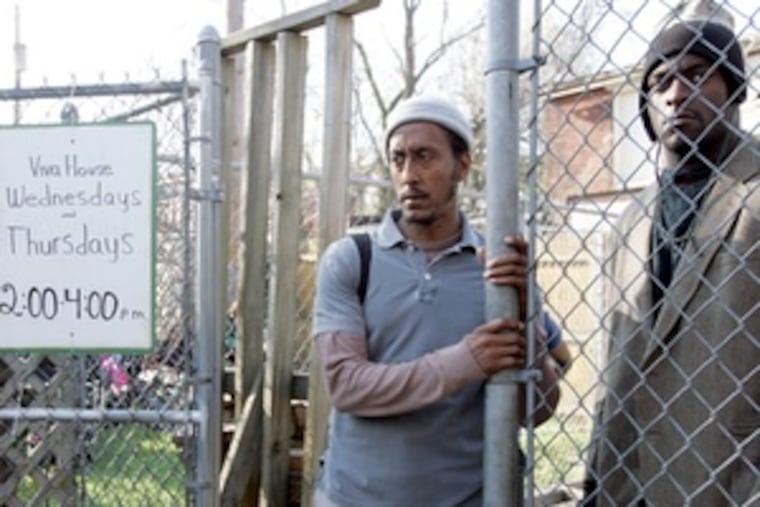
The English actor Dominic West is all boozy charm as the earnest rogue cop and sorry womanizer McNulty. (And Gillen, who plays Carcetti, is Irish - what's with these transatlantic Baltimoreans?) Andre Royo offers a heartbreaking portrait of a lonely, hopped-up heroin addict named Bubbles, hawking bootleg DVDs and stolen scraps from his supermarket shopping cart. Clarke Peters is wily and quiet as Lester Freamon, a BPD detective who crafts miniature antique furniture at his desk, and orchestrates an ingenious surveillance operation on the city's biggest dealers. And when Sonja Sohn's Shakima "Kima" Greggs gets shot at the end of Season One - well, the actress has brought us into the life of this smart, tough woman so deftly that you want to run down to the ER and leave her some flowers. Or a case of beer.
Jermaine Crawford, as the bright, beset Dukie, is emblematic of an up-from-the-'hood success story - except he's not an emblem, and who knows if this scrawny teen can make it through all the beatings and the badness that come his way?
There are well over 200 actors credited to the various seasons and episodes of The Wire (including a whole bunch of talented Baltimore teens, the rapper Method Man, and Amy Ryan, of Gone Baby Gone and Before the Devil Knows You're Dead), and I daresay there's not a false note struck by one of them. The performances this show has consistently drawn from a largely unheralded cast are astounding.
If The Wire's first four seasons addressed the disillusionment in, and devaluation of, vital civic institutions - police, schools, the workforce, the government, the courts - Season Five promises to, well, not paint the rosiest of pictures of the relationship between a newspaper and its community. (At 10 episodes, it's the smallest batch in the series.)
Simon has oft acknowledged that he holds grudges long and nastily, and he left the Sun when it was in the throes of cutbacks and buyouts - and when Inquirer editor Bill Marimow was managing editor there.
Simon wasn't happy about the direction newspapers - and his newspaper - were going, and that unhappiness is bound to manifest itself in the final episodes of The Wire.
I can hardly wait. Even if it hurts.