The gift of gratitude
For Mother's Day, some people of achievement pay tribute to the women who made their good lives possible.
What's Mom getting this year - brunch or dinner? A warm robe or a bright bouquet?
Today is Mother's Day - the 100th anniversary of the national holiday, as a matter of fact. And if you haven't caught on by now, here's the secret: It's not all about the gift.
Sure, gestures count. But perhaps the best way to honor one's mother any day is by living a life that would make her proud. We spoke with a half-dozen area folks recently about the impact of their mothers.
These are their stories.
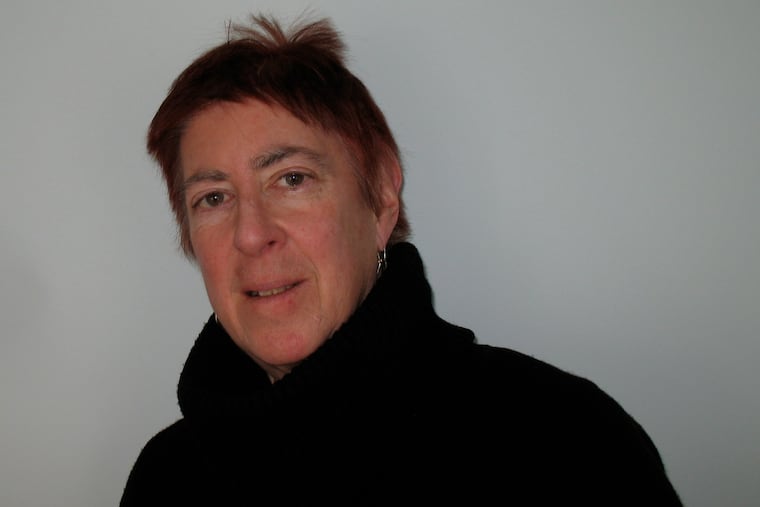
Storyteller Linda Goss and Willie Louise Martin McNear
Her mother's stories were always there. Tall stories, small stories, stories in rhyme, folk stories. Stories of family, of heritage, of whimsy, and a good smattering of Bible stories. They filled Linda Goss' childhood world and stayed with her, bouncing around sometimes, or lodged in out-of-the-way brain cells, only to return unexpectedly.
"I think I always knew I'd use those stories in my own life and work," says Goss, who majored in theater at Howard College (now University) and went on to cofound the National Association of Black Storytellers with Mary Carter Smith.
Goss, who lives in Mount Airy, says her mother, Willie Louise Martin McNear, was perhaps the best third-grade teacher in all of Alcoa, Tenn. She broke conventional barriers to earn a college education in the then-segregated South, filled her home with songs, poetry and sermonettes. She even helped Goss overcome a childhood stutter.
"Let the little frog jump out of your mouth," Goss remembers her mother saying.
"My mother was so strict that she didn't want me to date until I got my education and graduated from college."
Goss said she did not want to follow in her mother's footsteps and become a teacher, because she dreaded the comparison.
"Parents and kids wept when they got promoted from my mother's class - that's the kind of teacher she was."
She succumbed, briefly, after college and taught for several years. But her mother's voice continued to resonate, and in time Goss forged a career for herself as a traveling teller of tales.
"Her stories seeped into me and into my soul," said Goss, 60.
McNear died just before Mother's Day in 2002.
Goss continues to visit schools and organizations across the country, often in costume, telling stories inspired by her mother.
"I do this to honor my mother, and to honor our heritage."
New Jersey Gov. Corzine and Nancy Hedrick Corzine
He's 61 now and governor of New Jersey, but Jon Corzine is still Johnny to his mother, 92-year-old Nancy Hedrick Corzine.
Nancy Corzine, who still lives in the family's hometown of Mount Auburn, Ill., was a motherless child.
Her own mother died when she was 8; her father when she was in her 20s; her only two siblings, both brothers, died of childhood illnesses; and she endured the Depression of the 1930s.
"She certainly knew that bad things could happen to good people - she learned the hard way. It left her a lifetime worrier," said Corzine, who was elected in 2006.
A farmer's wife who canned and made preserves, Nancy Corzine earned an undergraduate degree and a master's degree in education when that was rare for women. She was determined to make her two sons well-rounded, educated people, the governor says.
"A grade of B was a failure to my mother. Winning her approval wasn't easy."
Corzine calls his mother "the most independent and hardworking person I've ever known."
He may be a Democrat, but she's still a staunch Republican - stubbornly adamant, especially about politics, Corzine says.
She is opposed to the death penalty and is a strong supporter of civil rights and feminism, he says. And he knows better than to tangle with her.
"She still lectures me, and I'm expected to listen."
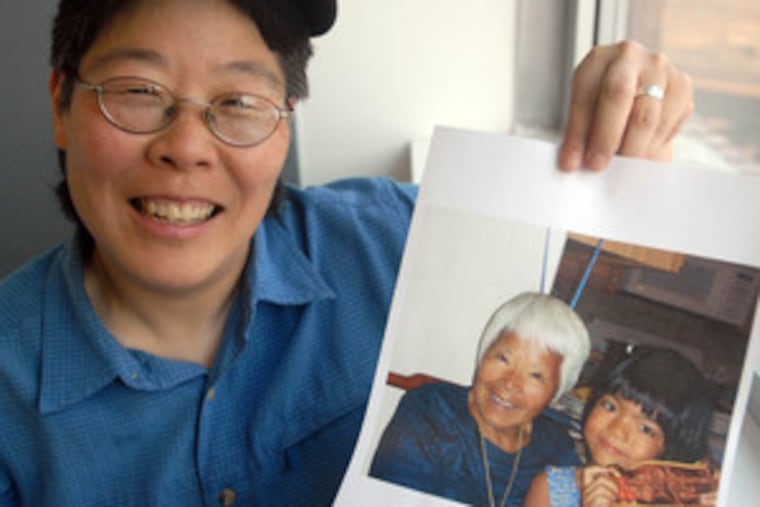
Ellen Somekawa of Asian Americans United and Mari Kawanami Somekawa
At the annual dinner of the Japanese American Citizens League near Plymouth, Minn., in 1969, Ellen Somekawa, then 14, learned her mother's secret.
"I had never, ever heard where my mother was during World War II," says Somekawa, now 52 and executive director of Asian Americans United.
"I certainly didn't know she was in an internment camp . . . I didn't even know what a camp was."
She recalls the 1969 gathering vividly. A person seated at a card table was handing out flyers that read: "It could happen again . . . ". And Somekawa had to ask what that meant.
"Everything I thought I knew was erased about my family, my country, the world. I remember challenging my civics teacher about why he hadn't taught us about that chapter of history, but I don't remember ever challenging my parents. Their generation was silent - and ashamed."
That silence, especially between mother and daughter, became something of an elephant in the living room that the two stepped deftly around.
Somekawa says her awareness of the indignities suffered by Japanese Americans "changed my life. I became political. And my mother stuck with her silence, which made things slightly uncomfortable between us."
Somekawa says her mother was an upbeat person with a radiant personality - a woman who did not understand the rebellion and anger stewing in her daughter.
"I know my mother was afraid for me, that she was worried about when I would sort out my life," Somekawa says. "And I'm still doing that."
In 1996, Somekawa became executive director of Asian Americans United, a fund-raising organization for the most disenfranchised sectors of Philadelphia's Asian American community.
And while the mother-daughter connection has been affected by geography (Mari Kawanami Somekawa, now 82, still lives in Minnesota) and by their very different outlooks and personalities, there is a pride on both sides.
"My mother has managed to create a lovely life for herself and my father, and to accept my difference. And now that I'm a mother myself, I think that's a pretty brave and admirable thing."
Judge Marjorie O. Rendell and Mary Baldwin Osterlund
Mary Baldwin Osterlund grew up in a household of eight children, six of them boys. And that, her daughter says, taught her to become genteel and gracious - and to root for the right teams.
"I guess that prepared her for my husband," U.S. Circuit Judge Marjorie O. Rendell said in a recent telephone interview, referring to Pennsylvania Gov. Edward G. Rendell, her famously enthusiastic sportsaholic sidekick/husband.
Rendell, who sits on the U.S. Court of Appeals for the Third Circuit (and previously on the U.S. District Court for the Eastern District of Pennsylvania), recalls her mother as the quintessential wife of a corporate attorney. She ran a well-organized home in Delaware, entertained beautifully, and "saw to it that her two daughters had every lesson and enrichment."
Rendell, 60, says her mother made sacrifices too.
"She was extremely bright, but only went to college for one year. My parents had a very traditional marriage - for years, she received the weekly household money in an envelope from my father, and had to account for it. He was a thrifty Swede, who actually made the same bookkeeping demands on himself."
Osterlund's priority for her daughters was absolute self-sufficiency and independence.
"I definitely got the message," Rendell says, "and understood why it was so important to my mother."
Mary Osterlund was a world-class worrier. Midge Rendell is not. Her mother ran an impeccable home; Rendell is happy with a touch of clutter.
"I always spruced up the house for her visits, but she still didn't hesitate to tell me once that we definitely needed a new chandelier for the hallway. It was just about my last priority, but would have been her first."
Their bond was tested when Rendell became a lawyer and a political wife.
"I always figured we'd catch up later and just hang out," Rendell says. Osterlund died of a stroke in 1993 at age 78, on the day her daughter was nominated for a seat on the District Court, but she had learned of the honor before her death.
Rendell remains grateful that she managed to maneuver time for a visit to her mother the weekend before. The Rendells were returning from a White House event and the judge was able to regale her mother with the details. Her mother loved it, she says.
"She also passed away when Notre Dame, her favorite football team, was in first place," Rendell says. "I'm very thankful that she died knowing that."
Tourism executive Jeff Guaracino and Lucille Sharon Guaracino
Jeff Guaracino, 34, vice president of communications for the Greater Philadelphia Tourism and Marketing Corp., will tell you that he had a remarkable mother - and a remarkable relationship with her.
Lucille Sharon Guaracino was born in South Philadelphia to a family with Jewish and Italian roots. Both sets of grandparents lived with the family and hordes of relatives lived nearby, creating a rich ethnic stew.
"My mother was married young to a Navy man, and she traveled with him for four years," Guaracino says. "It opened the world to her."
When Jeff was 4, his parents divorced. His mother was left with two sons and little else.
By then living in Pennsauken, Lucille Guaracino became a blackjack dealer in Atlantic City's newly opened casinos. The hours were long, but the money was good, and relatives cared for her sons.
When the 12-hour shifts became unmanageable, she left the casinos and became a certified gemologist and, according to her son, a "stupendous jewelry saleswoman."
The moment of truth in their mother-child relationship came when Guaracino was 17. He took a trip to Fort Lauderdale, Fla., taking along a guide to gay gathering spots there. He had borrowed his mother's suitcase, and forgot to remove the guide from one of the pockets when he returned.
"I knew by that time that I was gay," he says. But his mother did not - until she found the book.
Guaracino says he will never forget the conversation that followed.
"She was worried about my health, my safety, and the whole issue of discrimination. She also mourned the thought of my not having kids," Guaracino says. "But I knew that day that she would always love me and be there for me."
In 2000, Lucille Guaracino died unexpectedly at 51, just after returning from a two-week spiritual pilgrimage to Italy.
"She died knowing that my brother was happily married with kids, and that I had found a wonderful partner - a man she, too, loved."
And she lives on in her son's heart.
"I have some of her deep spirituality," Guaracino says. "And to me, that means that somehow, she's always with me."
Actor Barry Moore and Barbara Ann Truitt Moore
Barbara Ann Truitt Moore told her family the morning of March 30 that she was "going home." And just as they finished reciting the Lord's Prayer at her hospital bedside, she died peacefully. She was 75, and had battled multiple sclerosis, breast cancer, and chronic obstructive pulmonary disease.
"My mother always had a wonderful sense of timing," said her son, Barry Moore, a Camden actor, teacher, author and activist. "She left us with an incredible legacy, and on her own terms."
Born the seventh of eight children in Moorestown, Barbara Moore attended the town's School Number Five, a segregated elementary school.
"My mother was passionate about justice and fairness, and she knew that segregation wasn't fair."
When Barry was 3 months old, his father left; his mother had five children and no money.
To keep the family going, Barbara Moore worked as a maid in some of Moorestown's grand homes. She also became known as a community and civil rights activist who led a massive, peaceful march down Moorestown's Church Street several days after the Rev. Dr. Martin Luther King Jr. was assassinated in 1968.
"She wanted to bring a sense of peace to the community," says her son, now 50. "And that's what she did. "My grandmother cried when she saw what her daughter had organized."
In her later years, Barbara Moore was a library assistant in Moorestown's public schools. And Barry Moore went on to act in community and regional theater. He toured with a production of
Ain't Misbehavin'
and directed summer theater programs for children - among them a 2006 interpretation of
A Christmas Carol
set in Camden.
Before his mother died, Moore published
Yum Zook
, a compendium of the unique words and phrases that generations of his family had used.
"Now I guess it's also a tribute to my mom," he said, "and to all the simple but mighty wisdom she gave us."