Something blue: The post wedding let down
That it's-all-over feeling, after months of wedding planning, is not uncommon to brides. Talking it over can help.
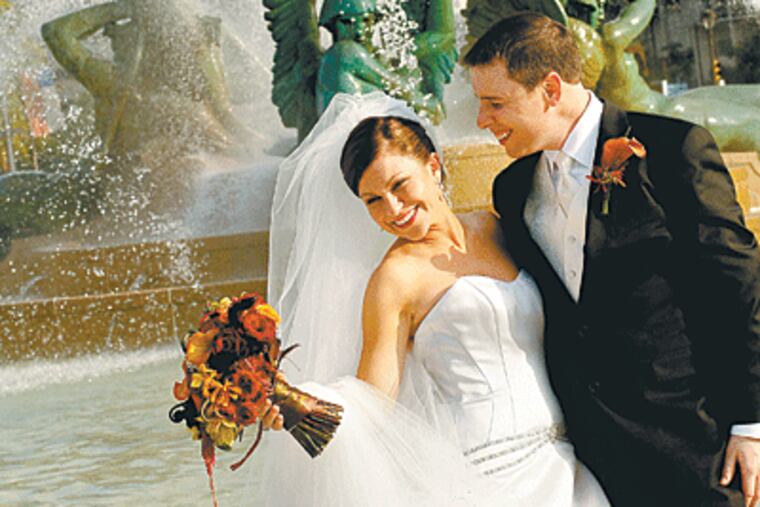
It was, in the bride's words, "absolutely perfect."
Lauren Avellino Turton's 2006 beach wedding featured steel drums playing as she walked across the sand to her groom, a rose tossed in the ocean as a tribute to her deceased father, and an Eagles-Giants game on a nearby bar television.
The next day, she found herself fighting tears.
"It's so hard when it's over. It's like you're going through withdrawal," the 31-year-old Media resident said.
Weddings in children's books generally end with the bride and groom riding away to live happily ever after.
But there's never a follow-up, detailing how in the months after the wedding, Sleeping Beauty stayed in bed for a week after all that adrenaline-filled wedding planning ended, or Snow White realized she missed her planning sessions with the dwarves.
Yet, post-wedding, a dip in bliss is considered fairly routine. This sudden sadness is not a reflection on the state of the union. Rather, it can be brought on by a combination of factors physical and mental.
"Some women just want to be the bride again," said Philadelphia psychologist April Perrymore. "There's an emphasis on the day of the wedding and not on the marriage."
Licensed clinical social worker Linda Brockway said the jolt to Earth is similar to the letdowns some people feel after much-anticipated birthdays or vacations.
"You've been planning something for so long and it's so absorbing, and then bang! One day, it's over," said Brockway, who has offices in Center City and Plymouth Meeting. "People don't get over it in a few days."
Post-wedding blues more typically affect women, said Christa Vagnozzi, a senior editor at www.theweddingchannel.com, possibly because they traditionally do more of the planning and the emphasis is often on the bride.
"Most brides are running on adrenaline before the wedding, especially in the final weeks, so when they get the time to relax, it's not uncommon for them to slip into exhaustion," Vagnozzi said. "Their immune systems are weakened so they can more easily get sick or slip into the post-wedding blues."
Most vulnerable, she said, are those who are dealing with other stresses, like buying a new home, moving to unknown cities, changing careers, and finding they need more couple friends whose company they both enjoy.
Within one year, Sara Smith of West Chester got engaged, threw a wedding, and purchased a house. But the 30-year-old had entered the whirlwind heeding the advice of a friend: "Just be careful when you get back from the honeymoon because then it's all over."
While she won't say she was depressed when it was over, she definitely noticed some change.
"In a way, for me, it was a welcome quiet, but you don't have all that attention and you definitely feel it."
But people should remember there's also much to look forward to, Brockway said.
"Healthy people see it's not an ending but a beginning, and all the attention and energy that went toward planning the wedding can be spent on learning each other's likes, learning compromise, building relationships with friends and family," she said. "It helps if people realize this is the exciting part now."
For some brides who have put their all into wedding planning, the best way to work through the downturn is to find something else on which to focus.
After her 1998 wedding, Mara Stanley Levy noticed a significant change in one aspect of her life:
"I don't know if I was necessarily depressed, but I certainly ate a lot," said Levy, 35, of Blue Bell. "I gained at least 10 pounds."
She was happy to be married - it meant her husband, who had been living in England, could finally move to the United States - but she missed the all-encompassing planning.
"I had to find another project," she said. "I needed something big."
She decided to go back to school, earning a degree in multimedia and Web design from the Art Institute. Now a freelance Web designer, mother of two, and still happily married, she recommends the "keep keeping busy" option to other new brides. It's also important to know when to say enough's enough.
Kelleigh Parker turned her May 10 wedding into a giant DIY project, creating the "Save the Date" cards, the invitations and the menus, among other things. For 18 months, she said, she constantly had projects in the works.
Then came May 11.
"Not that getting married isn't exciting, but it's a little sad when you put a year and a half into something and it's over," said Parker, 33, of Trooper. "I'm not going to jump out of a window, but it's hard not to miss something you've been doing for so long. It was a nice outlet."
Jennifer Kent thinks realistic expectations helped her avoid a post-wedding downturn. She planned a Philly-centric, very personal October 2007 wedding, one that included a reception at the Franklin Institute, mini-Liberty Bells as favors, and musical performances by both her and her husband. (A drummer, he learned to play the piano just to serenade her with her favorite song, Billy's Joel's "She's Got a Way.")
Still, the 33-year-old Media resident found adjusting to life post-celebration was amazingly easy. She thinks being prepared helped, as did living together before marriage. As she puts it: "If you can still love each other after someone throws a red sock in the white wash, that's a good thing."
The post-wedding blues aren't always instantaneous. Post-wedding rituals, like sending thank-you notes and sorting gifts, can keep former brides and grooms busy for months.
Immediately after her October wedding - a 1930s-style black-tie gala for 70 guests at Le Bec-Fin - Katie Berman felt mostly relief. Plus, she finally had a chance to take a breath.
Six months later, the 26-year-old Ambler resident felt her first twinge of discontent. She now finds herself trying to find her footing in her husband's large extended family, struggling to maintain her own identity instead of a generic "couple" one, and figuring out how to return to life, post-wedding madness.
"We're like, 'What do we do now?' Now we have to learn how to date again," she said. "We have to set aside time for each other since we haven't had a chance to do that for almost a year."
One good thing about the post-wedding blues? They're usually short-lived. While some people may need to seek professional help, most can get through the low period on their own.
The experts say the best way is to talk about it, particularly with like-minded people on Web sites such as www.thenest.com, www. theweddingchannel.com, and www.consciousweddings. com. They recommend making "We" time: going on a date with your spouse on a Wednesday night or staying in bed late on a Sunday.
"I think a lot of people are helped just knowing this is not some terrible sign the marriage is in trouble. This is a fairly typical development," Brockway said. "Just tend to the marriage."