Ellen Gray: Viewers seem to like life without people
LIFE AFTER PEOPLE. 10 p.m. tomorrow, History Channel. THE HISTORY CHANNEL is about to become the Post-History Channel. Assuming, that is, that we're talking human history.
LIFE AFTER PEOPLE. 10 p.m. tomorrow, History Channel.
THE HISTORY CHANNEL is about to become the Post-History Channel.
Assuming, that is, that we're talking human history.
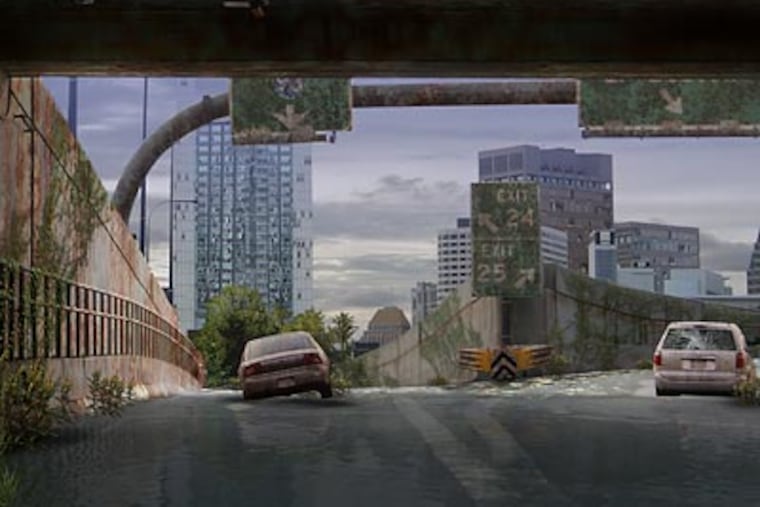
Following up on its absurd but - by cable standards - wildly popular January 2008 special "Life After People," which posited a world in which humans disappeared, seemingly without a trace, leaving their pets, cars and junk behind, History tomorrow expands the concept into a 10-episode series.
Think disaster movies, but without the harried husband, the estranged wife, the plucky child or most of the other cliches we associate with the destruction of Manhattan and points north, south, east and west.
The good news? The brave dog might just make it. For an episode or two.
Some 5.4 million people are said to have watched the original "Life After People," the largest audience ever for the channel, which has expanded its view of "history" in recent years well beyond Nazis, embracing "Ice Road Truckers," "Ax Men" and "UFO Hunters."
All amazing jobs, but according to "Life After People," those who hold them are as doomed as the rest of us.
Not that "Life After People" wants to get into that.
"This isn't the story of how we might vanish," admonishes the narrator in tomorrow's episode, "The Bodies Left Behind."
Nor are the bodies referred to likely to belong to most of us.
No, while the landscape - and the highways - remain oddly clear of the remains you might expect after a humanity-ending cataclysm, "Life After People" is zeroing in on other bodies.
Specifically, those of some long-dead Egyptians and one Vladimir Lenin, whose Red Square tomb isn't going to keep him looking that good forever. Not once the tourists leave.
No details on what happens to mummies that might still be tucked away in pyramids, but those lying in climate-controlled luxury in the world's museums are out of luck. Again.
Hoping to have yourself cryogenically frozen? Don't bother.
Frozen embryos? The cold truth is they need people, too.
Even the DNA collection circling above our heads in the International Space Station eventually will require extraterrestrial rescue if earthlings are to get a second chance.
I'm not holding my breath.
If our dead bodies won't be preserved, our languages may, for a few decades, anyway, thanks to the tens of thousands of parrots "Life After People" expects to escape into the wild, taking their "Polly want a cracker" vocabularies with them.
No word on whether they'll be using Twitter.
Next week's episode, "Outbreak," will track what happens to some of the other domesticated animals who'll presumably set themselves loose once we're not there to feed them.
A year ago, I wrote about the original special, wondering who might be the audience for a show about what happens when the audience no longer exists.
From my e-mail, I now know that there are viewers - a lot of them guys - who find decay and destruction fascinating, and might well be willing to wade through some of this silliness for the occasional fascinating snippet about how long, say, the USS Constitution might stay afloat up in Boston without daily maintenance.
I don't pretend to understand it, but I accept it. Still, I'm hoping the History Channel will know where to stop.
"Life After People" is one thing. Life after people to pay the cable bill is quite another. *
Send e-mail to graye@phillynews.com.
