Jonathan Takiff: It's your call: Here are lower-cost alternatives to landline phone bills
TIRED OF PAYING lofty landline phone bills and long distance charges? In this economy, who isn't? That's why "even rich people are buying devices like mine," said Dan Borislow, the Philadelphia-rooted inventor/marketer of an Internet-based phone device called magicJack that slashes domestic and international calling fees to literally pennies a day.
TIRED OF PAYING lofty landline phone bills and long distance charges? In this economy, who isn't?
That's why "even rich people are buying devices like mine," said Dan Borislow, the Philadelphia-rooted inventor/marketer of an Internet-based phone device called magicJack that slashes domestic and international calling fees to literally pennies a day.
Consumers have snapped up 3 million magicJacks in just 14 months. Bargain hunters also are looking more seriously into alternatives like Skype and Vonage - the grandaddys of voice-over-Internet-protocol (or VoIP) phone calling technology - and relative upstart ooma, which offers perhaps the most elegant of alternative home phone solutions.
LISTEN UP: Phone calling through a computer Internet connection used to be strictly the stuff of geeks. An Internet call recipient listening on a land line would have thought the caller was stationed on Mars. Yeah, the sound was that distorted and echoey.
But with improvements in high speed connectivity, system backbone, device design and software, product innovators now deliver Internet-channeled calls that sound almost as good as those on a conventional, landline system.
"The magicJack might be small [matchbook-sized] but there's 1.7 million lines of software code in there," clued inventor Borislow, who previously cut his telecommunications teeth (and made a mint) with the bargain long distance phone company Tel-Save.
"For magicJack, we built our own worldwide backbone and route international calls through AT&T. Eight months ago, we upgraded the core magicJack chip with a new hardware solution for echo-suppression and we increased the number of headend servers. That's eliminated most of the complaints of users."
Internet phone systems have also grown more elegant-looking.
Some Skype phones and the desktop ooma modules are particularly handsome. And while hook-up isn't always stress-free, the process no longer requires an engineering degree. (Word to the wise: Buy locally - say, at your neighborhood Radio Shack, Best Buy or Costco - for easy return if the device doesn't work for you.)
MAKING THE CONNECTION: Most Internet phone systems connect directly to your Internet router.
But not Magic Jack.
Designed with the traveler in mind and to keep costs way down, this little thing plugs into the USB port of an Internet-connected laptop or desktop computer and, on the other side, to the phone of your choice (corded, cordless base station or a compatible headset/mike).
Then the device pretty much starts itself up, loading software and connecting to the magicJack network, where you register the device and receive a new phone number with the area code of your choice.
Wherever you are in the world, Carmen Sandiego, you can make a phone call back to the States and magicJack will treat it as a free local call, part of the unlimited domestic service offered for all of $20 a year! (Oh, and when you buy the device for $40, the first year of service is tossed in.)
"About 15 percent of our devices wind up being used overseas. People send them to friends and relatives so they can talk to each other whenever they want," said Borislow.
Yes, the computer must remain on to make or receive magicJack calls. But when you shut down the PC (or Mac), the device triggers voice mail or forwards calls to another phone number.
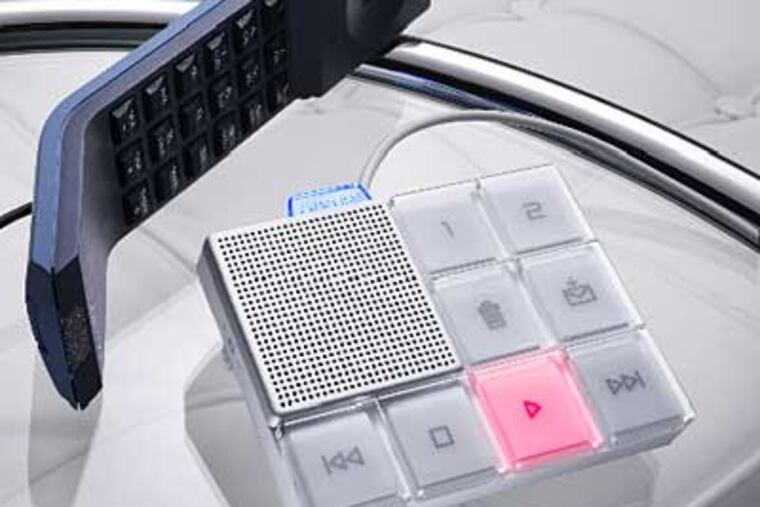
OOMA'S IN THE HOUSE: The starter, two-module ooma Internet phone system's also a good deal. Hardware goes for $210-$249, but after that, basic domestic phone service is absolutely free for at least three years.
Like Vonage - which costs almost nothing for the equipment but charges the most for monthly service (see chart) - ooma plugs directly into an Internet router and the phone of your choice to deliver clean-sounding calls.
There's no need to have a computer on to run the show.
ooma devices stand apart with dedicated answering machine functionality and the ability to deliver calls to standard, plugged-in home phones, though a smaller ooma box (the Scout, supplied in the starter set) must be attached to each of those extension phones. Scouts are not required when using a cordless phone system.
As with Skype handsets, ooma can deliver both Internet and landline calls to a single phone. Many people are reluctant to give up their wired phone, knowing that if there's a power outage or the Internet goes down, "old reliable" will still be running.
But with a new alternate phone also installed, you can cut back the landline subscription to the most minimal, "lifeline" local service offering in good conscience. Ironically, ooma had an outage just last week.
At the moment, Skype is considered the best compliment to someone who lives on a mobile phone, especially now that you can put a free Skype app on pocket PCs and a variety of smart phones, including the just-added Apple iPhone.
In WiFi zones, the app lets you make free international calls to another Skype user or enjoy low, low per minute Internet calling rates - 2 cents a minute from here to Paris, 8 cents a min to the Dominican Republic.
FYI, magicJack and ooma both have second-generation devices coming soon that will play nicely with mobile phones.
PHONE COMPANIES RESPOND: Seeing their customer base eroding, old-school phone companies are testing the waters with Internet-exploiting phone alternatives like the Verizon Hub and AT&T Home Manager.
These touch-sensitive, color-screen media centers have some cute features - also using the Internet to offer text messaging, video clips, news, weather reports and even recipes.
But they're no bargains.
Available only to Verizon Wireless subscribers but piggybacking on whatever your Internet service might be, a Hub goes for $200 (with two-year service contract), then costs $35 a month, with unlimited domestic calling. *
E-mail Jonathan Takiff at takiffj@phillynews.com.