Pine Barrens offer a pleasant summer trip
While it may not quite compare with the California Coast Highway drive or motoring through Yellowstone National Park in the fall, the drive through Central New Jersey takes Shore-goers through one of the magnificent natural wonders of the United States, the Pine Barrens.
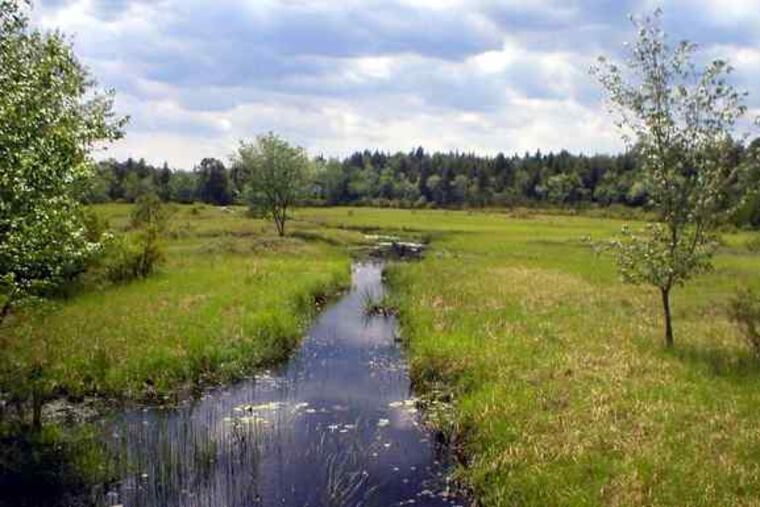
While it may not quite compare with the California Coast Highway drive or motoring through Yellowstone National Park in the fall, the drive through Central New Jersey takes Shore-goers through one of the magnificent natural wonders of the United States, the Pine Barrens.
Even the straight shots - east on Interstate 195 to the northern Ocean County and Monmouth County beaches, and State Routes 70 and 72 to Long Beach Island - are pleasant and green in the summer. The Pine Barrens cover more than one million acres and are the biggest aquifer - natural water reservoir - in the Eastern United States.
The northern route doesn't transit an official Pinelands park until near the end, at exits 31 and 35, which lead into Allaire State Park, where there are plenty of hiking trails into the pines, but also the Historic Village at Allaire.
When early 19th-century marine manufacturer James Allaire wanted to expand his business, he set up a village just in from the ocean at what was then called the Howell Works Company, so that he would be near the natural resources he would need for his products.
Visitors today can go through Allaire's mansion and several of the outbuildings, often with costumed interpreters and crafters as guides.
For more information on the village, go to www.allairevillage.org, and for the park and its nature offerings themselves, it is www.state.nj.us/dep/parksandforests/parks/allaire.html. The phone number is 732-938-2371.
Farther south, on the way to Long Beach Island, the best way to see the pines is to take a dip off the main road, New Jersey Route 70 at Medford, on to Route 532, going through Medford Lakes, then increasingly more rural through Tabernacle and on into the traditional "capital of the Pine Barrens," Chatsworth.
One small side trip off Route 532 is to the Carranza Memorial. Emilio Carranza was, more or less, the Mexican Charles Lindbergh, and on July 12, 1928, he was going home after making what was called a "goodwill flight" between Mexico City and New York, the longest flight of that time by a Mexican aviator. Unfortunately, he got caught in one of New Jersey's frequent summer thunderstorms, crash-landed in the Pine Barrens and died.
To get to the monument marking his flight, look for Route 648, or Carranza Road, just past U.S. 206. Go past the sign for the old New Jersey Correctional System Boot Camp and the memorial will be about two miles down in a clearing on the right.
It is not that there is so much special to see in Chatsworth, just that it was the commercial center, such as it is, for those working in the nearby cranberry bogs, and was made famous in a book by New Yorker writer John McPhee four decades ago, "The Pine Barrens," which is still a good read for the history and nature of the area.
Back in mid-20th century, many of the people living back there were called "Pineys," and often made their livings off the land, knowing every berry to eat and every water hole to tap - or at least that is what fascinated McPhee, a Princeton writing professor by trade.
Along Route 72, a few miles before it crosses the Garden State Parkway and civilization, in what is called the Stafford Forge Wildlife Management Area, just to the south of the road are a stand of pygmy pines. They are usually only about 8 to 10 feet tall, as opposed to the normal pines three to four times that height, and give the area the cast of say, a Munchkin forest, something Dorothy might have crossed just before getting to Oz, or in this case, Long Beach Island. *