When hoarding becomes a problem
Clutterers Anonymous, a support group, has seen its membership jump in S. Jersey.
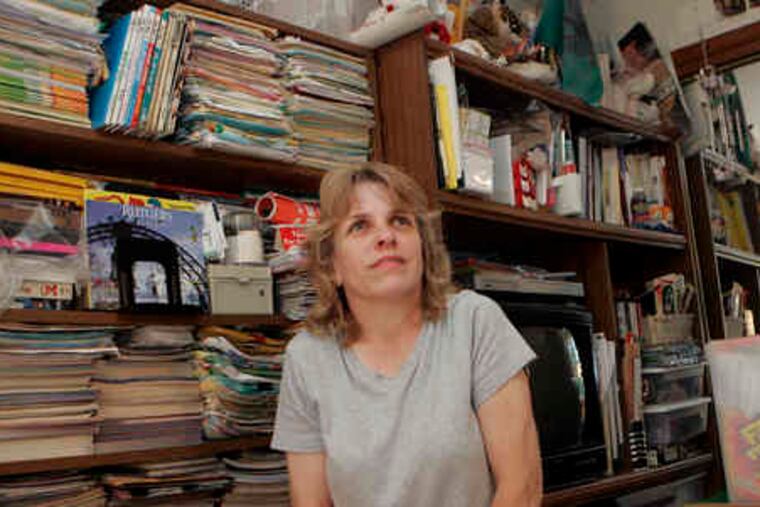
After Karen Johnson lost her mother in 1994, she held on to all that remained: her mom's clothing, photos, letters, knickknacks. The 35 trash bags and dozens of boxes sat in Johnson's home for six years, untouched.
No matter how hard she tried, Johnson couldn't stand to throw out the possessions or donate them to charity. They provided too much solace - even as they clogged her home.
"My closets were so cramped, an ant couldn't crawl between two shirts," she said.
But four months ago, Johnson, a 52-year-old elementary school teacher from Atco, joined the Marlton-based chapter of a national organization called Clutterers Anonymous. It is a free 12-step support group based on the tenets of Alcoholics Anonymous - and membership at the South Jersey meeting has skyrocketed.
According to group facilitator Bobbi Holcombe, the Marlton chapter counted five members in February 2008. These days, more than 50 people show up for the bimonthly meetings. Although new data shows that hoarding - the clinical term for this type of obsessive compulsive disorder - is more prevalent than previously thought (affecting about 5 percent of the population), the extent of the problem isn't growing, experts say. It's just that more people see it as an issue that needs to be addressed. With increased public awareness and media exposure, those who suffer know they are not alone.
Locally, Holcombe has worked hard to get the word out through her participation at health conferences and community events, contributions to county Web sites, and advertising in free newspapers. The efforts are paying off, she said. "We are seeing four or five new people at every meeting."
Holcombe says she already is looking for a larger meeting space and exploring other ways to accommodate the increased enrollment. Currently, the group meets at Virtua Hospital.
Most people turn to such groups when their clutter spills into their public lives, according to Elna Yadin, coordinator of the Obsessive-Compulsive Disorder Clinic of the Center for the Treatment and Study of Anxiety at the University of Pennsylvania. When people don't host visitors in their home because they're embarrassed, can't pay bills because they are lost in piles, or aren't able to complete their work duties because of a messy desk, they need intervention.
But for clutterers like Johnson, speaking openly about their problem is not easy. "It was my dirty secret that I kept in a closet," said Johnson. "If people knew how much clutter I had, they would be judgmental."
Johnson, a divorced mother of two grown daughters, still lives amid unread papers and books, cartons of memorabilia, holiday decorations, lesson plans, and art supplies that languish in piles so high and wide that walking through the rooms of her townhouse is a challenge.
Clutterers Anonymous defines clutter as anything that is not wanted or needed or that takes up too much space, time, and energy. The problem for people is a lack of discrimination - clutterers can't distinguish between what to keep and what to discard.
Especially when it comes to trashing loved ones' old possessions, "Getting rid of something may be perceived as violating or being disrespectful to the memory of that person," said Yadin.
Johnson says she finds emotional comfort from her collections. Still, with the help of Clutterers Anonymous, she is making progress in reducing the household inventory.
"I enjoy coming to the meetings and actually look forward to them," she said. The unconditional acceptance and camaraderie has eased her burden, she said.
Holcombe tells the group, mostly female, that they "have to learn to practice habits that non-clutterers have, no matter what the underlying cause is."
At a recent meeting, Johnson reported to the group that she discarded three large shopping bags of papers - old pamphlets, magazines, and newspapers. "It felt so great to walk them to the recycling bin," she said. "I was able to make a space for something more important."
Yadin praises the vision of groups like Clutterers Anonymous. "A support group brings hope for change," she said. "There are so many people who suffer from this disorder who are alone. This is one way to help them learn that they don't have to stay this way."
Mary Emily Cameron, a 61-year-old former nurse who recently moved to smaller quarters in Collingswood, has used the skills she learned at Clutterers Anonymous meetings over the last few months to control the clutter that overwhelmed her new space. As a result of the support from the group and new skills, she can sleep on a clear bed, and her kitchen sink is no longer filled with dirty dishes.
A lover and collector of books, Cameron now uses the library to get reading material, avoiding the temptation to buy books she may never read - or have room for.
"Library books have to be returned," she said.
Clutterers Anonymous meets from 7 p.m. to 8:30 p.m. on the first and third Tuesdays of each month at Virtua Hospital Marlton, Brick Road at Route 73, in the Scarborough Room. Call 609-668-3785 for more information. The Philadelphia chapter meets from 7:30 to 9 p.m. every Tuesday at Blessed Trinity Motherhouse, 3501 Solly Ave., Philadelphia, 215-335-7500.EndText