New Recordings
Pop The American edition of Colour Me Free comes wrapped in an unsightly purple cover that looks like a rejected design for a Taking Woodstock poster. Joss Stone prefers the version of her fourth album that shows her crammed into a cage like a factory-far
Pop
Colour Me Free
(EMI **)
nolead ends The American edition of Colour Me Free comes wrapped in an unsightly purple cover that looks like a rejected design for a Taking Woodstock poster. Joss Stone prefers the version of her fourth album that shows her crammed into a cage like a factory-farm chicken, her limbs numbered like a butcher's diagram. The bizarre image, not exactly par for the slick soul singer's course, refers to her ongoing battle with EMI, which refused to release her from her contract despite a reported buyout offer of more than $3 million. The album-opening "Free Me" bids for defiance, as she belts, "Don't tell me that I won't / I can." Too bad Stone's vision of independence is as colorless as that vague proclamation. The album's swipes from Aretha Franklin, Stevie Wonder, et al., are as accomplished as ever, but she has devolved from retro-soul to retro-retro-soul, re-creating other people's simulations of a vintage sound. Freedom never sounded so constrained.
- Sam Adams
nolead begins Various artists
nolead ends nolead begins The Twilight Saga: New Moon Original Motion Picture Soundtrack
nolead ends nolead begins (Atlantic **1/2)
nolead ends At this point, you can hardly go wrong buying into a vampire franchise. Tweens dig cute fang boys. Moms dream of toothy, near-fatal seductions. Dads dig vamp vixens. Everyone wins. With a soundtrack overseen by music supervisor Alexandra Patsavas (Gossip Girl, The O.C.), New Moon oozes with top-notch alt-all-star spookiness, recent cuts by Bon Iver and Grizzly Bear, and a Muse remix, among others. The original tracks on New Moon are surprisingly sedate - in fact, the whole affair is quieter and softer than its Twilight predecessor. While one doesn't require, say, the heavy hand of a Bauhaus to get the blood flowing, bringing Death Cab for Cutie (a tensely emotive yet melodically weak "Meet Me on the Equinox") to a teen soap opera is like playing Susan Boyle as background for Saw VI. It's discordant, but not in the interesting way. Thankfully, Radiohead's Thom Yorke keeps his electro-ballad "Hearing Damage" jittery, pensive yet unnerving. Yorke's crepuscular tone belongs to vampire cinema. And God bless the Killers for playing up their camp side. "A White Demon Love Song" gives goth-glam a great name and lets Brandon Flowers ham it up splashily. It's no "Monster Mash," but it's close.
- A.D. Amorosi
nolead begins Devendra Banhart
nolead ends nolead begins What We Will Be
nolead ends nolead begins (Warner Bros. ***)
nolead ends Devendra Banhart became the eccentric shaman of the freak-folk movement, and those who object to the freak in that label have Banhart to blame more than any other artist. His quirky, usually brief songs can exude childlike wonder; they can also seem annoyingly juvenile. Fortunately, What We Will Be, although recorded with the same crew that brought 2007's half-baked Smokey Rolls Down Thunder Canyon, falls into the former category.
Banhart's a dabbler, and on his sixth album since 2002, he touches on Brazilian shuffles, after-hours crooning, rolling country-rock, percolating ska, psychedelic rock. There's a tribute to Roxy Music ("16th & Valencia, Roxy Music"), a gorgeous Spanish ballad ("Brindo"), and a handful of wide-eyed love songs. "Can't Help but Smiling" is the first track and an apt mantra for What We Will Be.
- Steve Klinge
nolead begins La Roux
nolead ends nolead begins La Roux
nolead ends nolead begins (Cherrytree/Interscope ***)
nolead ends Synth-pop darlings La Roux are a duo: songwriter/ singer Elly Jackson and keyboardist/producer Ben Langmaid. They make a surprisingly frazzled brand of rigid electronic music, a less-processed and decidedly non-sleek take on what passes at present for '80s-inspired danz-rock. Langmaid is to be thanked for busted-up beats and crusty arrangements on electro-luxe numbers such as "Reflections Are Protection." But like the duo it cribs from most, the Eurythmics, La Roux's central focus is its redheaded roarer. Jackson shares Annie Lennox's physical androgyny, what with her boyishly asymmetrical red hair. But it is her now-rough, now-silken croon and funky frostiness that, combined with the pair's rugged electronics, make La Roux dynamic and compelling. Her snotty interaction with tight grooves ("Tigerlily"), her throaty purr ("Colourless Colour"), rapturous highs ("In for the Kill") and teetering-on-the-cliff falsetto ("Fascination") - all are divine. While Jackson the lyricist wears her heart on her sleeve, then casts those ruminations in iron (the wistful "As if by Magic"), Jackson the singer never holds back. Even when broken - as through the doleful ballad "Cover My Eyes" - she summons the soul to out-sing the London Community Gospel Choir. Me impressed.
- A.D.A.
Country/Roots
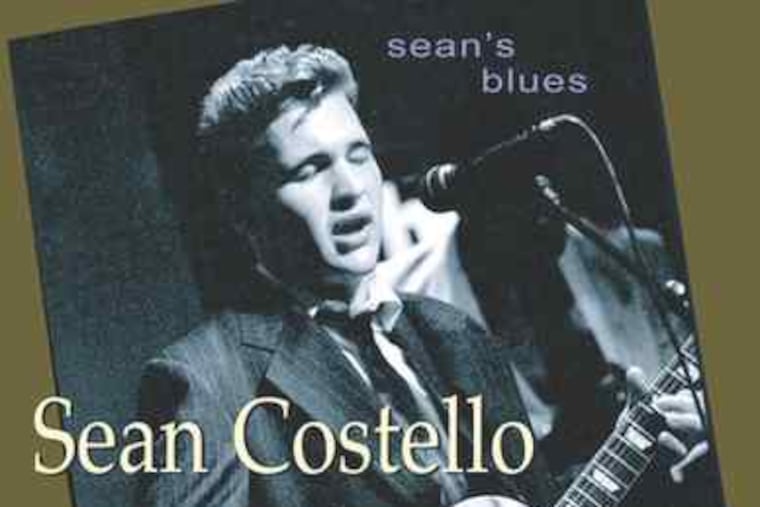
Sean's Blues: A Memorial Retrospective
(Landslide ***1/2)
nolead ends Sean Costello died in April 2008, one day before his 29th birthday. Sean's Blues is not a complete retrospective - it ranges from 1996 to 2002 - but its mix of album selections and unreleased tracks, including some live cuts, does offer a broad sampling of Costello's exceptional talents as a guitarist, singer, writer, and interpreter.
Costello could dig deep into the blues, but he also had a jazzman's nimble touch with jump-blues and swing. Even when he reached back for old material, he always brought a fresh touch to it, and for all his six-string prowess, the onetime blues-rock prodigy and Susan Tedeschi sideman was less interested in flashy soloing than in crafting a taut, dynamic ensemble sound. As he matured and his voice took on a rougher edge, he also at times recalled the great Southern-soul singer and guitarist Eddie Hinton. What a loss.
- Nick Cristiano
nolead begins Darrell Nulisch
nolead ends nolead begins Just for You
nolead ends nolead begins (Severn ***1/2)
nolead ends A former singer for Anson Funderburgh and the Rockets and Ronnie Earl and the Broadcasters, Darrell Nulisch began his career steeped in the blues. He still knows his way around the music: His previous album, Goin' Back to Dallas, was a straight-up blues set. But over his three decades-plus in the business, the Massachusetts-based Dallas native has also matured into an impressive soul man.
Just for You brims with vintage-sounding soul music. The rich, horn-accented arrangements, more smooth than gritty, never push too hard, and neither does Nulisch. He doesn't overemote, but that doesn't mean he stints on feeling. You'll hear echoes of Bobby Bland and even, in one case, the Sound of Philadelphia. But give Nulisch, who cowrote half the material, extra points for explicitly referencing "Dyke" - i.e. Arlester Christian, front man for the vastly underappreciated Dyke and the Blazers - on "Let a Woman Be a Woman."
- N.C.
Jazz
Esta Plena
(Marsalis Music ***1/2)
nolead ends Alto saxophonist Miguel Zenón sets out to meld modern jazz with the music of the Puerto Rican countryside, called La Plena. (The title translates as "This Is Plena.")
The CD mirrors the creation of jazz itself from disparate European and African roots. La Plena, too, shares that lineage, but with shots of Haitian, Cuban, Dominican, and other Puerto Rican folk music thrown in.
A Puerto Rican native and 2008 MacArthur and Guggenheim award-winner, Zenón, 32, shapes this ambitious effort a bit like a point-counterpoint between cultures. For much of the time, his longtime jazz quartet with pianist Luis Perdomo, bassist Hans Glawischnig, and drummer Henry Cole predominates in virtuoso jazz mode. At other times, it's a Puerto Rican folkfest, as Zenón and vocalist Hector "Tito" Matos, among others, chant in unison while playing traditional drums called panderos.
Zenón creates the cultural mix by writing all 10 compositions and often keeping the style of La Plena drumming as a base. But the result often seems a bit schizophrenic. The jazz sections can be cold and seem to bear little relation to the warmer folkloric cousin. Still, there's genuine fire here. The voices in the Plena style really juice the proceedings. The country music scores.
- Karl Stark
nolead begins Jackie Ryan
nolead ends nolead begins Doozy
nolead ends nolead begins (OpenArt ***)
nolead ends Singer Jackie Ryan's voice can melt butter or break a champagne glass. With her three-octave-plus range, she shows a lot of moves on this double CD collection of standards and eclectic torch songs.
It's a day's work for Ryan, who comes from Mexican and Irish parents, to go from the bebop title track with a high jazz quintet to a Mexican pop tune, "Solamente una Vez," with just the accompaniment of guitarist Romero Lubambo.
She shows a natural yen for swing on Billie Holiday's "Tell Me More and More and Then Some." She croons persuasively in Portuguese on A.C. Jobim's "Caminhos Cruzados." And she can belt a Broadway ditty like "Some Other Time," rendered here with pianist Cyrus Chestnut.
This collection spans 20 tunes and slips occasionally. "Dat Dere" is so childish, it's embarrassing. But Ryan shows a winning range.
- K.S.
Classical
Apollon musagete and Pulcinella Suite
Chamber Orchestra of Europe, Alexander Janiczek conducting
(Linn ***1/2)
nolead ends nolead begins Jeu de Cartes, Agon and Orpheus
nolead ends nolead begins BBC Scottish Symphony Orchestra, Ilan Volkov conducting
nolead ends nolead begins (Hyperion ***1/2)
nolead ends Together, these two independently conceived discs give a good overview of Stravinsky's post-Rite of Spring ballets, most of them underrepresented among modern recordings and showing how the composer continued to create works that were unmistakably Stravinskian, but thoroughly tailored to the subject at hand, from the marvelously restrained color palette of Orpheus to the unique brass-and-mandolin orchestration of Agon.
Both pieces have standard-setting performances on the BBC disc, with conductor Volkov exploring the subtle gradations of gray in Orpheus and, thanks to his rhythmic acuity, revealing the dazzling counterpoint in Agon, which is the late-Stravinsky masterpiece. Jeu de Cartes is reasonably engaging, considering that it's far from the composer's best. The Linn-label disc features works that need less pleading - Apollon musagete and Pulcinella - but there's always room for performances that are this alert, well-played, and beautifully engineered, with welcome incidental contributions from Janiczek on violin.
- David Patrick Stearns
nolead begins Transmigration
Barber's Adagio for Strings and Agnus Dei, Higdon's Dooryard Bloom, Corigliano's Elegy and Adams' On the Transmigration of Souls
nolead ends nolead begins Atlanta Symphony Orchestra and Chorus, Robert Spano conducting
. nolead ends nolead begins (Telarc ****)
nolead ends Though not presented as a 9/11 memorial disc, Transmigration is the sort of thing that people acquire on principle and then never get around to hearing - to their great loss. Framed by Barber's Adagio in its orchestral incarnation and a later version for chorus, the disc is a cross-section of modern American composers, most notably Jennifer Higdon's Dooryard Bloom, recorded here for the first time. The 23-minute setting of Walt Whitman's elegy for Abraham Lincoln takes the listener through various stages of grief - in contrast to Adams' On the Transmigration of Souls, which is built around the words of real people in a moving extension of the impromptu, folk-art memorials erected to 9/11 victims by their families.
Conductor Spano again demonstrates his instinctive grasp of American idioms, beautifully projecting the intuitively conceived interior drama that Higdon finds in Whitman's verse (and showing why the composer is now turning to opera). Baritone soloist Nmon Ford delivers all the vocal and emotional stamina needed for the piece. The Adams piece holds together better in Lorin Maazel's New York Philharmonic recording, but the level of detail in Telarc's all-encompassing sound picture is worth the price of the disc.
- D.P.S.