Pianist Danilo Perez makes music from Boston to Philly to his native Panama
WHEN I WALKED into the restaurant at the Hotel El Panama one balmy, 80-degree morning in January, I had no further plans than a hearty breakfast and a stroll through the city before taking in whatever music was on offer that night at the seventh annual Panama Jazz Festival.
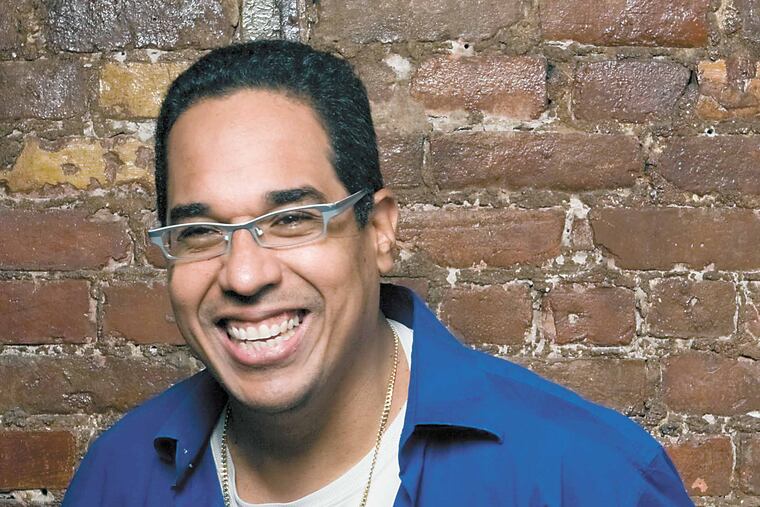
WHEN I WALKED into the restaurant at the Hotel El Panama one balmy, 80-degree morning in January, I had no further plans than a hearty breakfast and a stroll through the city before taking in whatever music was on offer that night at the seventh annual Panama Jazz Festival.
But after bumping into jazz pianist Danilo Perez on the buffet line, I found myself an hour later sitting at a small table with the President of the National Assembly (the Panamanian equivalent to Congress) as Perez lobbied for more support for his festival, held in Panama City, Panama.
An hour after that, we were standing under the sprawling, spiderlike girders of the under-construction Biomuseo, the first Frank Gehry building in Latin America, as its director showed off scale models of the stylized, multihued canopy that the site will soon become.
And two hours after that, we were crossing the Panama Canal on a narrow footbridge, taking a VIP tour of the control room that monitors the canal's Pacific-side locks.
That's what it's like to spend a day with Perez.
Watching him on stage, whether leading his own bands, exploring the outer limits as part of the Wayne Shorter Quartet, or engaging in lively discussions with fellow musicians he's brought to Philly as curator of the Kimmel's Jazz Up Close series for the past six seasons, it's easy to recognize his voracious appetite for music and the overwhelming enthusiasm with which he approaches the subject.
Observing him in his native Panama, however, where for the past seven years he's worn the hats of festival director, musician, cultural ambassador, educator and lobbyist via his Panama Jazz Festival, one is still taken aback by his unflagging optimism and seemingly limitless energy.
"The biggest dream in my life would be to find a way to incorporate this kind of festival all throughout Latin America," Perez reflected a few months later from his home in Boston. "It's a personal and national dream, but also an international dream of uniting Latin America through this festival, with Panama as the bridge."
Musician on a mission
Perez's educational outreach takes place both in the States, where he is on the faculty at Berklee College of Music, and in Panama, where his Fundacion Danilo Perez provides music lessons and social outreach for underprivileged youth.
Those two worlds were united at this year's festival through the launch of the Berklee Global Jazz Institute, a new program that not only gives students access to an all-star faculty - major jazz names like Pérez, Joe Lovano, Jamey Haddad, John Patitucci and Terri Lyne Carrington - but encourages them to explore music's social power through travel and performance opportunities.
By the second day of the festival, before the Berklee students took the stage together for the first time, many of them were already leading clinics for young Panamanian musicians. In one display of cross-cultural communication, a pair of American saxophonists led a half-dozen local counterparts, not much younger than themselves, many of whom couldn't speak English, through an exercise in the blues, instantly evoking well-worn but appropriate cliches about what constitutes a universal language.
Artist's responsibility
Perez laughed as he compared his musical endeavors to that of a band of comic book superheroes, but given the Herculean goals he's set for himself, the analogy isn't entirely inapt.
"Danilo loves Panama," said saxophonist Lovano, who has played twice at the Panama Festival and whose relationship with Pérez dates back more than 20 years.
"Every time he went home, it seemed to me he was giving not only of his talents, but he was giving back a certain energy and appreciation for growing up there. I think he started his foundation just by being himself and trying to share his gifts, with no grandiose overtones of what it could be, and it snowballed into this beautiful situation that's happening today."
Perez shares that situation with his wife, Patricia, an alto saxophonist who works closely with her husband in his educational endeavors. That includes not only the Fundacion and festival in Panama, but the home schooling in Boston of their two young daughters (a third is on the way).
Each home inspires aspects of the other, as with Junglewood, the performing and visual arts space founded by Perez last year in the Panamanian rain forest, inspired in part by Tanglewood, the Boston Symphony Orchestra's summer home in the Berkshires.
Much of the inspiration for Perez's vision of community-building through music has come from trumpet legend Dizzy Gillespie, with whose United Nations Orchestra the pianist played from 1989, shortly after his graduation from Berklee, until the bandleader's death in 1993.
"To me, Dizzy is the ambassador of global jazz," Perez said. "He understood the meaning of universality in the music and through the opening that he left, we're using that meaning, that spirit and that legacy to explore new possibilities in creativity."
Tribute to Gillespie
While the show will take place in Verizon Hall, Perez spends most of his time in Philly in the smaller Perelman Theater, where he appears to converse (and, more often than not, to jam) with the artists he books for the Jazz Up Close series, now in its sixth season with plans to continue.
This season's tribute to Billie Holiday has been a success, with two of the three performances thus far selling out. The fourth, singer Claudia Acuna's "Lady in Satin Goes Latin," was postponed by February's blizzard but will take place on March 26.
Perez has assembled an outstanding septet for this Friday's performance, building on his regular trio with bassist Ben Street and drummer Adam Cruz with Puerto Rican-born tenor saxophonist David Sanchez, Indian-American altoist Rudresh Mahanthappa, Iraqi-American trumpeter Amir ElSaffar, and Lebanese-American percussionist Jamey Haddad.
"It's like a mini-United Nations band," Perez enthused. "It's a combination of people who I feel are pushing the cultural envelope in what they're doing. This group is a laboratory for me. I'm not only going to be bringing my identity but also going to be exploring what everybody else brings to the table. I want to bring a family, community feeling to it, which was something that Dizzy was a magician at."
That attitude extends even to the evening's opening act, the vocalist Somi, who was born in Illinois to parents from Rwanda and Uganda, and grew up in Zambia.
According to Mahanthappa, who is arranging "Salt Peanuts" for the occasion, Perez is "just a really inspiring person to be around. It's very easy to get jaded or beaten down by the business, and he just has so much joy for music and for living life that it's very hard to feel negative at all around him. I think that just makes you play better and makes the people around him dig deeper into what they have to offer."
For Perez, the performance is an opportunity to exercise the kind of social impact that he encourages in his students. "The idea that Dizzy had of finding a common tone is very special to me," he said. "I like that whole mentality that the music is so individual, like a human being, that you can see differences but you can also see connections.
"There's a healing process we have to go through right now because people in many parts of the world don't have a great perception of North America, and there's no way to heal that faster than with music.
That's what Dizzy was talking about."
Verizon Hall, Kimmel Center, Broad and Spruce streets, 8 p.m. Friday, $26-$64, 215-893-1999, www.kimmelcenter.org.
Perez will pay tribute to that multicultural legacy this weekend with "Things To Come: 21st Century Dizzy," a performance at the Kimmel Center that promises a radical rethinking of some of Gillespie's most familiar compositions. "The major goal that we have," explained Perez, "is not only developing . . . a great artist, but also their understanding that having so much talent is also a responsibility. There's a lot of great players out there and sometimes they need to see the necessity in the world for music. We're in a state of emergency now - look at what's going on in Chile and Haiti [after the recent, devastating earthquakes]. Just entertaining is not enough these days. We as musicians have to get out there like the Watchmen."
Where other musicians speak of their work in terms of personal expression or artistic achievement, Perez refers to his music as a mission. That concept was made explicit in Panama City, where clinics and workshops had been under way for three days before a gala concert officially kicked off this year's festival.