Beyond 'Survivor:' 10 years later, reality TV thrives
From the moment it was mentioned as a CBS series, Survivor generated intense scrutiny and comment. Still, no one was prepared for the power it generated.
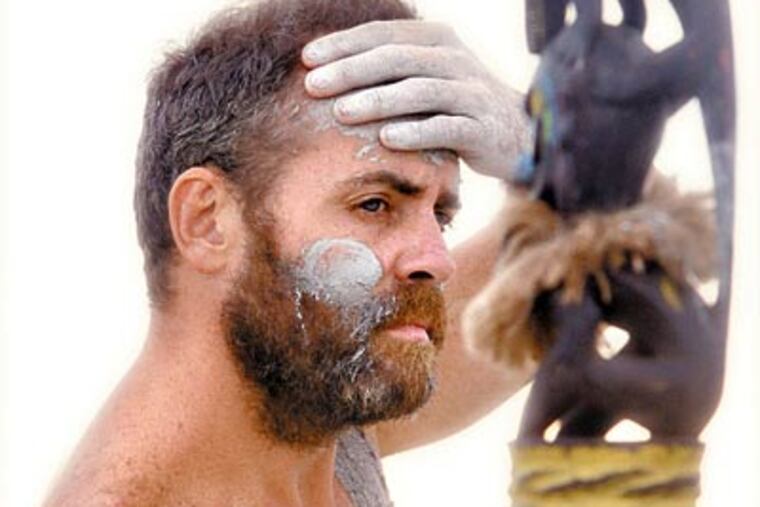
From the moment it was mentioned as a CBS series, Survivor generated intense scrutiny and comment. Still, no one was prepared for the power it generated.
The show exploded in the ratings after its May 2000 debut and changed American television forever. It demonstrated that unscripted series were more than summer filler and could be a dominant form of programming, not just in the backwaters of cable TV, but on the broadcast networks, where they could attract tens of millions of viewers.
Without the reality TV that followed Survivor in one form or another, all five broadcast networks would suffer. American Idol is TV's No. 1 series and the key to Fox's current success. Dancing With the Stars is ABC's top show, No. 2 on all of television. NBC's highest-rated series? The Biggest Loser. Tops at the CW? America's Top Model.
The drama NCIS beats CBS's Undercover Boss by a few points in the ratings, but the rookie workplace reality show is No. 2 at the network. Teamed with The Amazing Race, it has given CBS new power on Sunday nights.
And the old warhorse that started it all, completing its 20th "season" Sunday night as veteran "heroes" and "villains" square off for $1 million, has done more than survive. It still wins its time slot almost every Thursday at 8 p.m., attracting 13.5 million viewers, tied for 16th this year among all the shows on television.
"It's one of the network's crown jewels," said Jennifer Bresnan, vice president of alternative programming at CBS, a position that did not exist at the big networks before Survivor.
"There was everything to indicate while we were shooting that this was going to be very different and very interesting," Survivor host Jeff Probst said, "but there was nothing to indicate it would be a massive hit."
There was certainly massive interest in the show, announced in October 1999 by CBS, which needed to start casting. "Just when it seemed broadcast TV couldn't get any more outrageous," read the item in The Inquirer.
Anticipation among the public and in the media built continuously as reports filtered out about the contestants - more than 6,000 applied, a quaintly low number by current standards - and the preposterous idea that they would be marooned with nothing for 39 days on an island off the coast of Borneo. Fifty area semifinalists showed up at KYW studios to audition. One, Gervase Petersen, a YMCA instructor from Willingboro, made it to the island.
Interest was even higher in Big Brother, a show that had earlier virtually shut down the Netherlands once a week as viewers gathered to see the intimate machinations of a group of people stuck in a box for months at a time. CBS had scheduled its premiere in tandem with Survivor, but the island follies scored so well, the network delayed the show, which has always played little brother to the granddaddy of them all, for a month.
An immediate hit
Survivor opened well on May 31, 2000, and the ratings got bigger every week. By the seventh episode, in the dead of summer when TV viewing is at its lowest, the audience had reached about 25 million, what American Idol now draws on a very good night in darkest February. CBS was getting more viewers than the other five networks combined, and more viewers than the network had recorded at 8 p.m. on any Wednesday in the 13 years since Nielsen ratings switched to People Meters.
More significantly, its audience among viewers in the 18-34 age range - the youthful end of the 18-49 demographic, the Holy Grail of TV advertising - had increased more than tenfold. The average age of a CBS viewer was 53; the average for Survivor viewers, 39. "Every network worries about the demo," Bresnan said. "It's terribly important."
At first, Survivor was categorized as a game show. ABC's Who Wants to Be a Millionaire had already established itself as a sensational hit, and Survivor was lumped with a revival of Twenty-One, a Fox trivia quiz show called Greed, and a few others as part of a game-show trend.
Others correctly saw it as the beginning of something different, a confluence of game, social experiment, and natural history, a combination of unscripted genres that transcended them all.
But the game part of the reality equation is especially important to large networks, giving viewers an added incentive beyond the general voyeuristic interest in the personalities, which must be present in any reality show for it to draw an audience. and ABC's veteran Extreme Makeover: Home Edition are rare exceptions on the broadcast networks that do not involve the continual elimination of cast members, either by direct competition (The Amazing Race), contestants' votes (Survivor), a combination of both (The Biggest Loser), or audience votes (Dancing With the Stars, American Idol).
Undercover Boss
Importing ideas
Who Wants to Be a Millionaire, which originated in Britain, had opened the door to big-event television from foreign markets. The United States, the global home of movies and TV, had until then - with few exceptions - originated its own programming. But the Europeans and Japanese had been watching homegrown, unscripted shows for years.
"Much of what we see as the revolution of this decade is merely really an updating of the kind of programming that has been part of the equation abroad for a long time," said Bob DiBetteto, president of cable's A&E and Bio channels. Because of smaller populations or much more limited TV penetration, or both, foreign broadcasters couldn't get the advertising rates to afford to make their own scripted entertainment with high-priced actors, writers, directors, and film crews.
"But they were making less-expensive, nonfiction programming of all kinds," DiBetteto said, "and a lot of it started to have real traction in generating large amounts of viewers around the world, and a lot of buzz."
Survivor's format was created in Britain by Planet 24, a company headed by Live Aid impresario Bob Geldof, among others. But it was first produced as Expedition Robinson in Sweden in 1997, where it was a sensation - at times almost half the people in the country watched. At one point or another, the format has been produced in more than 50 countries, from virtually all of Europe to the Philippines, Pakistan, South Africa, Turkey, Saudi Arabia, Argentina, and Japan.
Placing products
Mark Burnett, a Britisher who had extensive rough-country producing experience doing a survivalist racing show called Eco Challenge for various cable channels, got involved because one of his neighbors was best friends with one of the Planet 24 principals.
Burnett has gone on to an impressive career. Like all reality producers, he has had his share of misses, including Pirate Master and Commando Nanny, though such shows as The Apprentice and Are You Smarter Than a 5th Grader? are substantial hits. But the only way he could sell Survivor to CBS was to land some sponsors, too.
"Product placement," including favorable mention and presentations of companies' merchandise in the body of a show, has grown tremendously in the last decade as a form of TV advertising. Survivor is one force behind that trend. Pontiacs would magically appear in the heart of the tropical jungle; the crew constructed a fully functional bathroom (imagine the luxury) called Casa de Charmin. This season, contestants won a fancy dinner at a temporary Outback Steakhouse (it's our favorite restaurant back home, cagey Sandra Diaz-Twine said).
In addition to changing the content of television, Survivor also helped changed its rhythms. ABC drove Who Wants to Be a Millionaire into the ground with constant play, sometimes airing it five nights a week. CBS soon hit on the idea of two separate and complete competitions for Survivor each year. With a couple of clip-job recaps and a megawatt three-hour Sunday finale, each "season" runs about 16 weeks.
Fewer repeats
Now, instead of always producing about 22 episodes of a series and trying to stretch them out over the traditional 39-week TV season, all the networks have series, mostly reality shows, that run consecutively, 13 to 20 weeks, with little repetition.
"You can repeat the week-before episode right before you get the week's new episode," said Mike Darnell, Fox president of alternative programming. "Over time, that can bolster a show.
"But where there's an elimination process, like Dancing With the Stars, if you have too many players, it's too long of a commitment for audiences to stand by. We've defined our own limitations with American Idol, 18 or 19 weeks."
It's not just reality shows that get the concentrated treatment. Since Survivor, networks have also shown some of their hotter dramas, ABC's Lost and Fox's 24, for instance, straight through about a half of the traditional 39-week season.
The audience vote-off shows such as Idol and Stars generally appear two nights a week: performance, then results. That may be diluting their audiences.
While still strong, viewership for all the current blockbuster reality shows has diminished as they have aged. Someday, they will all be canceled as TV moves along. Probst and Burnett, however, have given up on speculating about the end of Survivor, and everyone in the industry says reality TV is here to stay.
"There has been a huge change in the landscape," Burnett said. "Before Survivor, it didn't matter if you were 10 years old or 85, your choice of what to watch was 99 percent scripted. Now that's changed, maybe 80-20, in favor of unscripted.
"The public wants this kind of programming."
For video of former reality contestants discussing
how their
lives have
been changed, and other reality TV stories, go to www.philly.com/
realityTV.EndText