New Recordings
Pop How does a record this good, made by a guy who's one half of OutKast, one of the biggest-selling rap groups of all time, wind up in the reject pile? Ask the folks at Jive Records, who decided not to put out the dazzlingly varied and impressively consistent Sir Lucious Left Foot when Antwan "Big Boi" Patton initially turned it in during 2008, allegedly because the label felt it wasn't commercially accessible enough.
Pop
Sir Lucious Left Foot: The Son Of Chico Dusty
(Def Jam ***1/2)
nolead ends How does a record this good, made by a guy who's one half of OutKast, one of the biggest-selling rap groups of all time, wind up in the reject pile? Ask the folks at Jive Records, who decided not to put out the dazzlingly varied and impressively consistent Sir Lucious Left Foot when Antwan "Big Boi" Patton initially turned it in during 2008, allegedly because the label felt it wasn't commercially accessible enough.
Two years later, Big Boi's funk de force solo debut occasionally sounds slightly dated in its lyrical allusions, with references to Ricky Bobby and some guy named Obama who was getting a lot of attention back then. But musically it doesn't miss a step, from the mighty martial groove that drives "Back Up Plan" forward to the Philly soul horns and dub bass that bubble up from under in "The Train Part II (Sir Lucious Left Foot Saves the Day)." Jive has nixed planned tracks that included André Benjamin, Big Boi's partner in OutKast; the label is holding out for a Patton/Benjamin reunion. But the world can wait.
Collaborating with Janelle Monae, George Clinton, Gucci Mane, T. I., and others, Big Boi has more than enough helpmates on hand, and on Sir Lucious, the earthier OutKast auteur throws a vibrant and wildly creative house party that'll do better than fine until that next OutKast album comes to pass.
- Dan DeLuca
nolead begins Mystery Jets
nolead ends nolead begins Serotonin
nolead ends nolead begins (Rough Trade ***)
nolead ends Mystery Jets, the quintet once based on Eel Pie Island on the River Thames, initially were famed for that and two other things: writing killer pop tunes and featuring the drummer's dad on guitar. But neither of those admittedly impressive facts was enough carry the Jets to the next musical level, and their initial hype seemed to have stagnated.
Serotonin, their third album, comes at a turning point for the band. Whether they become indie also-rans or finally deliver rides on 11 simple tracks. And, dare we say it, the Jets impress.
From the beginning, the spiky rhythms of their earlier tracks have been supplanted by the spacious opener "Alice Springs," with its Bono-aping bluster. Elsewhere, the brilliant "Dreaming of Another World" and the massive riff at the heart of "Show Me the Light" are simply standouts on a genuinely stellar album.
At their core, the Jets retain their love for glittering pop drama. More grown up? Maybe. But grown old? Never.
- Emily Tartanella
nolead begins Kelis
nolead ends nolead begins Flesh Tone
nolead ends nolead begins (Interscope ***)
nolead ends nolead begins Kylie Minogue
nolead ends nolead begins Aphrodite
nolead ends nolead begins (EMI/Astralwerks **1/2)
nolead ends Being a dancing queen is no easy reign. You can't just waltz into the job or keep the crown without competition. Ask Kelis and Kylie.
Kelis trades in her quirky brand of sultry soul-hop for something sleeker and colder this time, with varying results. The throbbing Euro-sparseness of "Acapella" stays durable, while the elastic "22nd Century" grows limp after time. The best thing about her foray into electro is how she uses escapist house musicality to embrace the lyrical realities of being a divorced (bye, Nas) single mom.
Kylie Minogue has been an international dance-pop sweetheart since the late '80s, with her breathy chirp at the forefront of every nu-tech trend. Aphrodite has 'em all. Though she tries her hand, as she has in the past, at dull Celine-like balladry, Kylie is best when she's honeying up the glam-electro "Better Than Today" and the thumping "All the Lovers" with girly gusto.
- A.D. Amorosi
nolead begins Danger Mouse
and Sparklehorse
nolead ends nolead begins Dark Night of the Soul
(EMI ***)
nolead ends A year ago, Danger Mouse (Brian Burton) and Sparklehorse (Mark Linkous) planned to release Dark Night of the Soul, their suite of soul-searching psychedelia and nightmarish rock, for a flock of guest singers and lyricists, but a label dispute derailed it. A book of related photos by filmmaker David Lynch came out, with a blank CD-R inviting purchasers to download the leaked album. Since then, Linkous and Vic Chesnutt, one of the guests, have committed suicide, which now makes the release an unintentional valedictory.
Stately and staticky, the understated songs sound like prime Sparklehorse, although with the vocals of, among many, Flaming Lips' Wayne Coyne, the Strokes' Julian Casablancas, Suzanne Vega, and James Mercer of the Shins and (with Burton) Broken Bells. A few heavy-handed rockers disrupt the spell, but Dark Night is, aptly, haunted, nuanced, and phantasmagoric.
- Steve Klinge
Country/Roots
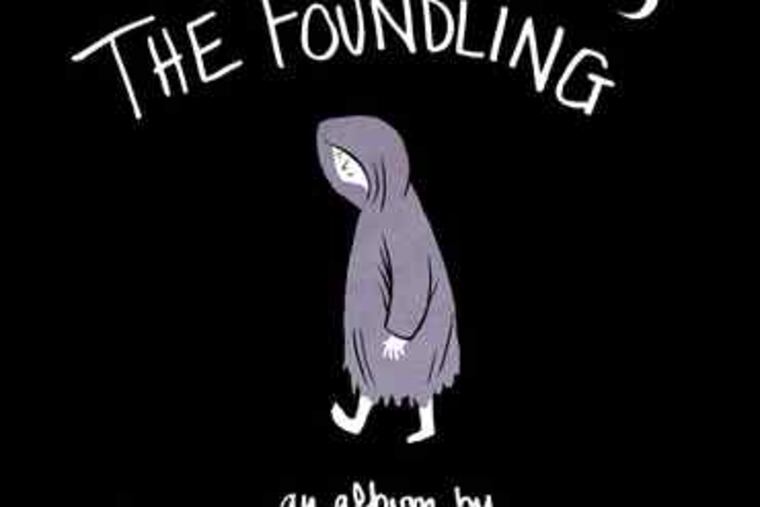
The Foundling
(Razor & Tie ****)
nolead ends As a singer-songwriter who has always tended toward the downbeat, Mary Gauthier (pronounced Go-Shay) could not have picked a more suitable topic for her latest album. The Foundling is her overtly autobiographical account of being an orphan and failing to connect with her birth mother.
Working with the Cowboy Junkies' Michael Timmins as producer - he surrounds her Louisiana drawl with understated but richly evocative arrangements - Gauthier presents a gripping narrative that amounts to the best work of a fine career. "March 11, 1962," in which she finally reaches her mother by phone, only to be rejected, is a killer. But the story doesn't end there. A clue to how Gauthier manages to keep this tale from being irredeemably dark and depressing can be found in "Sideshow"; she unapologetically confesses to a penchant for sad songs, but also pokes a little fun at herself: "Another truly troubled troubadour/ Writing songs to even up the score." With The Foundling, Gauthier does much more than that.
- Nick Cristiano
nolead begins Paul Thorn
nolead ends nolead begins Pimps and Preachers
nolead ends nolead begins (Perpetual Obscurity ***)
nolead ends We already knew Paul Thorn was the son of a Pentecostal preacher. Now we find out the Mississippi-born roots-rocker is also the nephew of a onetime pimp. "They both became my teachers," he sings on the title song of Pimps and Preachers.
That's not surprising. Thorn's music has always possessed a streak of gospel uplift, but the push toward the saintly has always sprung from what seems like an intimate acquaintance with the sinful, or at least life's seedier side. That dichotomy sparks another colorful and compelling set. Numbers such as "You're Not the Only One" and "You Might Be Wrong" come across like sermons of streetwise wisdom. And so does the advice to the lovesick in the mournful "Tequila Is Good for the Heart" - "When prayer only takes you so far . . . ."
- N.C.
Jazz
The Complete Reprise Recordings
(Concord ***)
nolead ends Frank Sinatra made two recordings with the great Brazilian composer Antonio Carlos Jobim. The first, Francis Albert Sinatra & Antonio Carlos Jobim, appeared in 1967. A follow-up was recorded in 1969, but the Chairman, fighting his own sales battles with rock-and-roll, nixed its release. Most of its tunes were included on 1971's Sinatra & Company.
This CD merges the two sets, showing different personalities. The first 10 songs sound like vintage Sinatra, with Claus Ogerman's string-heavy arrangements coursing through such chestnuts as "The Girl From Ipanema" and "Dindi." The second 10, though, are more interesting. Ogerman was replaced by Eumir Deodato, and his livelier arrangements present Sinatra in a slightly more Brazilian way.
Not that it gets too earthy. Deodato uses lots of strings, too. But it's distinctive enough that Sinatra is heard just outside his comfort zone and still sounding damn good. And that shift deepens this collection.
- Karl Stark
nolead begins Fred Hersch
nolead ends nolead begins Whirl
nolead ends nolead begins (Palmetto)***
nolead ends It's impossible to hear this CD without noting the specialness of the moment. Pianist Fred Hersch developed AIDS-related dementia in early 2008, lying in a coma for two months and losing virtually all motor function in his hands. This trio CD with bassist John Hebert and drummer Eric McPherson documents his amazing recovery.
Hersch's legendary sense for beauty remains a central focus. But he seems more limited now - as if he's pushing the same desire through a smaller aperture. The intensity is stronger. The ideas fly at you on this set of six Hersch originals and four standards, and they keep coming in stylish, rococo waves.
Hersch, who has been open about his homosexuality and his HIV status for decades, remains honest here, plumbing the possibilities of Harry Warren's "You're My Everything" and distilling a moment in his "Snow is Falling." The title track, like much of this recording, is full of dark colors, a restless spirit, and an inspiring climax.
- K.S.
Classical
nolead begins (Wigmore Hall Live ****)
nolead ends Now in his early 60s, Hungarian cellist Miklos Perenyi is giving such interpretively well-chiseled performances that American audiences might wonder why he wasn't better noticed decades ago. Recordings suggest why: He's made plenty of them, but even previous outings with the same repertoire haven't been nearly as interesting as this 2009 live performance.
Besides showing a more interpretively evolved musician, the new disc has a refinement that wasn't previously evident - one that more clearly conveys the subtlety of his musical thoughts. And that's exactly what the rarely heard Britten sonata needs to emerge as a major work (with equal credit going to pianist Denes Varjon). The Brahms sonata isn't just deep; its extreme register changes are managed with great intelligence. In terms of the recording, this Wigmore Hall Live disc has an immediacy that some of the others have lacked.
- David Patrick Stearns
nolead begins Detlev Glanert
Caligula
nolead ends nolead begins Ashley Holland, Martin Wölfel, Michaela Schuster, and others. Frankfurt Opera and Museum Orchestra, Markus Stenz conducting
nolead ends nolead begins (Oehms, two discs, ***1/2)
nolead ends Those looking for the kinky sex of the infamous 1979 film Caligula will instead find here an opera based on Albert Camus' four-act play portraying the unbalanced Roman emperor as a prototypical dictator playing God - with such dramatically resourceful results you wonder why the idea wasn't hatched sooner. Utilizing the Camus play as a theatrical floor plan, composer Detlev Glanert (little known in this country, but with eight operas to his name) fashioned his orchestra as an embodiment of Caligula's madness - lots of extreme treble and bass instruments without much in between.
What's important is that he uses the orchestra to mold dramatically purposeful, tautly paced soliloquies, duets, and choruses that have a basis in German modernism, but with a degree of color, histrionic specificity, and even melody that one doesn't associate with the more literary operas of this genre. There's even humor in an absurd scene in which Caligula holds a poetry contest, literally blowing the whistle on what he dislikes.
Few new operas are heard in such a fully realized performance, a significant force being conductor Markus Stenz. This recording, plus his excellent Mahler symphony discs (also on the Oehms label), mark him as a major talent. The only drawback in this set is the lack of an English libretto.
- D.P.S.