'Elie Nadelman and the Influence of Folk Art' at Lancaster's Demuth Museum
'Elie Nadelman and the Influence of Folk Art" at Lancaster's Demuth Museum is a 50-piece display that creates its own environment, at once unfamiliar and inviting, to some extent reshaping the exhibition space. Several of the more remarkable works on view, among both Nadelman's modernist sculptures and examples of the old folk art he collected in his lifetime (1882-1946), are genuine touchstones for quality in American art.
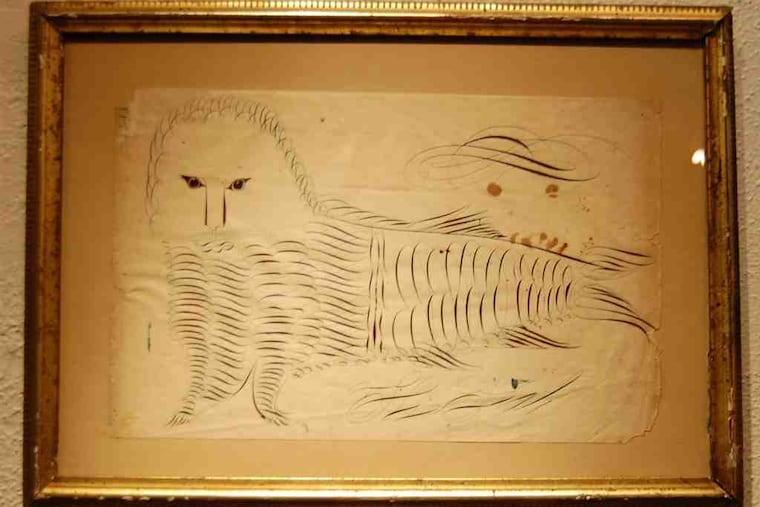
'Elie Nadelman and the Influence of Folk Art" at Lancaster's Demuth Museum is a 50-piece display that creates its own environment, at once unfamiliar and inviting, to some extent reshaping the exhibition space. Several of the more remarkable works on view, among both Nadelman's modernist sculptures and examples of the old folk art he collected in his lifetime (1882-1946), are genuine touchstones for quality in American art.
That's quite apart from the considerable impact folk art had on Nadelman's work, as demonstrated in this first-ever show of both his work and its influences.
The Demuth Museum is a perfect location for the show for two reasons. First, Nadelman and his wife, Viola, who acquired 70,000 folk art pieces and in 1926 opened America's first folk art museum on their estate in Riverdale, N.Y., collected chiefly along the East Coast and between Vermont and Budapest. But they did some of their most intensive searching in Lancaster County. And second, Anne M. Lampe, who worked on the 2003 Elie Nadelman retrospective show at New York's Whitney Museum of American Art, became executive director of the Demuth five years ago, and a year later began planning this exhibit.
This small institution, which since 2005 has doubled its attendance to 10,000 a year, is located in the former home of modernist painter Charles Demuth - another nice fit, because both Demuth and Nadelman used to exhibit at Alfred Stieglitz's "291" Gallery in New York.
The Polish-born sculptor had been accepted in the Paris art world before settling in New York in 1914; early collectors of his work had included cosmetics magnate Helena Rubinstein, and he quickly established himself. But folk-art collecting soon intervened, drawing him into a deeper understanding of American culture and occupying much of his time. He would later say he thought such collecting his greatest achievement.
Hard hit by the financial crash of 1929, the Nadelmans lost everything and their collection was dispersed. Abby Aldrich Rockefeller bought some of it, while her son Nelson acquired numerous works by Nadelman himself.
During his reclusive last years, Nadelman was inspired to make hundreds of small sculptures of papier-maché, believing they'd be more financially accessible to the public; he doubtless was inspired by the great popularity of low-priced Lancaster County chalkware folk art.
A small jewel of a show.
Find me a find
Ever want to be a patron of the arts, even in a modest way? If so, Main Line Art Center wants to hear from you. Its new program "C3: Create, Connect, Collect" brings would-be collectors together with 39 participating regional artists. Object: Matching the desires of the former with the skills of the latter to produce a commission for the artist. Salons in living rooms or at the center explain the commissioning process, which looks ahead to an autumn 2011 curated exhibition of the resulting new artworks. That show will launch the center's 75th-anniversary celebration.
Seventeen salons have taken place, and at least two dozen more will enable interested people to "connect" with the artist they select. Presumably the center could "grow" that list of professional artists if the event draws an avalanche of responses.
Single individuals or couples are invited to host a salon for themselves and interested friends. Phone the art center to request an explanatory visit by executive director Judy Herman.
Water world
Steph Roberts of Chicago, who paints nothing but divers, deals ably and naturalistically with these human subjects in oil at Manayunk's White Stone Gallery. She also zeroes in on the way divers work with and against gravity as they fall through space with grace and precision.
And because divers' willpower is exerted in the context of natural forces they cannot control, human will and the divine interact. Struggle, surrender, and destiny are some of the show's themes, at this gallery specializing in religious art.