New Recordings
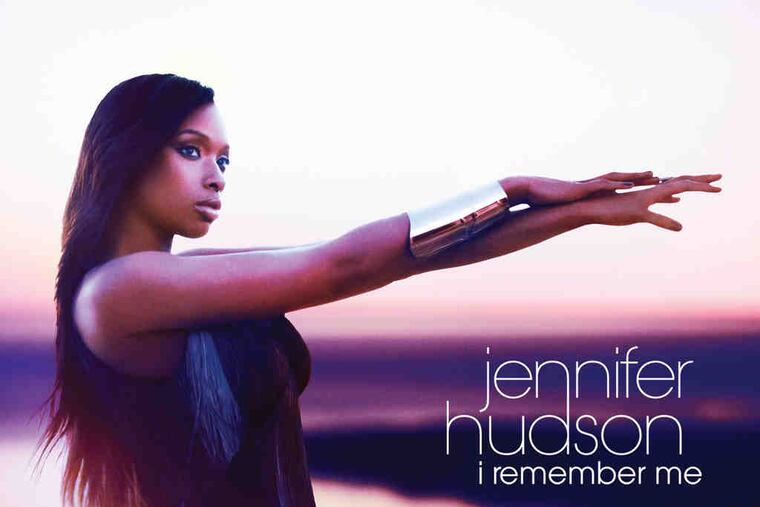
Pop Jennifer Hudson knows how to live. She turned her loss on American Idol into Oscars and Grammys for her debuts in film and music. She won roles in the hit Sex in the City flick, a successful Weight Watchers ad campaign, and as Winnie Mandela in a coming biopic. She has a man and a baby. Things are good. Joyful, even. That ebullience practically springs from Hudson's pipes and radiates through even the few lackluster moments on her sophomore effort, I Remember Me.
Pop
I Remember Me
(Arista ***)
nolead ends Jennifer Hudson knows how to live. She turned her loss on American Idol into Oscars and Grammys for her debuts in film and music. She won roles in the hit Sex in the City flick, a successful Weight Watchers ad campaign, and as Winnie Mandela in a coming biopic. She has a man and a baby. Things are good. Joyful, even. That ebullience practically springs from Hudson's pipes and radiates through even the few lackluster moments on her sophomore effort, I Remember Me.
On a CD recorded (thankfully) with less production frippery than her first album, the powerful vocalist has just enough attitude and theatricality to express the dry humor of R. Kelly's "Where You At." She's never too cold or too hot as her rich alto saunters through the cocksure "I Got This" and the forlorn "Gone," with occasional gruff huskiness in her voice. The sole misstep is "Feeling Good," a Nina Simone classic, in which the bluesy track's arrangement is somewhat formless for Hudson's formidable presentation. Still, she sounds dynamic. That's living.
- A.D. Amorosi
nolead begins The Baseball Project
nolead ends nolead begins Volume 2: High and Inside
nolead ends nolead begins (Yep Roc ****)
nolead ends Three years after the fantastic Volume 1: Frozen Ropes and Dying Quails, rockers and hardball junkies Steve Wynn, Scott McCaughey, Peter Buck, and Linda Pitmon are back with another set that shows they've lost nothing off their fastball.
The pattern is pretty much the same: Writing from their boomer perspective, main tunesmiths Wynn and McCaughey mix bittersweet reveries about flawed and/or tragic heroes such as Mark Fidrych, Bill Buckner, and Tony Conigliaro with more lighthearted fare - sharp-witted and insanely catchy numbers including "Panda and the Freak" and "The Straw That Stirs the Drink." (If you don't know who those two songs are about, you're probably not interested in this album.) And this time out, the quartet is joined by Craig Finn, singer of the Hold Steady and a Twin Cities native, who goes to bat for his beloved Twins with a plea: "Don't Call Them Twinkies."
(Unfortunately for Phillies fans, the album does not include "30 Doc." OK, the Baseball Project's prediction of 30 wins for Roy Halladay last season didn't come true, but you can still hear the song at http://sports.espn.go.com/ espn/thelife/news/story?id= 5178149.)
- Nick Cristiano
nolead begins Avril Lavigne
nolead ends nolead begins Goodbye Lullaby
nolead ends nolead begins (RCA **1/2)
nolead ends It's not easy for a skater/punk/mall rat to mature with grace. Singer-songwriter Avril Lavigne can attest to that. Since her first ripsnorting CD, she's played the hard-pop princess, the contemplative Hot Topic Goth, and the cool, fawning doe. At each stop, Lavigne used cocksure melody and age-appropriate lyrical grappling as her guide.
This time, Lavigne's reflections get the best of her, mulling as she does her divorce from Sum 41's Deryck Whibley with a moping, emotional display that seems more like limp affectation than anything else. She can't make angst work for her, in words or music. Weirder still is that Whibley produced the lamest cuts on Lullaby. The saccharine balladry of "Everybody Hurts" is guaranteed to give you a sinus headache.
What works is when glossy hit-making mixer/songwriter Max Martin teams with Lavigne for the potent likes of the Farfisa-filled "What the Hell" and the catty, bratty "Smile." Lavigne may not do a whole lot of grinning on those cuts, even when Martin boosts the bass and lifts Goodbye Lullabye's energies. But it's better to look good than to feel good in pop. Cheer up, A.
- A.D. Amorosi
nolead begins Raekwon
nolead ends nolead begins Shaolin vs. Wu-Tang
nolead ends nolead begins (Ice H2O/EMI ***)
nolead ends As evidenced by 2009's decade-in-the-making Only Built 4 Cuban Linx . . . Pt. II, the new Raekwon is the old Raekwon. We're not complaining. Striking while the iron is hot, the Wu-Tang torch bearer returns with Shaolin vs. Wu-Tang, his second album in less than two years and fifth solo effort overall.
While not as hypnotic as Cuban or as urgent as Ghostface's recent Apollo Kids, Shaolin vs. Wu-Tang creates a world unto itself, one in which cinematic drug dealers watch kung fu flicks and move to the sound of Ennio Morricone. Drum snaps become swollen with horns and strings, and a two-minute track ("Crane Style," "The Scroll") can make every second count. In Raekwon's vision, street life is both dangerous and alluring, and no detail is too small to include.
- Michael Pollock
nolead begins Edwyn Collins
nolead ends nolead begins Losing Sleep
nolead ends nolead begins (Heavenly ***)
nolead ends Stateside, Edwyn Collins is best known for his 1994 hit "A Girl Like You," but in the United Kingdom, he is a beloved elder statesman. In the '80s, Collins led Glasgow's Orange Juice (check last year's comprehensive collection, Coals to Newcastle), and he's had a strong solo career - interrupted in 2005 when he had a cerebral hemorrhage that required brain surgery. Losing Sleep, his comeback album, brought out a host of acolytes who play on the album and cowrote songs, including Johnny Marr and members of Franz Ferdinand, the Cribs, and the Drums.
The album is full of swinging Northern Soul/Motown-inflected rock and has flashes of Collins' mordant wit. Several needlessly repetitive songs keep it from being an unqualified success, but the best - including all of those written by Collins alone - are excellent. "Somehow, somewhere, I'm looking forward/I know I'm going to be fine," Collins sings in the swinging, soulful "Humble." That's cause for celebration.
- Steve Klinge
Country/Roots
Stronger
(RCA Nashville ***1/2)
nolead ends Over the last half-decade, Sara Evans has become known for more than her hit-making. She appeared on Dancing With the Stars and went through a made-for-the-tabloids divorce.
Stronger lives up to its title in the sense that it largely reverses Evans' slide into country-pop mediocrity after a promising start as a torchy, tradition-minded country singer. There's still some country pop, to be sure, but it never gets too fluffy. Overall, the set takes Evans back toward country - it's telling that the album concludes with a bluegrass take on her chart-topping "Born to Fly" - and in some cases the arrangements outshine subpar songs ("Ticket to Ride," "Wildfire").
At the heart of the album are such ballads as the hit single "A Little Bit Stronger," "Alone," and "What That Drink Cost Me." They wed substantial material to tasteful, glitz-free accompaniment that complements the emotional power of a strong-voiced singer again fulfilling her potential.
- Nick Cristiano
Jazz
Tirtha
(ACTmusic)***
nolead ends Pianist Vijay Iyer and his South Indian trio - electric guitarist Prasanna and tabla player Nitin Mitta - veer more toward the Indian side of the leader's Indo-American influences here. Even the title describes a place of pilgrimage for one to reach Nirvana.
These nine originals still contain traces of East and West. No doubt the amalgam will infuriate purists in both camps. Iyer, who has worked with Steve Coleman of the M-Base Collective, carries that questing jazz vibe here.
But present, too, are introspective moments and hypnotic rhythms that massage consciousness and suggest new definitions of coolness. The liquid sounds of the tabla maintain the Indian presence, especially on the gracious "Entropy and Time," while Prasanna's guitar holds a curious passport to dip into either culture.
Iyer, who studied math and physics, projects a certain coldness at times. Yet the music softens and remains hard to classify. His trio covers largely new terrain for jazz.
- Karl Stark