Los Tigres del Norte's tunes connect fans to Mexican roots
In their belated Philadelphia debut Saturday, Los Tigres del Norte - the multiple Grammy-winning top act in "Mexican Regional Music" for decades - delivered more than two hours of hits to a teeming Starlight Ballroom. Even given the event's fasc
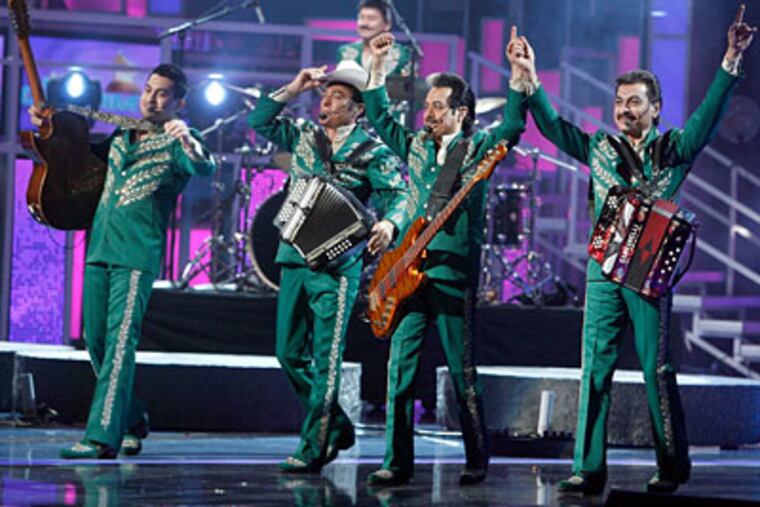
In their belated Philadelphia debut Saturday, Los Tigres del Norte - the multiple Grammy-winning top act in "Mexican Regional Music" for decades - delivered more than two hours of hits to a teeming Starlight Ballroom. Even given the event's fascinating cultural, socioeconomic aspects - coinciding with Mexican Independence Day festivities; a historic concert shockingly unlisted in English- or Spanish-language press; advertised only by poster and limited radio spots - any review must focus on the obvious: their music.
The sweet, lilting strains and periodic sharp accents of the button accordion dominate, wielded by "Tigers of the North" leader Jorge Hernández. Pushed along by an acoustic/electric bass-heavy, polkalike beat, Tigres tunes sound timelessly undiluted even as they have evolved. And the truly binational quintet - San Jose-based since its members moved up from Sinaloa in the late '60s - continue to produce exemplary Mexican "roots" music. (They were just nominated for two Latin Grammys for this year's MTV Unplugged: Los Tigres del Norte and Friends CD, which features guests such as Juanes, Paulina Rubio, Calle 13, even Rage Against the Machine's Zack de la Rocha.) Singing in nasally, warmly emotive, and incredibly compelling tenor tones, the group exhibits a defining mastery of the interrelated subgenres of norteño ("Tex-Mex"), ranchera, and their signature tale-telling "corridos."
And Los Tigres are innovators: the controversial "narco-corrido" - dramatic, detail-rich yarns about border-crossing drug-runners and corrupt government forces - is often traced to '70s Tigres smashes such as "Contrabando y traición" ("Contraband and Betrayal") and "La banda del carro rojo" ("The Red Car Gang"), both performed Saturday. The latter concerns an ill-fated excursion - "En un carro colorado/ Traían cien kilos de coca/ Iban con rumbo a Chicago" ("In a red car / Bringing in 100 kilos of cocaine/ Bound for Chicago") - where everybody dies in a shoot-out. The former recalls a couple's marijuana-smuggling trip through Tijuana to Los Angeles, where, after getting paid, betrayer Camelia shoots Emilio, disappears, and, "About the money and Camelia/ Nothing more was ever known."
Saturday, however, this band of three brothers, a cousin, and Hernandez family friend Oscar Lara (with his creatively rolling drum-fills) connected most with the rapt, nearly 100 percent Mexican audience via reality - with tunes such as their brilliant "Jaula de oro," where the gain of migrating north is balanced by fretful, illegal status: "Although the cage is golden/ That doesn't stop it/ From being/ A prison . . ."