Ask Dr. H: Apple a day can keep stroke away
Question: Besides watching salt in my diet, are there any foods I can eat that can help reduce my blood pressure and risk of stroke?
Question: Besides watching salt in my diet, are there any foods I can eat that can help reduce my blood pressure and risk of stroke?
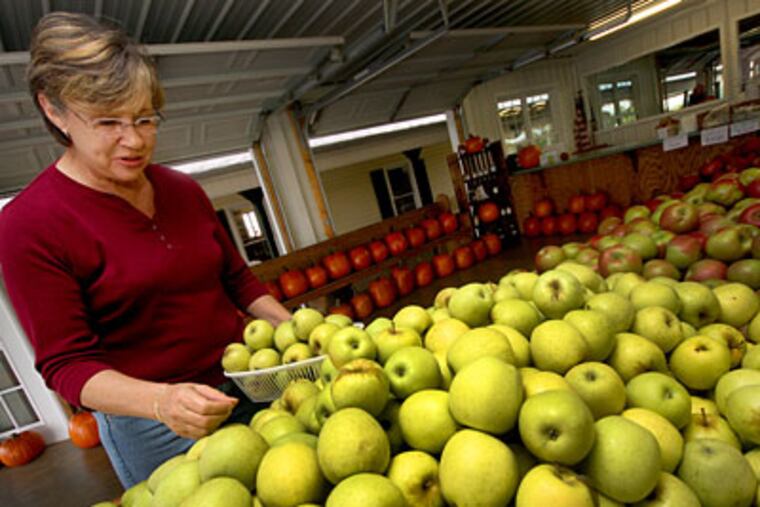
Answer: An apple a day really can keep the doctor away - at least when it comes to strokes. Eating fruit with white edible portions, such as apples and pears, can reduce the risk of stroke by 52 percent, according to researchers from Wageningen University in the Netherlands. Their 10-year study involved 20,069 adults, average age 41. None of the participants had cardiovascular disease at the onset. The researchers documented 233 strokes during the 10-year follow-up period.
They found that although stroke incidence was not affected by the consumption of orange/yellow fruits like oranges or grapefruit or red/purple fruits/veggies, they found that a high intake of white fruits and vegetables like apples, pears, cauliflower, banana, and cucumber was associated with a 52 percent lower risk of stroke. Potatoes are not part of this white veggie group. There was a 9 percent reduced risk of stroke for every 25-gram increase in daily white fruits/veggies. (An average apple weighs about 100 grams.)
While there's no definite explanation for their findings, pears and apples are rich in quercetin, a bioflavonoid (antioxidant), as well as dietary fiber. Also, consuming more potassium (found in bananas, orange juice, and tomatoes) may help lower blood pressure and regulate heart rhythm, which may, in turn, lower stroke risk.
Q: What is the difference between vertebroplasty and kyphoplasty? Do you recommend either of these procedures? My mother has bad osteoporosis and recently broke two vertebrae in her back, and I'm wondering if they might help.
A: Both are minimally invasive procedures to fuse and repair broken vertebral (spinal) bones using special cement. The intent is to provide rapid and dramatic pain relief and restore function in the setting of a recent vertebral fracture. In fact, just one hour after the procedure, a treated patient can walk. While vertebroplasty involves injection of the cement into the fractured area, kyphoplasty uses a special balloon to prop up the collapsed area of spine before filling in the deformed area with cement. Neither procedure is appropriate for a herniated disk or for a healed (chronic) vertebral fracture.
Here's the problem: While initial reports showed vertebroplasty lessens pain and restores function, neither of the two randomized trials found that vertebroplasty worked any better than sham or "dummy" surgery. In contrast, kyphoplasty has data showing effectiveness in the acute setting of collapsed vertebrae due to osteoporosis. Kyphoplasty's use of a balloon to restore the shape of the collapsed spine seems to provide treatment benefits. At least 75 percent of folks who receive kyphoplasty describe almost immediate relief of pain from their compression fracture.