Salute to Sister Tharpe
IF SISTER Rosetta Tharpe was with us today, she'd probably be humming one of her biggest gospel rockin' hits, "Strange Things Happening Every Day."
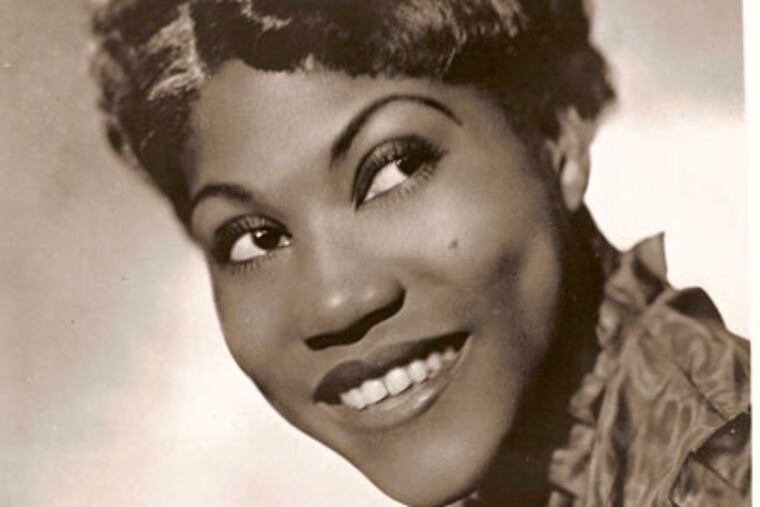
IF SISTER Rosetta Tharpe was with us today, she'd probably be humming one of her biggest gospel rockin' hits, "Strange Things Happening Every Day."
Until just a few years ago, you couldn't even find Tharpe's grave in Norwood Cemetery because the singer/guitarist died so poor (in 1973) and in such relative obscurity that there was no money - or rallying fans - to buy her a tombstone. But this afternoon, some of the folks who've helped shed new light on her important legacy will gather for a ceremony outside the Master Street home in North Philadelphia where Tharpe spent her final 16 years.
And tonight at 7:30, the Central Library hosts a free screening of the recent BBC documentary celebrating "The Godmother of Rock 'N' Roll: Sister Rosetta Tharpe."
The core reason for this afternoon's gathering is the official unveiling of a marker placed outside her home by the Pennsylvania Historical and Museum Commission, with comments by project coordinator Karen Galle and Beth Warshaw-Duncan of Girls Rock Philly, a music-education program that raised money for the installation. Attendees (you're invited!) also will enjoy insights from: Ira Tucker Jr. of the Dixie Hummingbirds, another Philadelphia gospel institution that often toured with Tharpe; Mark Carpentieri of M.C. Records, which issued a terrific all-star tribute album to the singer in 2003; and George Washington University professor Gayle Wald, author of a Tharpe biography (now out in paperback) that, like the tribute album, bears the rousing title Shout, Sister, Shout! That was another of Tharpe's hits and encapsulated what she was all about - a gospel singer who lived and breathed emancipation and unbridled joy, regardless of the consequences.
There'll also be some live music ringing outside Tharpe's old stomping grounds, performed appropriately by Monnette Sudler. She's another fine Philadelphia-based guitarist who's fought the odds and had her share of ups and downs.
Tharpe was a true pioneer, a sanctified, second-generation gospel singer with a flamboyant delivery and glamorous look, performing in stylish gowns and high heels instead of the requisite choir robes. Add in her equally strong guitar playing, which flirted with blues and swing styles, and it wasn't long into her adult career before Tharpe was asked to make records.
She signed with Decca in 1938, scored hits with Thomas Dorsey's "Rock Me" and "This Train" and soon was playing with the bands of secular stars like Lucky Millinder, Cab Calloway and Benny Goodman. During World War II, Tharpe was one of just two black gospel acts invited to record V-Discs for soldiers overseas.
Her initial 1944 collaboration with boogie-woogie pianist Sammy Price, the aforementioned "Strange Things," was the first gospel song to make Billboard's Harlem Hit Parade and is credited by some as the "first rock 'n' roll record."
In the 1950s, Tharpe was rejected by many church folk for the sin of recording too many sexy blues tunes and performing in nightclubs where alcohol was served. (Outreaching gospel artists today, from Blind Boys of Alabama to Robert Randolph, have it a bit easier, but not much.) There was also a lot of rumor mongering about her relationship with Marie Knight, another sanctified shouter with whom Tharpe recorded the hit "Up Above My Head."
Yet Tharpe continued to find favor touring Europe on folk and blues showcases - some filmed for posterity, fortunately. Princeton, N.J.-born record producer Joe Boyd, who road-managed one of those early '60s tours, said Tharpe had "a sparkle and sophistication unlike any of the others" on the caravan, which also included Muddy Waters and the Rev. Gary Davis.
Clearly, this innovator inspired many other gospel-rooted talents to cross over. Numbering among Tharpe's most vocal devotees in their formative performing days were Elvis Presley, Little Richard, Johnny Cash and Aretha Franklin. More recently, her rock 'em, sock 'em ways have been celebrated by Bonnie Raitt and Michelle Shocked.
Born in Cotton Plant, Ark., this talent first performed at age 4 with her mom in tent revivals as "Little Rosetta Nubin, the singing and guitar-playing miracle."
Tharpe landed in Philadelphia in 1957, taking up residence in the then new Yorktown neighborhood and joining Bright Hope Baptist Church, a few years after her third marriage to manager Russell Morrison. (The couple's 1951 wedding ceremony, folded in with a Tharpe concert, had attracted 25,000 paying guests to a stadium in Washington.)
Here she suffered declining health, lost a leg to diabetes, but was on the eve of recording another album when she died in 1973.
Twenty-four years later, Tharpe was posthumously inducted into the Blues Hall of Fame. In 2008, a benefit concert finally raised the money to place a stone at her grave.