A look back at FDR's presidency
Campaigning in Pittsburgh in 1932, Democratic presidential candidate Franklin Delano Roosevelt attacked the profligacy of President Herbert Hoover's four years of deficit spending and pledged to "reduce the cost of current federal government operations by 25 percent."
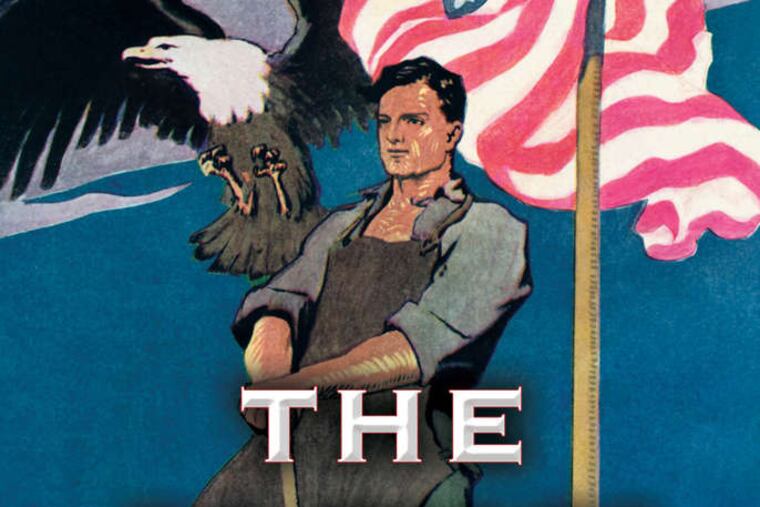
A Modern History
By Michael Hiltzik
Free Press. 497 pp. $30
nolead ends nolead begins
Reviewed by Leonard Boasberg
Campaigning in Pittsburgh in 1932, Democratic presidential candidate Franklin Delano Roosevelt attacked the profligacy of President Herbert Hoover's four years of deficit spending and pledged to "reduce the cost of current federal government operations by 25 percent."
Four years later, preparing to return to Pittsburgh in his campaign for reelection, Roosevelt asked his speech writer, Sam Rosenman, to work up "a good and convincing explanation" for the earlier speech. Rosenman reported back that the only thing he could say about the speech was "to deny categorically that you ever made it."
Before taking office, Roosevelt went along with the conventional economic wisdom of the time (resurrected in the current recession by the Republican Party), Michael Hiltzik points out in The New Deal. That was the belief that cutting federal spending was the key to restoring confidence in the government's credit and credibility. It took Roosevelt a long time to accept the Keynesian doctrine that government must prime the pump to compensate for the lack of private investment.
One of the myths about the New Deal, Hiltzik writes, is that Roosevelt entered the White House with a plan to spend money to extricate us from the worst economic crisis in American history. Not so. Another, related myth is that Roosevelt brought with him a fully conceived political and economic plan. Also not so. As one participant observed, New Deal initiatives were "highly experimental, improvised, and inconsistent."
By 1932, when the Democrats ousted Hoover's Republican administration, the nation was in terrible shape, much worse than today. Rampant speculation, the housing boom, and the lack of regulation under the Republican administrations of the 1920s ended with the Great Crash of 1929. By 1932, nearly a quarter of American workers were unemployed. Banks were failing all over the country. Civil unrest stirred in the farm belt. Bankers appeared at farm foreclosures at their peril. A thousand people a day were losing their homes in Roosevelt's first year in the White House. Many moved to makeshift villages that came to be called Hoovervilles.
One of the first things Roosevelt did was to rescue the banks. And, to the dismay of bankers and bondholders, he took the country off the gold standard.
While repeal of Prohibition was on its way to ratification by the states, Roosevelt called on Congress to modify the enabling Volstead Act, which it did with alacrity. At last, Americans could hoist a beer without breaking the law.
Then the New Deal set about putting people to work, first with the Civilian Conservation Corps, bringing thousands of unemployed young men to work in forests and national parks. Later would come the Public Works Administration, the Works Progress Administration, and the Tennessee Valley Authority, which would transform a backwoods region into a land of plenty.
FDR at first had his doubts about Social Security, but he came around under the incessant pressure of his modest but determined secretary of labor, Frances Perkins. "We put those payroll contributions in there" so that "no damn politician can ever scrap my social security program," he later told an interviewer.
(The one Democratic senator who voted no, A. Harry Moore of New Jersey, explained: "It will take the romance out of old age.")
In a pattern that would be repeated 75 years later, big business, having been rescued by the New Deal, denounced it for being antibusiness, for "socialism," and for engaging in "class warfare."
Roosevelt returned the hostile fire with his characteristic zest. "Never before in all our history have these [reactionary] forces been so united against one candidate," he said in a campaign speech in 1936. ". . . They are unanimous in their hate for me - and I welcome their hatred. I should like to have it said of my first administration that in it, the forces of selfishness and of lust for power met their match. I should like to have it said of my second administration that in it, these forces met their master."
It didn't quite work out that way. Following his landslide victory in 1936, FDR, infuriated by a reactionary Supreme Court that had struck down one New Deal measure after another, called on Congress to increase the number of justices to permit the appointment of men "in tune with the spirit of the age." The "court-packing plan" turned out to be a monstrous blunder. FDR compounded it in 1938 when he failed to defeat senators who had killed the plan.
In The New Deal, Hiltzik, a Pulitzer Prize-winning journalist for the Los Angeles Times, gives us an admirable chronicle of the successes and failures of Roosevelt's transformative domestic program. He limns its squabbling cast of characters and the demagogues such as Louisiana governor and U.S. Senator Huey Long and the radio priest Father Charles Coughlin, whose successors live on today.
The New Dealers, Hiltzik writes, did not think of government as the enemy of liberty but rather as an instrument to be used for the common good. The legacy of the New Deal, he concludes, "lives on; that shining ideal that the American government should serve the people, all the people, and that none should be forgotten."