New Recordings
Pop In 2008, Roots drummer Ahmir "?uestlove" Thompson got into the old-soul music reclamation business with a reverential production of Memphis master Al Green on Lay It Down. On Betty Wright: The Movie, ?uestlove again gets together with a dese
Pop
Betty Wright: The Movie
(Ms. B / S-Curve ***)
nolead ends In 2008, Roots drummer Ahmir "?uestlove" Thompson got into the old-soul music reclamation business with a reverential production of Memphis master Al Green on Lay It Down. On Betty Wright: The Movie, ?uestlove again gets together with a deserving star of a previous generation who specialized in making baby-making music. In this case, it's 57-year-old Wright, best known for her '70s singles "Clean Up Woman" and "Tonight's the Night" (which gets a sequel in "Tonight Again.") This time, the timekeeper brings along his entire band, who it seems can never be busy enough, what with their nightly Jimmy Fallon gig and a new concept album of their own, Undun, due in December. The Movie aims to make sexy "grown folks music" - "I ain't no little girl, you ain't no little boy," Wright sings, while offering "a little knowledge you can't get in college." The album pretty much pledges allegiance to the drum sound and wah-wah guitar sonic signatures of Wright's original hitmaking era, but it largely avoids the nostalgia trap, not because of inconsequential drop-ins by modern men such as Snoop Dogg and Lil Wayne but because Wright's still writing fresh songs and sneakin' around and paying the price for doing wrong.
- Dan DeLuca
nolead begins Childish Gambino
nolead ends nolead begins Camp
nolead ends nolead begins (Glassnote ***1/2)
nolead ends It's not so usual that a humorous Emmy-winning scripter (30 Rock) who happens to act in a television comedy (Community) would turn out to be an awesome, smartly serious rapper, beats maker, and producer. Yet here we are with multi-hyphenate Donald Glover and his nom de hip hop, Childish Gambino, which at times is reminiscent of Kanye West in the innocent days of College Dropout. Ah, youth.
As a rapper, Childish Gambino is hard-core sharp, with slippery cadences galore ("You See Me"). More plainspoken than Kanye, Glover/Gambino goes about his autobiography on a song such as "Hold You Down" with a tart, taut flow and a world-weary lyrical sensibility as he talks about being a poor nerdy black kid before parsing the broader discussion of race. "Letter Home," too, is poignant and pertinent.
And still Gambino has time for one-liners. The siren-filled "Bonfire" is one long rap slang tease. "L.E.S." (an abbreviation for "Lower East Side") pokes ho-ho-holes in hipsters who don't know the true meaning of irony. Yet, against the song's sumptuous melancholy strings and clacking rhythms, the MC seems to be questioning the psychology of his own life choices. How hip is that?
- A.D. Amorosi
nolead begins
Drake
nolead ends nolead begins Take Care
nolead ends nolead begins (Cash Money/Young Money/Universal Republic ***1/2)
nolead ends For all his success, Drake - Degrassi grad, platinum-selling Canadian MC - doesn't seem too happy on Take Care, his star-studded second album. The Weeknd's weird production frippery, the love of good lady collaborators Nicki Minaj and Rihanna, Stevie Wonder's harmonica: Nothing cheers him. Then, again, sad-sack stature may be the baritone rhymer/crooner's master plan. "What have I learned since getting richer?/ I learned working with the negatives could make for better pictures," he raps on "HYFR."
Frank Sinatra couldn't have said it better in his Only the Lonely era. Forget about ac-cent-u-a-ting the positive. Raise a glass to the bad and the broken.
Sonically, it's slow and low, that is the tempo. Yet Take Care is opulent, expensively wrapped, and delicately cushioned with beats as fluid as pudding. Though grand pianos trill and gurgling synths swell through "Over My Dead Body," Drake can't even enjoy his night out on the hot town. "I was drinking at the Palm last night / And ended up losing everything I came with," he sing-speaks. The elongated "Marvin's Room," taped in the place Mr. Gaye recorded his divorce classic Here, My Dear, lets Drake expound woozily about the lack of real love during powerful sex on a lost weekend. Pity parties never sounded as dynamic as this.
- A.D.A.
nolead begins Kate Bush
nolead ends nolead begins 50 Words for Snow
nolead ends nolead begins (Anti)***
nolead ends Kate Bush's influence is undeniable: One can hear her in Tori Amos, Björk, Joanna Newsom, Antony Hegarty of Antony and the Johnsons, and Florence Welch of Florence + the Machine. The notoriously reclusive British auteur has been on a creative tear this year, in May releasing The Director's Cut, which reworked songs from two of her albums, and now 50 Words for Snow.
Bush has never shied from lofty aspirations - in 1977, she debuted as a teen singing from the perspective of Cathy in Wuthering Heights - and 50 Words is an ambitious, enveloping work. These seven long songs - mostly piano ballads which stretch from nearly seven minutes to more than 13 - are adrift in snow: They are fairy tales, meditations, and, in the title track, a literal list of snow descriptors. Bush's voice is truly beautiful; it's less strident than when she was young, and she brings an airy gravity to these art songs. The spell is disrupted, however, when she lets men step to the mike on three tracks. Elton John, Stephen Fry, and Andy Fairweather Low sound self-important and affected on an otherwise spellbinding album.
- Steve Klinge
Country/Roots
The McCrary Sisters
Our Journey
(McC Records ***1/2)
nolead ends The daughters of one of the founders of the great gospel quartet the Fairfield Four, the McCrary Sisters have gospel music in their blood. But if the name sounds familiar, it's probably because one or more of the four siblings have sung with everyone from Elvis, Bob Dylan, and Johnny Cash to Americana stalwarts Buddy Miller and Patty Griffin (both of whom guest here).
Our Journey unites all four sisters - Ann, Regina, Alfreda, and Deborah - for their national debut together, and it's hard to imagine a better showcase for their talents.
Starting with a bluesy, Staples-like take on "Blowin' in the Wind" that breathes new life into that warhorse, the McCrarys offer a varied set of originals (one cowritten by Regina and Dylan) and covers. Horn-blaring jump-blues, smooth soul-pop, solemn piano balladry, and finger-snapping a cappella - all are imbued to some extent with gospel intensity.
"Other Side of the Blues (Since I Met You)," with guest vocalist Delbert McClinton, highlights more than anything here the link between gospel and blues. The centerpiece of the album, however, is "Know My Name," more than seven minutes of primal, unadulterated gospel with Ann and her sisters trading call-and-response vocals with guests Mike Farris and Griffin. It's the most spectacularly soul-stirring piece on a set that's full of them. - Nick Cristiano
Jazz
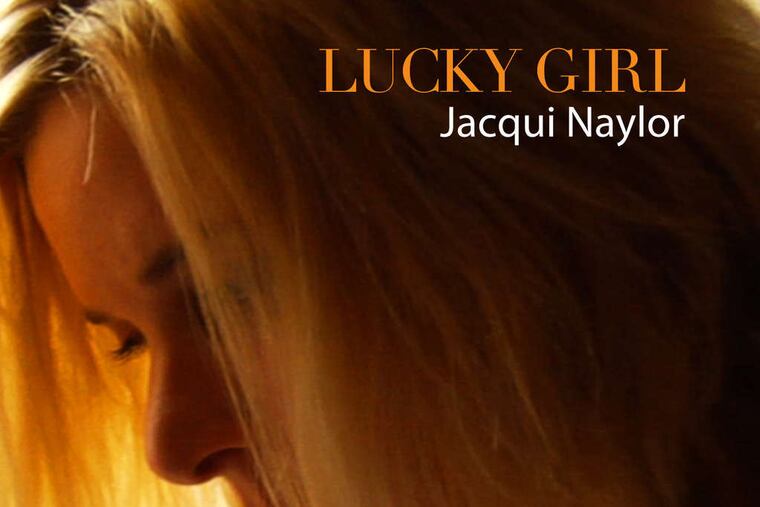
Jacqui Naylor
Lucky Girl
(Ruby Star Records ***1/2)
nolead ends Singer Jacqui Naylor scores because she ranges so widely. She dips into the Great American Songbook, but is all about tweaking those standards boldly. She reinterprets "The Surrey With the Fringe on Top" by mashing it with a lick from George Benson's "Breezin.' "
The blond California native, who last month played both Chris' Jazz Cafe in Philadelphia and Puck in Doylestown, dips into Neil Young's "Only Love Can Break Your Heart" and gets all seductive on Gamble and Huff's "Close the Door." Her take of "Moon River" is an organ-laced, soul-stirring ballad, while "Angel Eyes" gets a rare funky vibe.
Fully nine of the 15 tunes are originals. "I Promise" sounds folky, while the title track crackles with soulful sass.
- Karl Stark
Classical
Faure
Complete Chamber Music
for Strings and Piano
Renaud Capuçon, Gerard Causse, Gautier Capuçon, Nicholas Angelich, Michel Dalberto, Quartet Ebene
(Virgin Classics, five discs, ***1/2)
nolead ends nolead begins Works for Cello and Piano
nolead ends nolead begins Eric Le Sage, François Salque and Paul Meyer
nolead ends nolead begins (Alpha ****)
nolead ends nolead begins Requiem
nolead ends nolead begins Philippe Jaroussky, Matthias Goerne, Chorus and Orchestre de Paris, Paavo Jarvi conducting
nolead ends nolead begins (Virgin Classics ***1/2)
nolead ends French music doesn't get any more ecstatic than the chamber works of Gabriel Faure, which are collected in a handsome, five-disc, gift-worthy box on Virgin, played by some of the most charismatic young French musicians. There's no single performance viewpoint here. Though many like to draw Faure out of his introspective shell these days, Renaud Capuçon makes no apologies for the music's inward nature. Keyboard duties are divvied between the ever-subtle Michel Dalberto and the more technically brilliant Nicholas Angelich. The one drawback is the cool, clinical recording quality.
The other two discs have extraordinary performances, well worth hearing, but with elements that take getting used to. On the Alpha disc, pianist Eric Le Sage gives Faure a Mozartean precision but isn't afraid to build into big, sweeping climaxes. Cellist François Salque gives the cello writing the expressive detail of a great lieder singer. But in the Trio Op. 120, the usual violinist is replaced by clarinetist Paul Meyer - a fine player, though his lack of vibrato plays oddly off of the cello and creates some unpleasant blends.
The Requiem performance is wonderful as big-chorus versions go, and baritone Matthias Goerne is a huge plus. But countertenor Philippe Jaroussky replaces the usual soprano solo, and the microphone catches some distracting quirks.
- David Patrick Stearns