"Enchanted Island" an operatic romp in need of stronger musical strategy
NEW YORK - The Metropolitan Opera spent so much time and money assembling an operatic adaptation of The Tempest, you wonder why it didn't just commission a composer to write a new one. Well, Thomas Adès did that not long ago. Instead, the Met cobbled toge
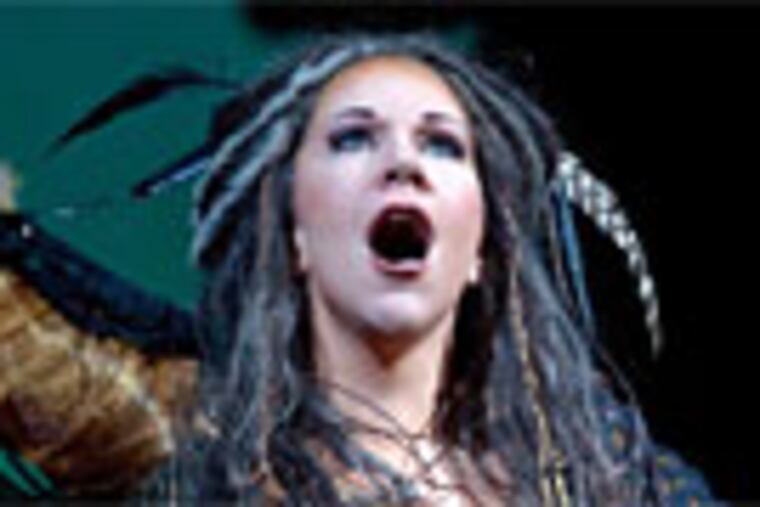
NEW YORK - The Metropolitan Opera spent so much time and money assembling an operatic adaptation of The Tempest, you wonder why it didn't just commission a composer to write a new one. Well, Thomas Adès did that not long ago. Instead, the Met cobbled together its latest premiere, The Enchanted Island, from existing arias by Handel, Vivaldi, and others - guaranteeing delivery on the operatic basics: fine, voice-friendly music; stars to sing it; and scenic effects that prompt their own ovations.
The New Year's Eve unveiling was an audience success (lots of cheering, no booing), and the Jan. 21 simulcast in movie theaters may well pull its weight, if only because the starry cast includes Joyce DiDonato, Danielle de Niese, and Plácido Domingo. Artistically, though, the piece might not find its legs until it's revised and revived. Secondary problems are numerous.
The brainchild of Met czar Peter Gelb, The Enchanted Island was mainly assembled by all-around theater artist Jeremy Sams. The Shakespeare/Dryden plot about shipwrecked aristocrats at the mercy of sorcerer Prospero is grafted onto A Midsummer Night's Dream, thus adding magic-addled lovers. The Tempest's Ariel was melded with Midsummer's Puck.
The spurned island sorceress, Sycorax, usurps much of the stage time from Prospero, who gets a bit lost halfway through. Caliban is the main source of pathos. And Neptune (not in Shakespeare) arrives periodically to express outrage. A mash-up? No. An 18th-century-style pasticcio with influence from British Christmas pantos, a vaudeville-esque tradition in which familiar plots are breezily augmented by show tunes.
So The Enchanted Island is mainly a romp - a quality underscored by the pop-up children's-book quality of the Phelim McDermott/Julian Crouch production, with one-dimensional effects exulting in their artificiality. Computerized animation by 59 Productions (from Broadway's War Horse) allowed ships to wreck convincingly.
Most emblematic, Neptune's underwater kingdom surrounds Domingo with gaggles of glitter-tossing mermaids and is heralded by Handel's "Zadok the Priest." It's maybe the grandest entrance of Domingo's career, made all the more humorous by the legendary tenor's not having a campy bone in his body.
Lyrics had moments of good anachronistic humor (example: a character asked to explain the plot replied, "How should I know? I've been stuck in a cave!"), yet some were so pedestrian as to insult the music. Aria selections hit the right emotional temperature for any given plot moment, but not always: When all is resolved with the Midsummer lovers, the music simply gets them offstage quickly. That's bound to happen with a plot overstuffed with characters.
What the piece really needs is stronger musical strategy. Though Baroque conductor William Christie maintains good Baroque style, the opera lacks an 18th-century underlying trajectory. Then, musical logic was driven by a progression of key signatures, creating a subliminal carrot-on-a-stick effect. Lacking that, The Enchanted Island's three-hour-plus length is hard to take and puts a greater burden on singers to seize attention.
Neither David Daniels (Prospero) nor Domingo was in a good vocal state to do so. But not a single uncharged nanosecond came from DiDonato as the sorceress Sycorax; her exciting, accurate vocalism was matched by her knack for flamboyant theatrics. As Ariel, de Niese revealed a great comic talent and delivered a knockout aria from Vivaldi's Griselda. Challenged by senselessly opaque makeup, Luca Pisaroni projected his character through sheer vocal charisma. Generally, singing was best when musical priorities were dictated by projection of the English text, not vocal pyrotechnics, even when the words had little to say.