Coltrane: His own jazz, with a nod to his heritage
Given his monumental place in the jazz pantheon, it simply isn't possible to pick up a tenor saxophone without stepping into the shadow of John Coltrane. How much greater must the pressure be, then, when you share not only his instrument but also his last name?
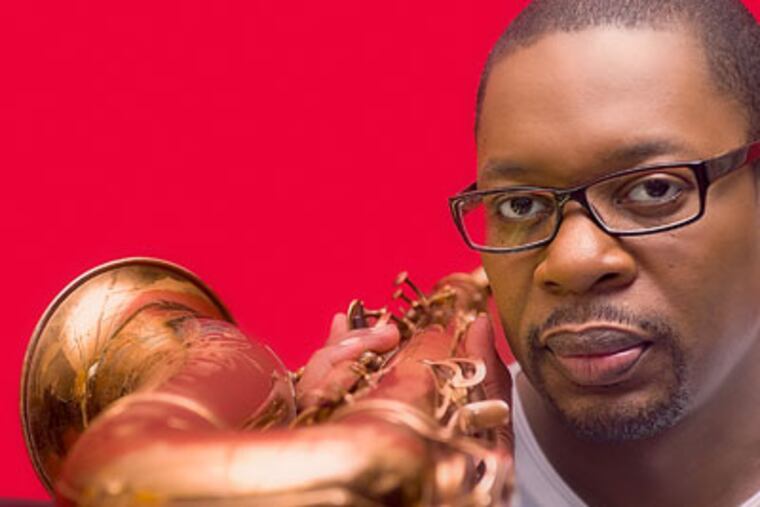
Given his monumental place in the jazz pantheon, it simply isn't possible to pick up a tenor saxophone without stepping into the shadow of John Coltrane. How much greater must the pressure be, then, when you share not only his instrument but also his last name?
Ravi Coltrane has admirably avoided such outsize expectations by simply following his own muse. He doesn't ignore his heritage. His set list often includes tunes by father John or mother Alice (herself a pioneering pianist). But neither does he slavishly follow the well-worn path laid by his father, content to develop his own voice within a narrowly circumscribed aesthetic born of the post-bop 1960s.
His two nearly hour-long sets at the Annenberg Center's Zellerbach Theater on Saturday night showed that Ravi Coltrane has evolved a bright, warm tone that pours from his instrument with a lucidity of expression, often with a molten intensity not devoid of a certain family resemblance.
Over the course of the long evening, however, those torrents began to feel somewhat repetitive, turning similar corners from piece to piece. This became clearest during the first half on Ravi Coltrane's own "Prelude," during which the haunting, rubato theme gave way to unaccompanied solos by each band member. Most of the quintet responded with spare, restrained statements; the bandleader unleashed yet another rapid-fire volley.
Coltrane shared the front line with undersung trumpeter Ralph Alessi, who made stunning use of space with quick, strangled bursts on the opener, "Marilyn and Tammy." But it was the rhythm section that stole the spotlight. Veteran bassist Robert Hurst, who served a long stint in the house band for The Tonight Show With Jay Leno, dug deeply into each groove with his robust, woody sound. Karriem Riggins, a drummer equally at home in hip-hop and jazz, maintained a taut, compact foundation free of pyrotechnics.
Cuban-born pianist David Virelles brought something wholly other to the ensemble, a stark, angular approach that tethered the quintet to the European avant-garde. Each solo found him taking an introspective turn into a barbed landscape, his lines tangling into wiry snarls. He even managed to make the famously jagged Thelonious Monk even more barbed on Monk's classic "Epistrophy," fracturing the melody into sonic shards.