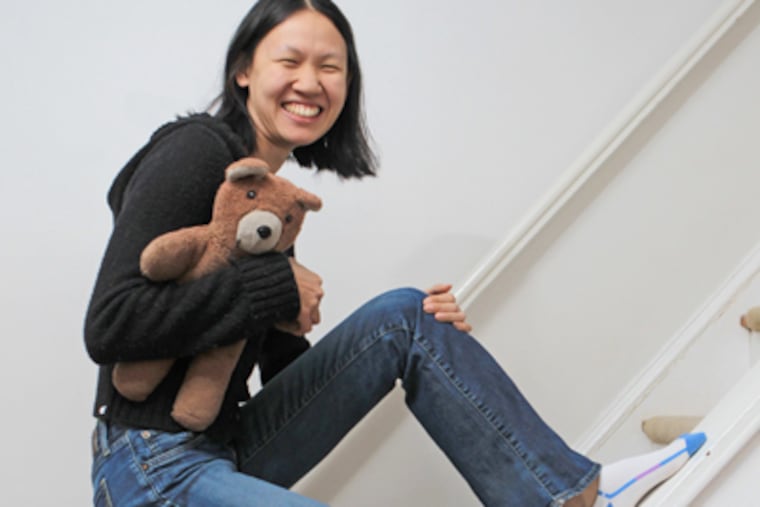
In the world of Chinese adoption, Sarah Mitteldorf stands at the edge of the known universe.
She came first - or among the very first, landing in the United States as a baby in early 1986. That was five years before the People's Republic loosened its laws to allow foreign adoption, and a decade before it began sending children here in large numbers.
She has always been an outlier.
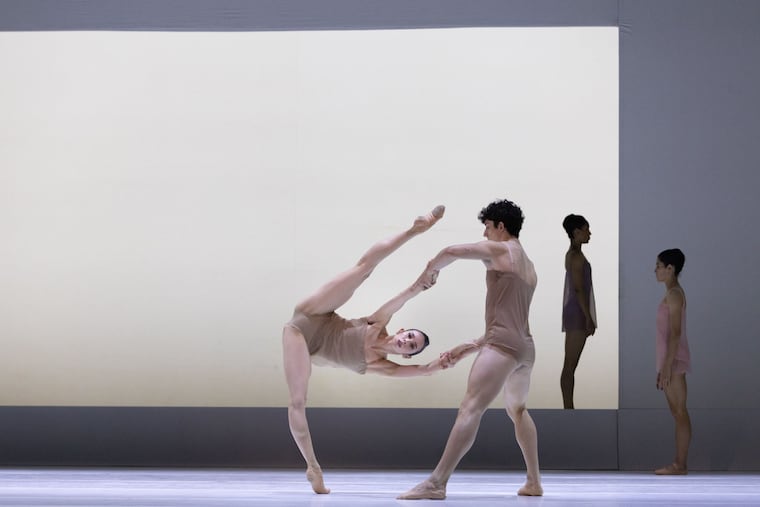
Now, at 26, Mitteldorf is pushing that frontier further, creating one of the first serious works of art by a Chinese adoptee that is based on the Chinese adoption experience - a theater performance that promises to be by turns probing, funny, and searing.
"It's time," said Mitteldorf, of Mount Airy, who is currently directing a festival play in New York City. "I'm finally ready. But I'm still terrified."
More than 81,000 Chinese children, almost all of them girls, have been adopted to the United States during the last two decades. Researchers and parents have wondered how those girls would interpret their hard beginnings - often abandoned at birth because of their gender, swept into state orphanages, then spirited across the sea to new homes in white families. They wondered if the girls would explore the duality of their lives, not just in the high school poetry or pastel self-portraits that have begun to emerge, but in major pieces of sculpture, painting, dance, and music.
In Mitteldorf, they have the beginnings of an answer.
Her resolve to create the work crystalized when she attended a screening of the documentary Wo Ai Ni Mommy, which translates to I Love You Mommy, about the adoption of an 8-year-old girl. The audience discussion was dominated by advocates, professionals and parents, and while all were sincere and caring people, one voice was missing: the adoptees.
What is Mitteldorf's play about? Right now it exists mostly as an idea, "a personal investigation" to "explain to people that I fit between racial identities."
Some key themes:
The complexity of transracial adoption. The loss of birth parents. The gulf between Chinese adoptees and Chinese Americans. It's likely to dissect a big, discomfiting topic: Can you and your parents experience the same family life but have disparate views of what it was like for you?
"That's something as adoptive parents we all sort of fear - what if I'm not good enough?" said Sarah Davies, president of the Delaware Valley chapter of Families With Children From China. "Her perception of her story might be different than mine."

Today, with Chinese products dominating American markets and flights to Beijing departing daily, it's hard to imagine the extent of China's isolation in 1985. Few people outside the big cities had ever seen anything as exotic as a live American.
Into that China went Alice Ballard and Josh Mitteldorf.
Adoption agencies had tried to steer them to South Korean programs, but Josh resisted. He had lived in Taiwan as a student and learned to speak Mandarin. If they were going to adopt from Asia, why not China?
The answer: It was impossible.
China's laws generally allowed adoption only by domestic or overseas Chinese. Prospective parents had to apply through their local danwei, or work unit, the entity that controlled virtually every aspect of Chinese life.
Plainly the American couple had no danwei. But they did have two advantages.
One was their unshakable belief that they could somehow adopt from China. Alice, as a lawyer, was used to handling complex situations, while Josh's language skills permitted nuanced talks with Chinese officials. Second, they had the crucial help of a close friend, a Chinese woman living in the United States.
At the time, and to a lesser extent now, people in China depended on personal connections known as guanxi, a sort of economy of favors. The Chinese friend transferred the favors she was owed to Ballard and Mitteldorf.
"We got off the plane, and there were people there to help us, well-connected in the Communist Party, who felt they owed us a favor," Josh said.
A baby had been identified, living in a community home in the town of Jingjiang, north of Shanghai. Rounds of document signings followed.
The couple brought Sarah home in January 1986. A second daughter, Maddy, followed three years later.
In 1991, China made it easier for foreigners to adopt, and soon waves of 3,000 to 4,000 children were arriving here each year. When adoptions from China peaked at 7,903 in 2005, Sarah was already in college.
Mitteldorf is on the run, bouncing between Philadelphia and New York, where she's directing Nobody But Somebody in the Strawberry One-Act Festival. She's been nominated there for best director.
She previously cowrote and directed two works in the Philly Fringe Festival: Eurydice in Market East, where a woman ends up dead - twice - and Spill, in which dancers express emotion through extreme contortions.
"She has such an original voice," said Ashley Alter, who works in arts education for several Philadelphia theater groups. "She melds text and movement together in a way that's unique - it's beyond body language."
And beyond surprising. Because Mitteldorf never planned to go into theater. Her degree from Reed College was in linguistics and literature.
Growing up, she was more musical than artsy, immersed in violin, the Temple University Children's Choir, and a passion for Irish step dancing that eventually led her to competitions in Ireland. She was fascinated by China - and her parents made sure Sarah and Maddy knew their birth culture, even opening their home to a Chinese family. Sarah learned to speak Mandarin at Concordia Language Villages in Minnesota and spent her junior year of high school in Beijing.
"I took pride in China," Mitteldorf said. "But I don't think I understood this sense of being special was also a sense of being different."
Her mother saw how others sometimes viewed Sarah.
"People think they know something about her by looking at her - that's what racism is all about," Ballard said.
In college, Mitteldorf considered becoming an English teacher, because she loved the flow and mystery of language. But when she experimented with a couple of directing classes, it felt like coming home. After graduation, she worked a million part-time jobs - sales clerk, counter server, tutor - so she could take low-pay or no-pay theater positions.
She's cleared a hurdle for her new project: Families With Children From China agreed to be her official "change partner," which lets her apply for a grant from the Leeway Foundation. Her plan is to use the summer to raise money and gather a collaborative group of adoptees, the fall to write the script, and finally, next spring, to stage the finished production.
Mitteldorf isn't the first adoptee to inspect her life through art. But the China experience differs from others:
The numbers are gigantic. The children are almost all the same gender. And generally they've grown up knowing kids like themselves.
"People have been waiting to see what Chinese adoptees are going to do," said Amanda Baden, a New York psychologist who specializes in adoption. "Art can provide a language that's largely internal: 'That's the thing I've been feeling for so long.' "
Mitteldorf is determined to bring her play to the stage, even if she has to "bake-sale it into existence."
"We can talk about things in theater that are difficult to articulate - you have the words, the images, the structure," she said. "I'm excited to have the big questions, and have a tool to explore those questions."
Contact Jeff Gammage at 215-854-2415, jgammage@phillynews.com, or on Twitter @JeffGammage.