He exposed atrocities but was hanged for treason
When Sir Roger Casement visited the United States in 1914, he was, as Mario Vargas Llosa puts it in The Dream of the Celt, "the most famous Irishman in the world."
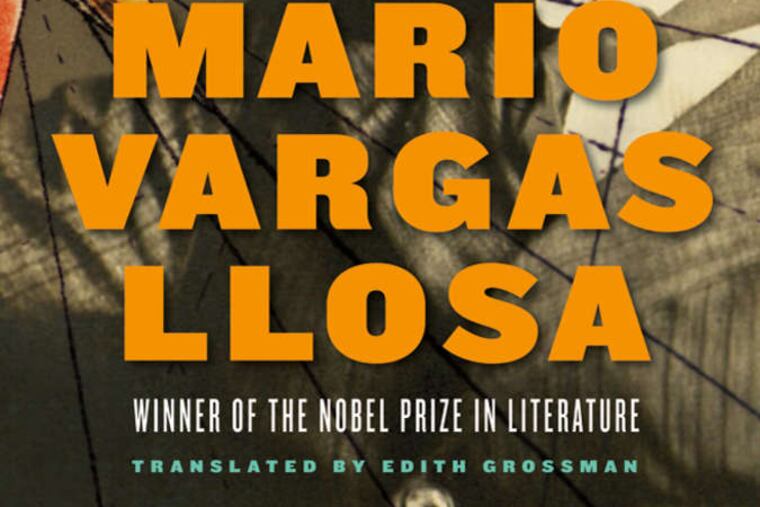
By Mario Vargas Llosa
Translated from the Spanish
by Edith Grossman
Farrar, Straus & Giroux.
358 pp. $27
nolead ends nolead begins
Reviewed by Frank Wilson
When Sir Roger Casement visited the United States in 1914, he was, as Mario Vargas Llosa puts it in
The Dream of the Celt
, "the most famous Irishman in the world."
But not for being Irish. Casement's fame rested on his work in the British diplomatic service. He had exposed, first in the Congo, then in the Amazonian regions of Vargas Llosa's own Peru, the unimaginable cruelty inflicted on the indigenous populations in order that the so-called civilized world could have its ever-increasing need for rubber satisfied. King Leopold II of Belgium may have claimed he was bringing civilization to the Congo, but what his minions really brought was gratuitous atrocity on a grand scale.
Vargas Llosa's novel contains scores of pages recounting the details of Casement's reports, but his account of a particular instrument of torture, the chicote, should suffice to demonstrate that the reader of his book needs strong nerves:
It was said the inventor had been a captain in the Force Publique named Monsieur Chicot, a Belgian in the first wave, a man apparently both practical and imaginative and endowed with sharp powers of observation, for he noticed before anyone else that the extremely tough hide of the hippopotamus could be fashioned into a whip more durable and damaging than those made of equine and feline intestines, a vinelike cord able to produce more burning, scars, and pain than any other scourge, and at the same time light and functional, for curled into a small wooden haft, overseers, orderlies, guards, jailers, and foremen could wrap it around their waist or hang it over their shoulder without realizing they were carrying it because it weighed so little.
Casement went to the Congo filled with idealistic fervor. He really believed King Leopold's cant about bringing Christianity and civilization to the poor, benighted natives. As his friend Herbert Ward told him once, "When I met you, I thought you were only an adventurer. Now I know you're a mystic."
Indeed, he was. And in the Congo he had an epiphany. He described it in a letter to his sister:
. . . this journey into the depths of the Congo has been useful in helping me discover my own country and understand her situation, her destiny, her reality. In these jungles I've not only found the true face of Leopold II. I've also found my true self: the incorrigible Irishman. . . . I have the impression I've shed the skin . . . of my mind and perhaps my soul.
It was this conversion experience that led, ultimately, to Casement's being arrested, tried for treason, and hanged in 1916. During the visit to America, and immediately after the outbreak of World War I, he made contact with German authorities, proposing that Germany provide Irish nationalists with sufficient arms to stage an uprising against British rule that would serve as a major diversion from British military operations on the Continent. In fact, Germany did ship arms to Ireland in 1916, but they never reached their destination; the ship carrying them was intercepted by the Royal Navy. Casement, however, did make it to Ireland (he had been in Germany trying - unsuccessfully - to get Irish prisoners of war to join forces against England). And not long afterward, he was captured.
Vargas Llosa's elegantly written fiction (smoothly translated by Edith Grossman) consists mostly of flashbacks, as Casement examines his conscience while confined to London's Pentonville Prison awaiting word on whether the appeal of his sentence has been approved.
The book opens, however, with news of the development in the case that will doom that appeal: the circulation of Casement's private diaries, in which the great humanitarian revealed himself as fond of cruising the alleys and wharves of the colonies in search of sexual favors from handsome young men. They seem comparatively tame now, but were devastating at the time.
There has always been controversy over whether the diaries are authentic. A forensic examination of them in 2002 concluded that they were, and Vargas Llosa thinks they are. But he also thinks they are mostly fantasies, what Casement might have liked to do, but rarely had the courage to.
And as with the diaries, so with Vargas Llosa's novel. It is hard to discern what is fiction and what is history. Not that it makes a lot of difference, because what the novel comes down to is a portrait of a soul. In fact, the figure of Casement takes on a certain unreality at times, in the sense that he appears so profoundly different from other mortals.
Casement was an Ulsterman. His father had been a captain in the British army and was fanatically pro-British. His mother, though, was a Catholic who kept her faith to herself out of deference to her husband, but nevertheless had her only son secretly baptized.
It is somehow appropriate that the only book Casement read while in prison - the only book he was allowed to have - was Thomas à Kempis' The Imitation of Christ. Casement could be said to have been imitating Jesus most of his life. The tall, robust man broke his health in the pestilential regions where he did the work that made him famous, suffering from malaria, grievously painful arthritis, and a panoply of gastrointestinal complaints.
The gentleness and compassion Casement extended to Mr. Stacey, his jailer, whose only son had died in the war and who at first despised his prisoner, turned that angry and broken-hearted man into something of a friend.
Casement formalized his relations with the Catholic Church while in prison. The Rev. James MacCarroll, the priest who heard his confession and gave him his first - and last - communion, is reported to have said (though Vargas Llosa does not mention it) that Casement was a saint, that "we should be praying to him instead of for him."
That may well have been the case. If nothing else, Casement's life and death demonstrate that the Psalmist was onto something when he declared that "it is a fearful thing to fall into the hands of the living God."