Philly comedy scene gets boost from new event
PHILLY HAS never lacked for hilarity. Ben Franklin was internationally funny. Comedy legends like Bill Cosby and Bob Saget were molded in our city. And our sports teams make us laugh - if only to keep from crying.
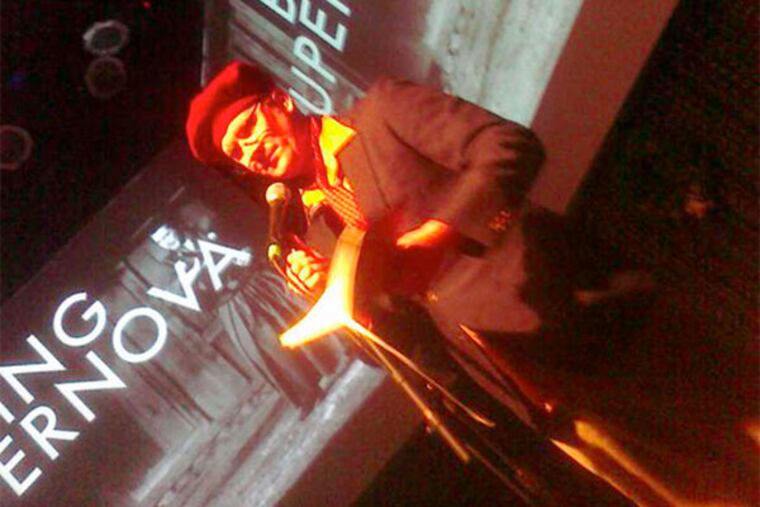
PHILLY HAS never lacked for hilarity. Ben Franklin was internationally funny. Comedy legends like Bill Cosby and Bob Saget were molded in our city. And our sports teams make us laugh - if only to keep from crying.
But Philly has never been known for its comedy scene the way Chicago, Boston or Austin have. But that's changing, as evidenced by the WitOut Awards for Philadelphia Comedy. Comedy blog WitOut.net will host its second annual awards show Sunday to fete Philly's funniest.
Alison Zeidman, WitOut's editor in chief, says this year differs from the inaugural event, because it will have fewer inside jokes and more broad appeal to those who might not be as familiar with what Philadelphia comedy has to offer.
Zeidman got involved with WitOut last spring. The site's former proprietors, Luke Giordano and Aaron Hertzog, separately left Philly to see if they could hack it in Los Angeles. (Giordano now writes for megahit "Two and a Half Men"; Hertzog is pursuing a stand-up career.)
The WitOuts, hosted by Grimacchio (a/k/a local improv artists Jason Grimley and Ralph Andracchio), will feature 13 awards celebrating all types of comedy, from Best Sketch Group to Special Achievement in Tweeting. Nominees came from the comedy community. Anybody could vote for the winners at WitOut's website.
Grimley even promises a red carpet at World Cafe Live. "That's new," he said during a conference call with Andracchio. "This is going to be an awards show that is very classy, regal."
"I wouldn't use the term regal," Andracchio shot back.
Like most cities, Philly experienced a stand-up boom in the '80s and early '90s, fostering new talent like Todd Glass and Paul F. Tompkins. But that died down.
"There was nothing in town. There was the Laff House on 2nd and South, and that was it. There were the Comedy Cabarets in the suburbs," said Chip Chantry, who is nominated for Best Stand-Up and Special Achievement in Tweeting. "At least for the stand-up scene, there was nothing to speak of."
Philly comedy didn't have a Woodstock moment, but popular consensus says the scene started to coalesce around 2006. That's the year Helium Comedy Club opened in Center City and Greg Maughan founded the Philly Improv Theater group. A year before, short-form improv group the N Crowd was founded.
Guys like Don Montrey, executive director of Philly's long-running improv group ComedySportz, and Gregg Gethard started hosting comedic get-togethers, like Montrey's show "Die Actor Die" and Gethard's "Bedtime Stories." Groups started connecting on the Internet.
The WitOut Awards aren't the only example of the growing comedy scene. There are standing sketch and improv shows around the city, and more open mikes. Comedians around the country come for events like last April's F Harold Festival, or November's Philadelphia Comedy Month.
Scouts from Comedy Central and Montreal's prestigious Just for Laughs Festival occasionally come here looking for talent, something they wouldn't have done seven or eight years ago.
And the public has responded. In the past three years, Grimley has noticed audiences aren't just made up of his friends anymore. "I've also noticed audiences getting younger and younger."
"Or we're getting older and older," Andracchio quipped.
As with many nascent scenes, said improv teacher Matt Holmes, the strength of Philadelphia's comedy landscape is its relatively small size and lower profile. There's not a lot of competitive pressure.
"It's artists getting together and collaborating and bubbling over in whatever form they work in. People aren't as concerned with success or fame or money. They come together and multiply and attract each other in doing it for the sake of art," Holmes said. "Success, appreciation, money come later, sometimes ruining it."
Philadelphia will never be on par with major entertainment hubs like Los Angeles or New York, locals say. But Montrey hopes Philly could be more like Boston, where a person can make a living as a full-time comedian.
Chantry is testing this theory this year, taking a sabbatical from his job as a fourth-grade teacher to give stand-up a full-time try.
For some, though, that evolution didn't come fast enough. "I wish I could live in Philly and make a living doing comedy," said Hertzog, who left for L.A. a month ago. "Because Philly is my favorite place in the world."