Nightlife photographers a must-have for events
There's nowhere to hide. Go to a party, gala, or other event in Philadelphia and it's likely that at least one photographer will want to take your picture - that is, if you don't approach them first.
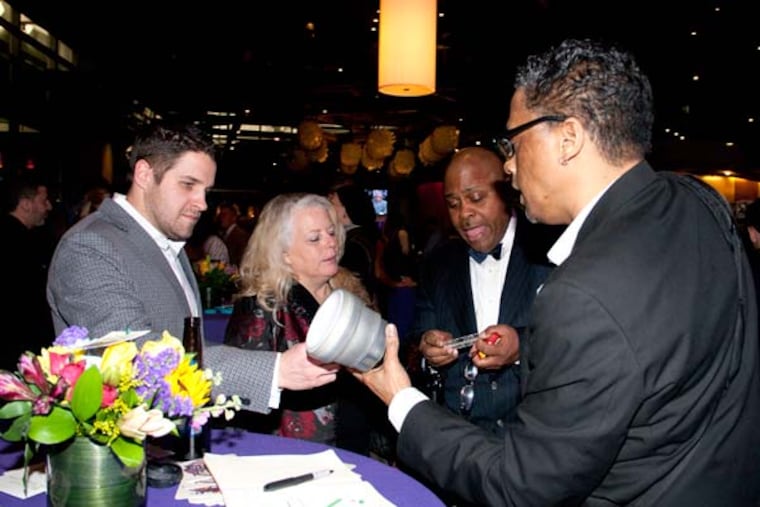
There's nowhere to hide.
Go to a party, gala, or other event in Philadelphia and it's likely that at least one photographer will want to take your picture - that is, if you don't approach them first.
These roving shooters-for-hire hit the floor at events as stately as the Academy Ball or the flower show gala. They fill foodie soirees as sumptuous as the Kimmel Center's StarChefs bash or as silly as the Wing Bowl.
They find the funkiest parties - InLiquid's gala at Crane Arts, Jimmy Style's Red Carpet Oscar Party - and snap until their digits are sore. Philadelphia Style magazine - long a destination for pages of event pics - even hosted a February party at Zee Bar called "Paparazzi" to honor their roles in the social scene.
Which is, in short, to create a sense of celebrity. With each click, they telegraph to the masses: This party attracts movers and shakers. Even the most camera-shy feel important when asked, "Can I take your picture?" That's why most events roll out their own step-and-repeat. Everybody's a star.
"It's up to the photographer to make the crowd 'cool,' " says event photography fixture Alfred For, who goes by "Al B. For."
Here's how it works: For, like most event photographers, is an independent contractor who shoots, then tries to sell, to publications such as Philly.com (owned by the same company as The Inquirer), Joonbug, Philadelphia Style, the Green Legion, Around Philly, Philly2night, and UpcomingEvents.com for those publications' photo galleries. Others shoot for their own blogs, like Hugh E. Dillon's "PhillyChitChat" (he also has a regular gig with the Philly Post), or "Street Gazing" by Reuben Harley, who has a weekly feature in the Daily News as well. The photographers also might work for local publicists such as Cashman & Associates, who post the photos to their blogs and distribute them to media clients.
Publications can pay up to $150 for photos from one event (usually between 20 and 40 photos), and photographers often hit several parties a night at least five nights a week.
"Smart promoters and venue organizers who realize the power of marketing and accompanying images that speaks to their clientele hire us," says photographer Tony Taylor, a former wedding photographer who has been shooting events since 1996. "Connecting with a good photo blog, or hiring a photog to cover them ties the crowd to the venue."
Sometimes photographers are contracted in advance, but more often, they are on the prowl nightly after combing through invitations and picking the choicest soirees. All say that more than their technical skills are tested.
"There's more to nightlife photography than putting a photographer out there," says Amit Gabai, who has been shooting for Philly2night, a Philadelphia nightlife resource, since 2007. "There's the politics of every event, a lot of psychology, and watching of social mannerisms. And that's before you take the first shot."
If an event includes political figures or social stalwarts, for example, photographers wait politely to start shooting. But if most partygoers are young professionals, they can more easily become part of the scene. At events sponsored by liquor companies, inhibitions are dropped and a willingness to pose grows.
"The only time things get hairy is when the liquor gets to talking," says Andre Lamont Flewellen, a freelance photographer since 1987, who has been shooting events since 2004. "All crowds are cool in my book."
Inviting the right guests for each event makes an impact, but party planners say hiring the right photographer is key to a party's success.
"The quality of their photos and ability to capture the essence of the event is the priority, while their ability to provide us with the photos within 12 hours is a close second," says Lauren Werkiser, special events manager for Cashman & Associates. It's also important for the photographer to keep the client's brand in mind. "The photography needs for each event may vary - a red-carpet charity gala and a nightclub opening require different photographer personalities and abilities."
One-time Philly2Night editorial director Marilyn D'Angelo, now a producer at Newsworks' new philanthropic-focused event site, The Circuit, says that organizations post these pictures for one purpose only. "The point of event photography is simple," she says. "It is to drive people to your site." Anybody who attended the party will want to see themselves and their friends. That means increased traffic, and, it is hoped, more ad dollars.
The proliferation of party-pic publishers - whether online or in print - has created greater demand for freelance photographers (not to mention that budget cuts have reduced the number of staff photographers). But the pictures' popularity is driven by a generation for which photo-posting and viewing is a way of life. In the era of Instagram, Facebook, and reality TV, everyone can be famous.
"People love sharing what they did this weekend, what they had for lunch, and how their kids are doing in school," says Jonah Berger, a marketing professor at the Wharton School, whose book Contagious: Why Things Catch On came out Tuesday. "Sharing with large groups of people, like on social network sites, makes people more self-focused."
The glut of online display opportunities bolsters this "cult of the self," he says, and people get desensitized to having private information publicly available.
"The cellphone camera and social media have been huge contributors to this behavior," says For, who often is asked to take additional photos with his subjects' phones. "I offer a lot of the same photos for sale at my SmugMug site (most of the photographers sell their wares at their own websites) but they still want that cellphone snap, no matter how long the line of people is behind them."
It's a difficult way to make a living, which is why most of these photographers have to do additional work - taking head shots for models or restoring photographs. But the event photography provides a networking environment to find potential clients for better jobs. "I just hooked up with a guy who I'll follow around as he gets engaged to his girlfriend," says For, who was in charge of the multimedia department at Philadelphia's University of the Sciences until the position was phased out.
"Networking is a must since we're always fishing for new opps, new work," says Taylor. "Your current event should be paving the way for the next one."