'Company You Keep':Not a Bomb
Star Robert Redford also directs The Company You Keep,about the uncovering of a former sixties radical cell. Great cast including Julie Christie helps plodding procedural
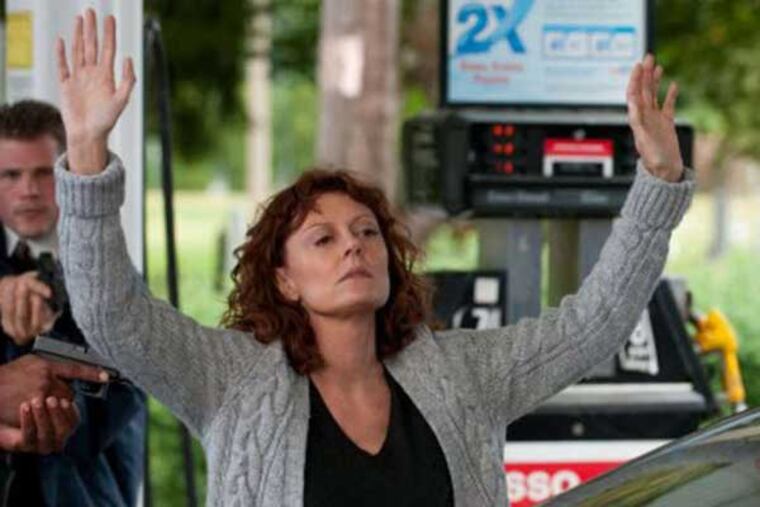
THIS YEAR'S bad-timing award goes to "The Company You Keep," a movie about on-the-lam former members of the Weather Underground.
Not the best week to be releasing a movie about radical bombers in hiding, although as several lefty websites have noted, "Company" is loosely based on a 1981 armored car robbery/murder committed by folks who'd been ex-communicated from the group, which disavowed their deadly tactics. The Weatherman, they note, bombed empty buildings (although for the victims of the radicalized perpetrators, probably a distinction without a difference).
"Company," directed by Robert Redford, sets up as a procedural and thriller. A wanted fugitive (Susan Sarandon) abruptly surfaces, and a cold trail is suddenly hot. A reporter (Shia LaBeouf) and the FBI (Terrence Howard, Anna Kendrick) start to follow it, while an outed suspect (Redford) goes to ground, on a desperate search for a confederate (Julie Christie).
The movie, as you can already see, has an unbelievable cast. And we're only halfway there. Redford's character undertakes a backtracking odyssey through a swath of radicals that includes Nick Nolte, Richard Jenkins, Stephen Root and Sam Elliott.
There's a newspaper editor (Stanley Tucci), and, at the epicenter of the long-ago crime, a close-mouthed smalltown sheriff (Brendan Gleeson) and his daughter (Brit Marling). Chris Cooper makes an appearance.
All of these exceptional actors give the movie a consistent surface tension, and there is enough tasty dialogue in the Lem Dobbs screenplay to keep everyone nourished.
But the story sets up expectations for insights about the '60s and extremism that never really materialize. The movie draws a line between the activist and the zealot, between the remorseful and the remorseless. In the end, representatives of the two factions square off.
The exchange feels hollow, and I think that's almost inevitable. The artist, who lives to create, will always have a hard time understanding or defining the nihilistic mind of the terrorist.
Or explaining the yawning gap between a terrorist's grandiose motivations and his sorry achievements, between his imagined targets and his actual victims.
The victims in 1981 were police officers. In Boston, a restaurant manager, a Chinese grad student, and 8-year-old boy, last photographed with a gap-toothed smile, holding a construction paper sign that says "no more hurting people."
A working definition of a terrorist? Anyone who can plant that bomb, then look at that boy's picture and not feel like a total jackass.
Online: ph.ly/Movies