Find local tunes, local voices on iRadioPhilly
New site looks to plug the holes in Philly radio, delivering niche sounds to new audiences.
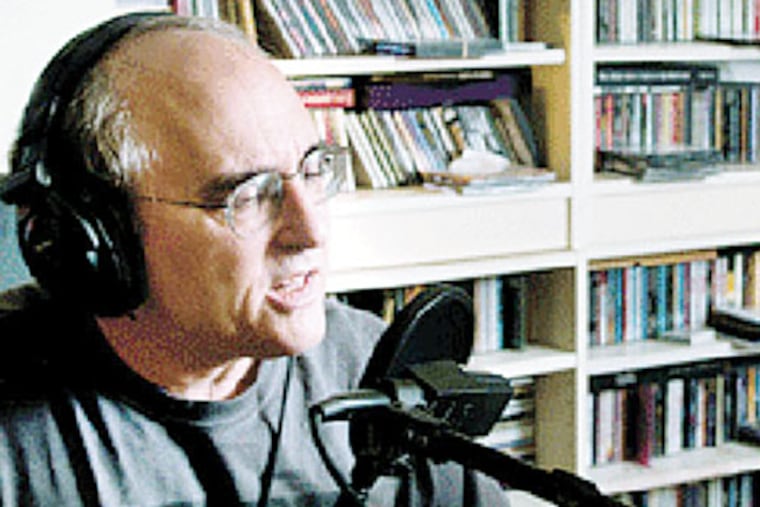
NOBODY KNOWS better what listeners like (and dislike) about local radio than Tom Kelly, director of Kelly Music Research. The Havertown-based operation offers programming counsel to B101 and WXTU locally, plus three dozen more stations nationwide.
Now, in his separate gig as managing director of iRadioPhilly, Kelly is doing more to fix what's broken, bruised or missing in action on our FM and AM radio dials than anyone else in the business, essentially (and ironically) by making an end run around the broadcasting world.
As that tech-toned name suggests, iRadioPhilly delivers its goods through the brave new world of Internet radio with 20 genre-focused channels (see sidebar) that folks can tap into on an Apple or Android smartphone or tablet with a free iRadioPhilly app. Listeners also can click into the channels on a computer via iradiophilly.com or on streaming audio/video boxes such as those made by Sonos, Apple TV, Roku and Logitech.
"In our core business - measuring listeners' reactions to music - we couldn't help but notice some holes in the marketplace," explained Kelly.
"And you don't have to look far to see the opportunities," he continued. "There's no '50s- and '60s-focused terrestrial [broadcast] radio station in Philadelphia, serving the music that was the genesis of '[American] Bandstand.' There's no indie-rock channel. No 24-hour classical station. No 24-hour jazz. Nor a station devoted to vocal standards - the Frank Sinatra, Diana Krall, Michael Buble breed of talents.
"These formats were important components in the Philadelphia radio scene in the past," he said. "Now we're bringing them all back."
They're also filling holes in sports coverage - this past season, they provided a full-court press of St. Joseph's University basketball games - and local arts, from high school and community-concert broadcasts to streaming of the big evening shows at the Philadelphia Folk Festival.
And mixing the two, iRadioPhilly's Jamz channel has just launched a Saturday afternoon (noon to 4 p.m.) "Game Day" party of music and conversation for the Philadelphia Soul indoor-football team, hosted by Brian Trevor and DJ 2CoolC.
By intent and, currently, necessity, iRadioPhilly aims to deliver happiness with far fewer commercials, most of them on the website. Broadcast radio's advertising clusters have "always been the biggest complaint" registered during audience testing, Kelly said.
The way-back machine
As icing on the cake, the Philly-centric Internet-radio site is giving new opportunities to seasoned spinners who no longer fit within the narrow constraints of today's broadcast-radio formats - local vets such as Michael Tearson, Mike Bowe and Bob Craig, plus the much-younger volunteer crew of the indie-rock stronghold Y-Not (formerly Y-Rock and Y-100) Radio.
Tearson's "New Marconi Experiment," airing Saturdays at 8 a.m. on the iRadio Ziggy channel and Sunday nights at 6 p.m. on the Libra outlet, nods in name and spirit to the ultracool show that launched WMMR into the world of progressive rock in 1969.
For its official launch this weekend, listeners will want to tune in an hour early, as Tearson is planning a preshow chat with Dave Herman, the DJ (now retired to St. Croix) who launched the original "Marconi Experiment" on WMMR "exactly 45 years ago this week," said Tearson.
As it was then, the idea is to focus primarily on music from the golden era of free-form rock (also carried on iRadioPhilly's Ziggy and Libra stations). But Tearson's been granted free reign to take the show where he will and be as artistic as he wants, with zero censorship restrictions.
"I like to think of it as creative autonomy," Tearson said. "You can use your imagination to build the shows, take the listener on a journey, a privilege which jocks in commercial radio haven't been able to do for decades."
On board the iRadio Philly platform since February with its round-the-clock and mostly live (from West Philly) programming, Y-Not Radio chief executive Josh T. Landow says "we bonded with iRadio over wanting to take radio back to when it was good and not controlled by corporations. At the moment, this is a labor of love for all of us. iRadio pays the significant music royalties and the streaming bills that we used to handle; we pay them some rent out of our listener donations and small base of advertising. And the staff works for free from our own location."
So does Tearson, zapping completed shows as digital files to iRadioPhilly from his nicely outfitted home studio in Westmont, N.J.
Y-Not, indeed
"Having fallen off commercial radio [he started with Y-100 as an intern] and then severing our streaming relationship with WXPN, I'm happy if Y-Not Radio can just sustain itself," Landow said. "And, ultimately, it would be great if it could become profitable."
Obviously, that's the goal of iRadioPhilly and its backers. The group is so gung-ho on the potential for locally focused Internet channel bundling that it's registered iRadio domain names for the top 50 markets in the country. Kelly said he knows of only one other market - Seattle - with a locally focused Internet-radio grouping similar to iRadioPhilly.
But ratings ain't all that right now. Landow estimates that the Y-Not channel gets "maybe 1,000 visitors a day." Kelly estimates that the aggregate monthly audience of drop-bys to iRadio's 20 channels is "about 200,000," with each visitor hanging in for "about an hour and a half."
But their numbers are rising each month, Internet-radio giant Pandora is a shining success to aim for, and to hear our Philly team tell it, the future's so bright, they've gotta wear shades.
Then is now
"The smartphone has become the transistor radio of our age," opined Kelly. How so? "It's the personal, portable, go-to place for music lovers, just as the transistor radio was in the early '60s."
Kelly believes "Internet radio is almost at the same place where FM was in the late 1960s."
That is, just starting to come into its own, with distinct programming and penetration into cars, where people still do the bulk of their listening.
"Today, I plug a smartphone into an audio jack in my car stereo to listen to iRadioPhilly," Kelly said. "My first FM car radio was also a separate tuner that I had to wire into the dash."
But as it did then, the technology to support Internet radio is improving.
"Some auto makers now have Internet radio interfaces in their infotainment displays, so you don't have to fumble with the phone to change the channel," Kelly said. Audi, for instance, has an in-car data plan with T-Mobile that uses the Audi Connect hardware.
"When every car has that stuff - look out!"
Online: ph.ly/Tech