One-Minute Play Festival: 60 seconds, curtain to curtain
Sixty seconds is barely enough time to compose a Tweet, let alone reveal an entire play's dramatic arc. It would seem an insurmountable task to get wordy playwrights to come up with narratives to fit into the tiny time confines of one minute.
Sixty seconds is barely enough time to compose a Tweet, let alone reveal an entire play's dramatic arc. It would seem an insurmountable task to get wordy playwrights to come up with narratives to fit into the tiny time confines of one minute.
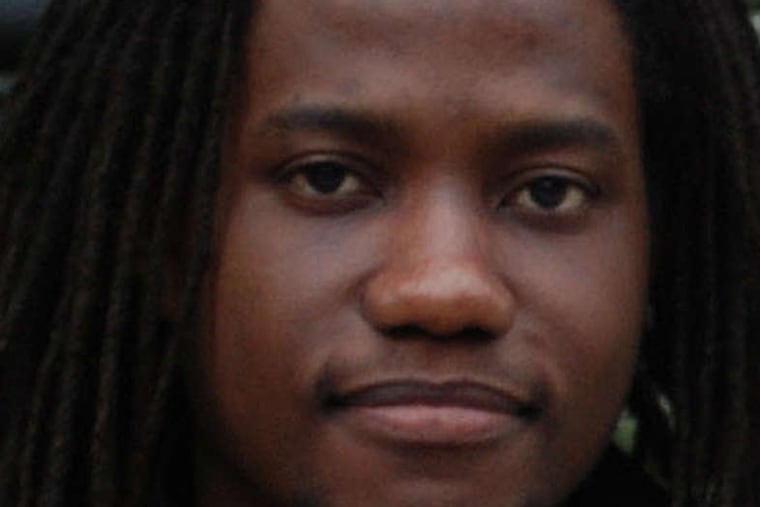
"Hey, drama is drama, whether it's in 90 minutes, three hours, or one minute," says A. Zell Williams about the idea of reconfiguring his usually loquacious aesthetic to fit the parameters of the first Philadelphia One-Minute Play Festival, presented Monday through Wednesday by InterAct Theatre Company at the Adrienne Theater.
"Scale down? I didn't have to. It comes down to picking the best place for the play to begin to maximize the amount of an emotional journey you're able to give to your audience."
Nearly 50 local playwrights, among them Michael Hollinger, Jacqueline Goldfinger, and InterAct artistic director Seth Rozin, agree with Williams - Rozin in particular, who joined with Dominic D'Andrea, founder of the New York-based One-Minute Play Festival (OMPF) for Philadelphia's test of theatrical brevity.
"One of my unofficial roles here is to advance new plays and playwrights, so it was an easy and obvious partnership," Rozin says.
A year or so ago, he was only vaguely aware of OMPF and its community-centric focus. He didn't even realize InterAct playwrights had been in OMPF festivals in other cities until Hollinger got him together with D'Andrea.
"In talking to Michael, Dominic, and other playwrights who had participated in OMPFs elsewhere, I became intrigued by their track record for galvanizing writing communities in cities across the country," Rozin says.
More than anything, what Rozin heard was that the festivals were incredibly fun for playwrights, directors, actors, and patrons. After joking that D'Andrea's festival guidelines were far longer than the plays, Rozin mentions that his two plays are linked through a comic twist of his own devising. (Contrarily, he notes, "We were encouraged by Dominic to submit two plays, but they should not be linked.")
D'Andrea, who launched the festival and his company in New York in 2006, says "OMPF is about the macro. It's about what voices in a given community say about each other through the work. True, the plays are all a minute long, without exception, but that guide only helps us achieve how many units we can include in an evening, and establish a rhythm of pulse."
Philly's festival will feature almost 90 new plays, by close to 50 local playwrights, with nine directors, and four dozen actors.
Hollinger is known for works with complex, cosmopolitan musicality - Barrymore Award-winning Opus, for one - and he penned a series of "Ten Minute Plays" before this festival, so he's familiar with squeezing a lot into a little. "I've always been attracted by miniatures - in painting, music, theater - and the challenges of thinking small," he says.
For him, the one-minute form invites exploration of a single highly oxygenated moment, the Here-Now-and-Us. So he looks for encounters between two characters that have an immediacy and nakedness to them.
"We only get to see them for 60 seconds, so we must be able to grasp the essence of their relationship and dilemma, and then appreciate the delicacy, absurdity, or poignancy of what it is to be human."
If he fails at doing this with his two OMPF pieces, "Step Nine" and "Lost and Found," at least "you're only boring your audience for a minute, which is much better than boring them for an entire evening," he says.
Goldfinger, author of Slip/Shot, another Barrymore Award winner, concurs, and goes a step further.
"Usually, to crawl inside the unruly minds of 50 playwrights, you'd have to see 100 hours of theater. But with OMPF, you're exposed to them in two hours. It's the roller coaster of new-works festivals."
Goldfinger's full-length plays can be amusement parks in themselves, often full of large numbers of people milling about, yakking loudly, and probing one another's characters. The two comedies she has written for the OMPF explore how communication evolves with new technology.
"To distill my ideas into 60 seconds," she says, "I wrote each one as a long scene, decided what the most compelling moment was, then deleted all of the text around that moment so that it stood alone."
A. Zell Williams, whose The Urban Retreat won the 2013 Terrence McNally Award for a new play, tackled two short bits that helped him key into tough emotions he was going through.
"It was a great way of acknowledging my feelings, and accepting them," he says of his differing takes on the breakup process. "The whole OMPF thing is a wonderful challenge to try and fit a whole story arc into a minute. It's a lovely test."
Short, Shorter, Shortest
InterAct Theatre Company presents the First Philadelphia One-Minute Play Festival, 8 p.m. Monday through Wednesday, at the Adrienne Theatre, 2030 Sansom St. Tickets: $20. 215-568-8079, www.InterActTheatre.org.EndText