'Henry VIII,' by the seat of its breeches
Let's be honest: Henry VIII isn't one of Shakespeare's greatest works, which might be why Pennsylvania Shakespeare Festival chose to make it their third "extreme Shakespeare" effort. Many scholars believe the play isn't even entirely his, but rather the result of a collaboration between him and his eventual King's Men theater company successor, John Fletcher.
Let's be honest: Henry VIII isn't one of Shakespeare's greatest works, which might be why Pennsylvania Shakespeare Festival chose to make it their third "extreme Shakespeare" effort. Many scholars believe the play isn't even entirely his, but rather the result of a collaboration between him and his eventual King's Men theater company successor, John Fletcher.
But, as it's essentially an exploration of the events leading up to the birth of Shakespeare's most important benefactor, Queen Elizabeth I - back when royal births changed the course of history - it's certainly worth its historical weight (even if, despite its alternative title, All Is True, much is anachronistic).
Extreme Shakespeare, by PSF's definition, signifies the Bard's works performed in the style of his company: Actors arrive with their lines (mostly) memorized, cobble together whatever costumes and set elements they find backstage, rehearse four or five days without directors or designers, and put on a show.
Here, the method adds a layer of thrill to a script that, for a history, and considering this particular king's history, contains a relatively low body count and treads lightly on its principals. The play ends with Anne Boleyn still very much in possession of her head, and almost everyone redeemed.
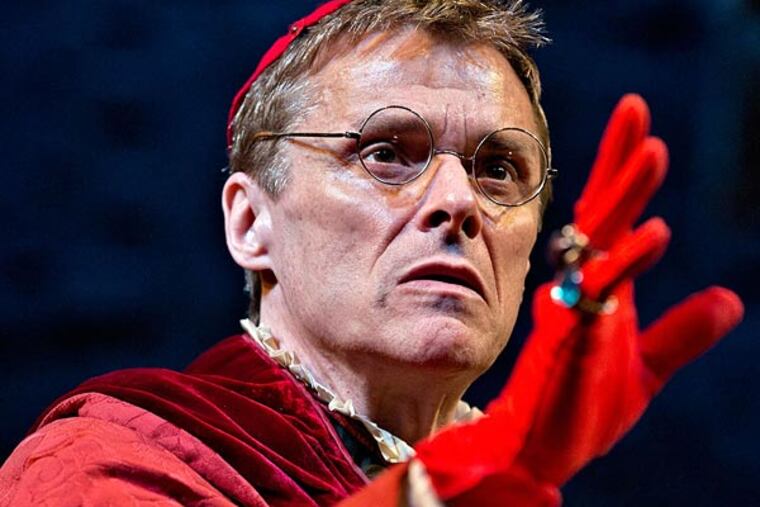
There's some overlap with last season's extreme King John. Richard B. Watson again dons a crimson robe as a scheming cardinal. This time, it's Wolsey, and why not? If the red Pradas fit, and they do, wear 'em. Susan Riley Stevens plays Queen Katherine, Henry's first ex-wife, and again lets loose, as she did last year as Constance, but now raging in a fiery Aragonese accent.
Ian Bedford, however, switches up the impact of his physical power (he's a big guy), playing Henry as a bull in diplomacy's china shop, clad in an ever-changing array of robes and pelts, subject to whims and passions that set everyone around him on edge.
So yes, it's exciting to watch this production come together on the fly. But the method has pitfalls, too. A lack of preparation interrupted Watson's performance - an otherwise excellent, serpentine portrayal of tightly wound duplicity - as he called for his lines multiple times, diluting his speeches.
In addition, one of the services a director can provide is a unifying theme, and this production tracks more like a series of powerful monologues and soliloquies, highlighting the performers at the expense of their subject.
Theater Henry VIII
Through Aug. 4 at the Pennsylvania Shakespeare Festival, Labuda Center for the Performing Arts, DeSales University, 2755 Station Ave., Center Valley. Tickets: $25-$34. 610-282-9455 or pashakespeare.org
EndText