Rise of a robber baron's shrewd clerk
John Jakob Raskob was 21, a clerk with a parochial school education, when Pierre S. du Pont II hired him to run around the country taking notes on the business deals the gunpowder heir and venture capitalist was cutting at the start of the 1900s.
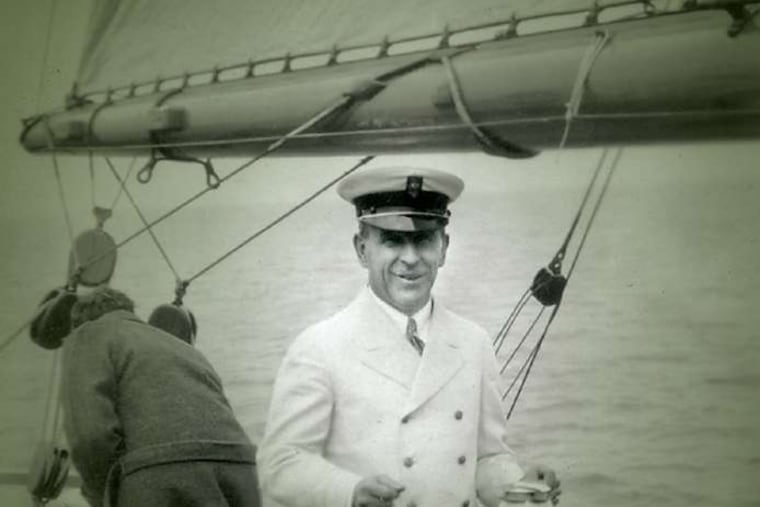
Everybody Ought to Be Rich
The Life and Times of John J. Raskob, Capitalist
By David Farber
Oxford University Press. 400 pp. $29.95
nolead ends nolead begins
Reviewed by Joseph N. DiStefano
John Jakob Raskob was 21, a clerk with a parochial school education, when Pierre S. du Pont II hired him to run around the country taking notes on the business deals the gunpowder heir and venture capitalist was cutting at the start of the 1900s.
Trotting from Ohio steelworks to Texas trolley lines, Raskob impressed du Pont as fast, tireless, precise, ambitious - and usefully silent.
The next year, when du Pont and two cousins talked their uncles into letting them buy control of the main family business, he put Raskob to work using the new techniques of public accounting to measure the cash-flow value of their far-flung plants. Finding surplus value far beyond the price they'd paid, DuPont and Raskob leveraged millions from Philadelphia and New York bankers to buy rival explosives makers and build DuPont Co. into the first modern multinational corporation, writes Farber, a Temple University historian whose previous books include Sloan Rules, on masterful General Motors boss Alfred Sloan.
The souped-up DuPont Co. profited hugely from World War I. By the time antimonopoly crusaders had the company split three ways, Pierre and Raskob were already pumping their war bucks into new chemical technologies (some seized by the Allies from the Germans) - and GM, which they made a giant buyer of new DuPont products.
Raskob also had a social vision: He pushed for executive stock ownership to buy managers' loyalty; he advocated for the weekend and higher wages (but not unions) to create a mass consumer market for DuPont products; he started General Motors Acceptance Corp. so millions of Americans could buy now and pay later. GMAC helped GM rocket past Ford Motor Co., which was more efficient at turning raw materials into durable, affordable vehicles, but whose moralistic boss, Henry Ford, disapproved of debt. More Americans borrowed to buy GM Chevys than would save for Fords.
Raskob built modern Wilmington's downtown, then moved on to New York, where he built the Empire State Building. He built Archmere, a palace home on the banks of the Delaware River, then gave it to Catholic priests for a prep school - Vice President Biden is a graduate - after moving his family to a vastly larger plantation on the Eastern Shore of Maryland, near where his wife, Helena, grew up.
Farber reminds us how the Democratic Party, even then, was almost as dominated by Wall Street and industrial bosses as the Republicans; du Pont family members and J.P. Morgan partners were leaders in both. Raskob took over the Democratic National Committee; his efforts to elect his fellow Catholic and anti-Prohibitionist Al Smith as president ended poorly and cost Raskob his post on GM's board.
Undaunted, Raskob collaborated with stock-market bulls and Henry Ford's ghostwriter, Samuel Crowther, to promote the idea that any hardworking American could save, borrow, and invest enough money to retire and live for years like a rich person. But Raskob's role as an early Jack Bogle (to Pierre's Warren Buffett) collapsed with the stock market in 1929; the friends turned out to have been shorting some of the stocks they were urging others to buy, and both were eventually convicted of multimillion-dollar tax fraud.
Stung by Franklin D. Roosevelt's embrace of high taxes and labor unions, Raskob organized the Liberty League of conservative capitalists, an early super PAC, but he led it distractedly, enabling Roosevelt to use the league's negative rhetoric as a stick to beat the out-of-step Republicans on his way to the Democrats' landslide victory in 1936.
Though as a prominent Catholic Raskob championed conventional morality and fathered 12 children with Helena, the couple grew apart; as he spent more time in New York, she took the children's tutor as her lover, marrying him after Raskob's death. Farber also names Pierre's probable gay companion - yet leaves open the question of whether Raskob slept with the showgirls he visited in New York, or anyone else, besides Helena.
Indeed, the author states up front that he enjoyed the cooperation of Raskob descendants in writing the book, giving this an air of authorized history. But he also notes the critics who called the du Ponts "merchants of death" for selling gunpowder to warring rival armies; and quotes FDR's Raskob-hating labor secretary, Frances Perkins, and Raskob's friend-turned-critic Eddie Dowling, the showman who blamed Raskob for corrupting Al Smith. Farber even cites with approval Raskob's portrait as a shy manipulator in Gerald Colby's muckraking 600-page 1983 expose, DuPont Dynasty: Beyond the Nylon Curtain.
Farber sees Raskob and his du Pont patrons not as bloodthirsty aristocratic robber barons, but as creative builders, socially conscious and sincerely groping for solutions that would preserve their baronial fortunes while restoring opportunity for the desperate and demanding public of their times.
Pierre du Pont left Longwood Gardens as his monument. Raskob has a more personal memorial: After settling comfortable trusts on each of his children, he willed the bulk of his fortune, juiced by the very timely post-World War II occupancy and sale of the Empire State Building, to the Raskob Foundation for Catholic Activities, controlled by his many descendants. He had started an earlier Catholic foundation under the bishop of Wilmington; though that foundation was stripped by the diocese's 2012 bankruptcy settlement to pay sex-abuse lawsuits, Raskob's much larger foundation continues to flourish, and brings his family together to bestow benefactions.
If his national vision fell short, Raskob's family focus still pays dividends.