Biographer finds some dissonance in Ellington's life
Edward Kennedy "Duke" Ellington was jazz royalty. He even eschewed the term jazz at times, although an unbelievable number of his 1,700 tunes remain jazz standards.
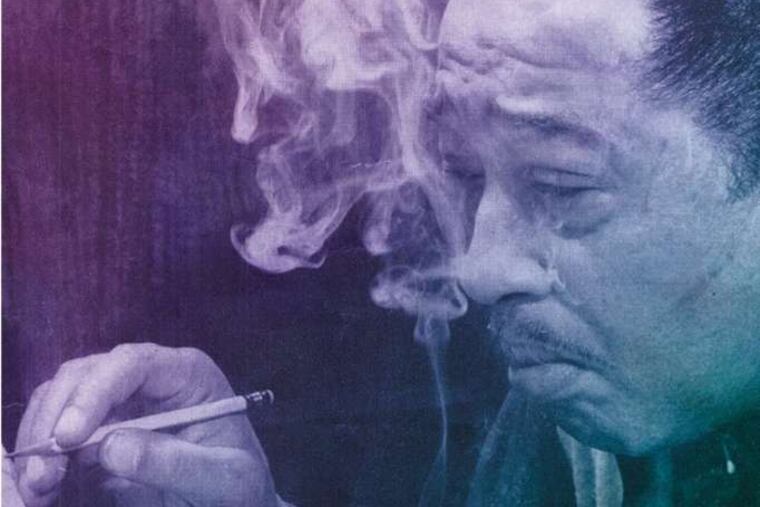
Duke
A Life of Duke Ellington
By Terry Teachout
Gotham. 496 pp. $30
nolead ends nolead begins
Reviewed by Karl Stark
Edward Kennedy "Duke" Ellington was jazz royalty. He even eschewed the term jazz at times, although an unbelievable number of his 1,700 tunes remain jazz standards.
Ellington wrote orchestral suites, soundtracks for the movies, and scores for Broadway. In an era when many jazz players were seen as drug addicts, he was one of the first jazz players to be successfully marketed as a creative artist, and he's often considered one of the greatest American composers ever.
Or was he?
In his new biography, Terry Teachout, a former professional bassist who is the drama critic for the Wall Street Journal, politely chips away at the Ellington image. The debonair maestro is still charismatic, but the weight of this biography, billed as the first major one in 18 years, hits some unpleasant dissonance.
Those tunes Ellington is credited with writing turn out to have been done largely by his sidemen. Ellington never really succeeded on Broadway or in the movies. His suites often lacked real orchestral development, Teachout writes, and even his celebrated band - full of unique players - scuffled at times with poor discipline and a lack of fire.
Teachout's biography is full of such critical counterpoint. At different points. he calls Ellington "one of the supreme creative figures of the 20th Century" and "a major composer but not an influential one." Certainly, to have led bands as Ellington did through a largely segregated America over nearly a half-century of shifting tastes was a monumental feat.
Ellington's ace in the hole was the band's songbook. His many standards provided a steady stream of royalties that kept his groups together when others were fading.
Those bands - full of powerhouse players like Ben Webster, Johnny Hodges, Paul Gonsalves, Cootie Williams, Harry Carney, and Clark Terry - were integral to the way Ellington composed. The man was not a natural tunesmith, Teachout writes. But he was adept at picking up promising fragments from band members and remolding them into tunes that he then took for himself.
"Sophisticated Lady" from 1933 was typical. This standard was composed of themes from two of his sidemen: saxophonist Otto Hardwick and trombonist Lawrence Brown. Ellington spliced their licks together and reharmonized them. He offered both men $15 and kept the long-term rights. "I don't consider you a composer," Brown told Ellington early in their difficult relationship, according to Teachout. "You are a compiler."
Other players took a more benign view of Ellington's ways. It's likely that nothing would have come of those licks had Ellington not recognized their verve and polished them. He showed considerable expertise in reshaping them. And those sidemen didn't go on to write amazing music, while Ellington kept it up for decades.
The leader had a similar alpha-dog relationship with his talented in-house composer, Billy Strayhorn. The pianist, who grew up in Pittsburgh, was called the other half of Ellington's heartbeat. He was steeped in classical music, especially in the French impressionists, and was far more educated musically than Ellington, Teachout writes. Strayhorn also was openly homosexual and probably couldn't have functioned as a bandleader.
Strayhorn wrote major tunes like "Take the A Train," while receiving little credit. Ellington both paid Strayhorn well and did little to promote him, dissing him as a "staff composer." Strayhorn smoldered for years; leaving the band and returning to it were both problematic.
In some ways, Ellington's practices were channeling the way he was treated by his longtime manager, Irving Mills, who extracted a heavy percentage of the leader's earnings for years. Mills' name is cemented into many of the band's song credits.
At the same time, Mills was extremely successful in marketing Ellington as an artist and launching him from his early gig at the Cotton Club in Harlem into an international superstar who died much lionized in 1974.
Teachout, who played bass in Kansas City before pursuing a career as a writer, is pretty workmanlike as a scribe. The biography exhibits little literary music. He says his work would not have been possible without the efforts of many modern and amateur scholars.
He's pretty dogged, though, logging Ellington's triumphs, such as the 1956 Newport Jazz Festival, where Paul Gonsalves played 27 legendary choruses of the blues.
Teachout is also busy blowing up Ellington's autobiography, Music is My Mistress, as so much florid fiction. You learn how Ellington was a serial womanizer whose relationships form a kind of dreary bass line in this book. He was a poseur who acted urbane but read little. He was extremely superstitious. And the list of his fears was encyclopedic, ranging from sea and air travel to people who whistled.
It all does little to diminish the music, which has outlived its compiler's foibles.
AUTHOR APPEARANCE
Terry Teachout:
"Duke: A Life of Duke Ellington"
7:30 p.m. Tuesday at the Central Library, 1901 Vine St. Free.
Information: 215-567-4341 or www.freelibrary.orgEndText