Killing a rodent could kill your dog, too
It's never good when a pet downs mouse or rat poison, but rodenticides containing anticoagulants are treatable.
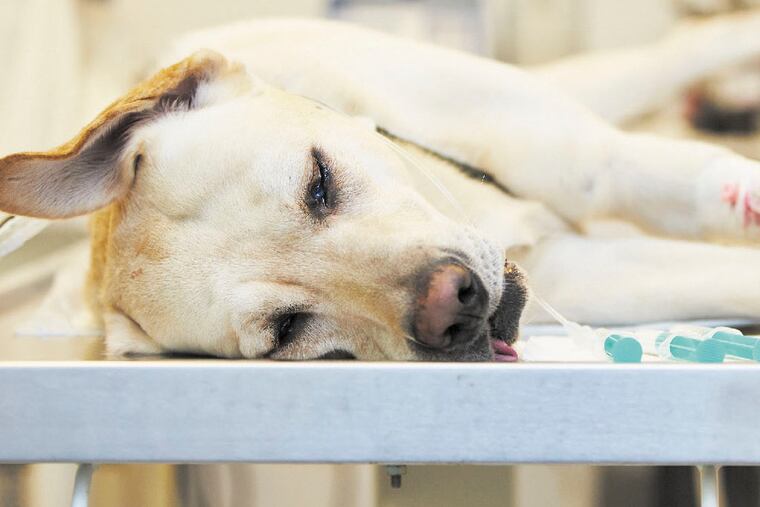
IT'S NEVER good when a pet downs mouse or rat poison, but rodenticides containing anticoagulants are treatable with blood transfusions and vitamin K if the poisoning is caught in time.
However, the Environmental Protection Agency is canceling eight such products, in part because they endanger wildlife, such as hawks, owls, bobcats and cougars. A common alternative contains a neurotoxin called bromethalin that can be more harmful to pets - dogs in particular, who tend to eat anything they come across.
"Often, by the time clinical signs appear, it's very difficult to treat," says veterinary toxicologist John Tegzes, a professor at Western University of Health Sciences in Pomona, Calif. "There's no antidote. The only good news about it is that dogs need to eat a bit more of it than they would the anticoagulant rodenticides." A typical medium- to large-sized dog would have to eat approximately three bait packs to reach a toxic dose of bromethalin, Tegzes says, while just a portion of a box of anticoagulant rodenticide can poison a dog. The trouble is, people may place four or five bait packs in their garage or yard. Also: "When the average consumer is walking down the aisle, if they go to the one at eye level that has the biggest box, they're going to end up with bromethalin."
If you use any kind of rodenticide, you should know how it works and the signs of toxicity. Anticoagulants prevent the blood's ability to clot, causing microhemorrhages in the gastrointestinal tract, the chest cavity or the brain. The hemorrhages cause anemia, heavy panting with even slight exertion and an increased heart rate. Dogs treated quickly usually recover well.
That's not always the case for dogs poisoned by bromethalin. They often begin to press their heads against objects or become uncoordinated. "What it looks like is, the dog is trying to walk from one part of the room to another and just circles around and can't quite make it across the room," Tegzes says. Dogs with bromethalin poisoning may also have seizures, become depressed and stop eating or drinking. The poison isn't detectable with blood work, and often by the time the cause is discovered, treatment comes too late.
Liz Palika, a dog trainer in Oceanside, Calif., is lucky her dog survived bromethalin poisoning. She doesn't use poisons in her home or yard, so when her young Australian shepherd, Archer, was acting a little clumsy, she didn't pay attention, but when he jumped off the bed and his back legs did the splits, she took notice.
Fortunately, her veterinarian started treating Archer for poisoning as Palika questioned neighbors and the handyman at her dog-training facility. She discovered that the handyman had put out bromethalin for gophers. Archer's symptoms worsened over 24 hours. Supportive treatment with fluids and prednisone kept him alive until his body could overcome the poison, fortunately with no lasting effects.
If you have problems with rodents, take the following steps: * First, try to manage the problem by blocking access or removing food sources.
* Use traps instead of poisons.
* If you use a poison, choose a first-generation anticoagulant, such as one that contains diphacinone, not brodifacoum, and not one that contains bromethalin.
* If you think your pet has been poisoned, take your dog and the container of poison to the veterinarian so she can treat your pet appropriately.
* Ask your neighbors if they use poisons, what type, and where they are set out.