Depp indulges inner clown in charmless 'Mortdecai'
Any film credited with its own "mustache wrangler" really should have been much more fun than Johnny Depp's latest misfiring action-comedy.
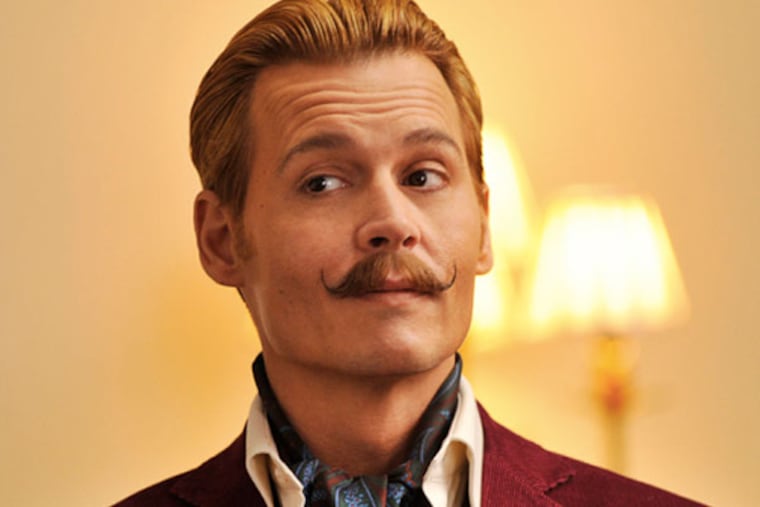
ANY FILM credited with its own "mustache wrangler" really should have been much more fun than Johnny Depp's latest misfiring action-comedy.
Mostly set in contemporary England but aiming for the zingy, Swinging Sixties feel of a Peter Sellers or Terry-Thomas feature, "Mortdecai" is an anachronistic mess that fails to capture the breezy tone or snappy rhythm of the classic caper movies it aims to pastiche.
Despite a heavyweight cast and the solid directing skills of A-list screenwriter David Koepp ("Jurassic Park," "Panic Room," "Spider-Man"), this charmless farce ends up as another black mark on Depp's recent track record of patchy pet projects.
"Mortdecai" is based on the first in a series of irreverent comic novels by Kyril Bonfiglioli, a British author of Italian and Slovenian heritage. Published in the 1970s, the books chronicle the amoral antics of aristocratic British art dealer Lord Charlie Mortdecai (Depp), who is aided on his drink-sodden adventures by his thuggish but resourceful and sexually irresistible manservant, Jock Strapp (Paul Bettany).
Depp plays Mortdecai as a human Looney Tunes character, a snobbish playboy narcissist so enamored of his comically absurd new mustache that he risks driving his disapproving wife, Johanna (Gwyneth Paltrow), to divorce.
Teetering on bankruptcy, Mortdecai spots a chance to escape financial ruin when a rare Goya canvas goes missing after a lethal robbery. Grudgingly recruited for his art-world expertise by suave MI5 agent and longtime love rival, Alistair Martland (Ewan McGregor), Mortdecai jets off around the globe on a mission to find the stolen painting and exploit the priceless secret rumored to be hidden on its reverse side.
The main players spend almost every scene mugging desperately for the camera in novice screenwriter Eric Aronson's thin script. Ironically, these overcooked performances are often more hindrance than help when the occasional funny line arises.
On the page, Mortdecai and Strapp are clearly uncouth cousins of P.G. Wodehouse's Jeeves and Wooster. On screen, their boorish mannerisms and retro attitudes owe more to Austin Powers. But while Mike Myers found rich humor in the gap between a chauvinistic past and politically correct present, much of the labored comedy in "Mortdecai" relies on dated stereotypes unredeemed by postmodern irony.
For all its minor offenses against taste and decency, the sole unforgivable sin that "Mortdecai" commits is one that would leave its rakish anti-hero aghast: The film that bears his name is ultimately a frightful, crashing bore.