'Serial' creators Sarah Koenig and Julie Snyder, live, on being a pop-cultural phenomenon
Very few people know how weird it is to be at the center of a pop-culture phenomenon: "It" girls, online viral sensations, tousle-haired boy-band stars.
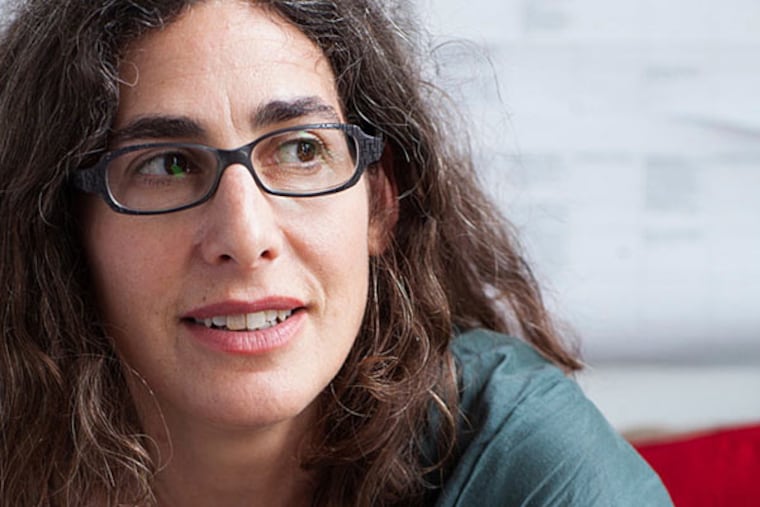
Very few people know how weird it is to be at the center of a pop-culture phenomenon: "It" girls, online viral sensations, tousle-haired boy-band stars.
Radio journalists are not often on that list.
"It's like watching pop culture happen in front of you," said Sarah Koenig, creator of the podcast juggernaut Serial. "People were gathering around this thing and picking apart any part of it to grab onto and congregate around."
Koenig said she had a hard time describing what it felt like to be at the center of something so suddenly popular - in part because she willfully ignored it. "I was a weird troll person the entire time. We made it in a basement, so I was in my pajamas for most of it," she said. "I'm not on social media, I'm not on Facebook, Twitter. I'm not plugged in in that way, but I was so busy I couldn't really pay attention anyway."
Koenig, producer Julie Snyder, and the rest of the Serial team produced an Internet product that created a community of listeners. Tonight at the Merriam Theater, many of those fans will gather to hear them talk about making Serial and what it was like being a part of that cultural tornado.
Why take this show on the road?
Koenig: "I don't know. Why not?"
The live show is a break from working on a new assignment, on which, alas, she could not share details.
Serial began in October. It followed the story of Adnan Syed, convicted of the 1999 murder of his 18-year-old ex-girlfriend Hae Min Lee. Serial retraced the case from its beginning to the present day, mulling its possible mishandling by the state of Maryland and Syed's own attorney, and following leads into other topics, such as the lives of first-generation immigrant teens.
People glommed on to Serial. Meta-podcasts obsessed over Serial. There was an abundance of memes. There were Saturday Night Live parodies.
What did it feel like to be part of something that big, that uniting?
"It was confusing," Snyder said. "It took a while for us to figure out that's what was happening."
People latched on to the strangest things. From the beginning, the newsletter service MailChimp was an important sponsor of Serial. The bumper ad before each episode features a series of voices saying, "MailChimp," including one that pronounces it "MailKimp."
Boom: a fake MailKimp Twitter account, an investigation into the identity of the pronouncer (a 14-year-old girl from Norway waiting in line with her parents for an iPhone 6), and a "Which MailChimp pronunciation are you?" quiz courtesy of Buzzfeed.
Such craziness began to make the Serial surge easier for the producers to grasp. "I think I recognized people wanted to have something they shared with one another," Snyder said. "Serial wasn't all broken up into a niche thing. It allowed people to connect, that's what it felt like - like it was bigger than us, it was bigger than the story or the mystery or the journalism. That felt fascinating and at times comforting and at other times frustrating."
Some online reaction was frustrating. In forums such as reddit, amateur sleuths tried to solve the case themselves. Some trashed ethical lines, posting personal information of those involved in the case. Though Koenig largely tried to ignore such self-deputized detectives to keep her own research pure, she could hardly help being affected.
"The freak-out for me was more for the people involved in the story, who I thought deserved more respect than they got online," Koenig said. "It raised the question of 'Whose fault is this? Is it my fault?' That was a struggle for me all the way through, trying to figure out my responsibility for it and what can I do about it, but there's not anything you can do about it."
Koenig said she was asked often about that journalist's nightmare, losing control of the story. In her past journalistic career, she said, she generally could control what information was published and when. But with Serial, details she decided not to publish were all of a sudden made public in a way she hadn't expected.
One thing remains constant: Koenig's singular relationship with Syed . Currently attempting to appeal his conviction on the basis of ineffective counsel, Syed calls Koenig from prison "whenever he feels like it."
She recalled their most recent conversation. "He had just watched the White House Correspondents Dinner on C-SPAN, where we got made fun of," she said. With Koenig in the audience at that April 25 dinner, host Cecily Strong of Saturday Night Live joked: "Sarah, I'm so sorry you weren't able to get your plus-one out of jail in time."
"I thought it was weird for me," Koenig said, "and it must have been so weird for him. There's a comedian up there talking about him, and the president's over there! [Syed] told me, 'I watch it every year, it's usually pretty funny.' "
PODCAST
An evening with creators of "Serial"
8 p.m. Thursday at the Merriam Theater, 250 S. Broad St. Tickets: $35-55.
Information: 215-893-1999, www.kimmelcenter.org.EndText
215-854-5909