Jake Gyllenhaal aims for knockout turn in 'Southpaw'
"SOUTHPAW" is about a white boxer named Hope, played by Jake Gyllenhaal - you can call him a Great White Hope, or, with his ripped torso, the abdominal snowman.
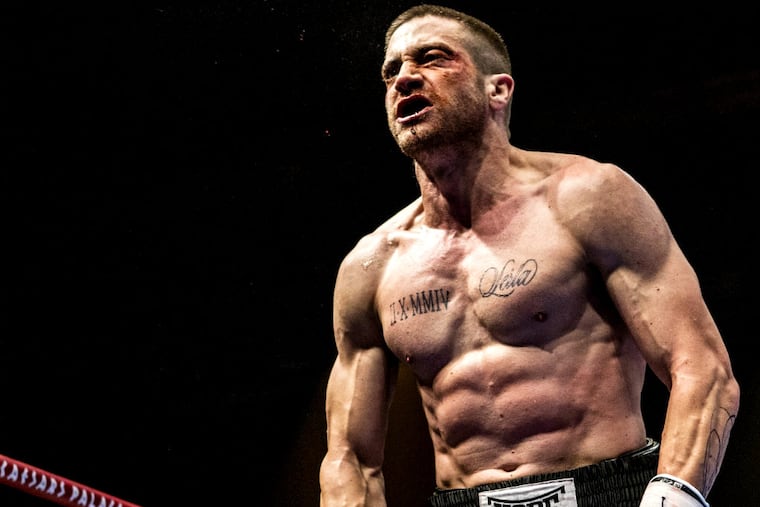
"SOUTHPAW" is about a white boxer named Hope, played by Jake Gyllenhaal - you can call him a Great White Hope, or, with his ripped torso, the abdominal snowman.
Given the character's loaded name, you keep waiting for race to be an issue in "Southpaw," but it never is - instead, this story of a white champ, his black trainer (Forest Whitaker) and Latino adversary (Victor Ortiz) takes its This Is What America Looks Like in the 21st Century cast and applies them to a screenplay leftover from the 1930s.
Billy Hope (Gyllenhaal), is a modestly educated foster-care kid from Hell's Kitchen who channels barely controlled rage into a career as an undefeated light-heavyweight champ.
He lives in a mansion, spends lavishly on his posse and his beautiful wife (Rachel McAdams), dotes on his daughter (Oona Laurence), and doesn't pay too much attention to his finances, which he entrusts to his manager (50 Cent), a guy who likes to say, "If it makes money, it makes sense." You wonder how he'll feel about Billy when the partnership stops making money.
Billy's a brawler who feeds on violence and animosity. This approach, which makes him a lead-with-his-face terror in the ring, leaves him vulnerable when his emotions stop working to his advantage, as happens when tragedy hits his family.
He becomes listless and unmotivated in the ring, a knockdown waiting to happen. In a blink he's destitute, deserted, rejected by the media that once adored and celebrated him.
His last and only possession - the infamous one-way ticket to Palookaville issued in movies like this.
Billy even loses custody of his daughter, remanded to a state institution while he works on substance-abuse and anger-management problems.
There's something about the sport of boxing that has directors throw haymakers, and that happens here to director Antoine Fuqua (himself a former competitive boxer) whose broad-stroke delivery of Billy's great fall undercuts what Gyllenhaal is trying to do with his method-y performance.
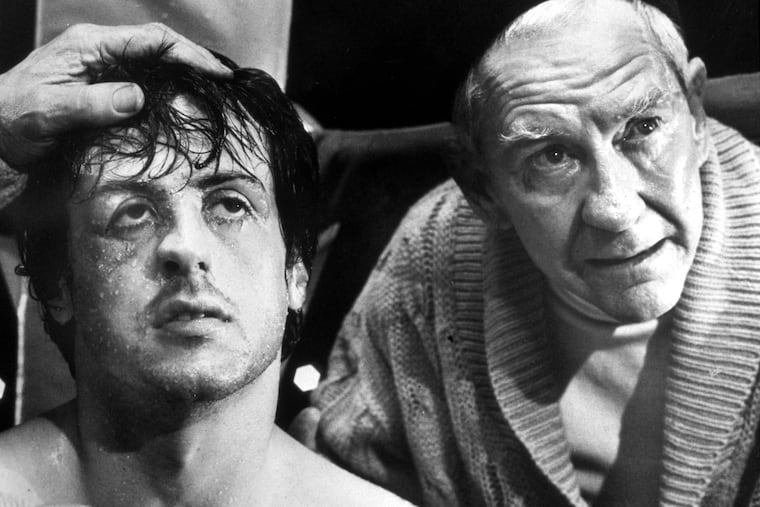
There is a point when "Southpaw" looks like a finished fighter, but the movie rallies when Billy bounces off rock bottom and hooks up with a new trainer, Tick Wills (Whitaker).
The two have great chemistry, and in a movie of roundhouse punches, Whitaker is a marvel of targeted jabs and feints, drawing a moving portrait of an older man giving a younger man the benefit of hard-won experience. (This is also where the movie expends its one narrative surprise, and it helps erase the misgivings you've had about the story's implausibility.)
The relationship also gives Fuqua an opportunity to remake his "Training Day" in reverse, presenting an alternative and hopeful version of apprenticeship, and it works nicely.
Most of the lessons Billy receives are about life, how to be a father, but there is boxing instruction as well, and at one point Tick advises Billy to employ a strategy he's never tried before - "defense." (The title, by the way, refers to the way Whitaker advises his right-handed apprentice to switch his stance mid-fight to confuse opponents.)
Gyllenhaal looks credible as a boxer in training, more comfortable in the ring than in scenes with his daughter.
This subplot is also dangerously corny, but gets a boost from the performance of Naomie Harris as a canny social worker.
It all comes down to a big fight, Billy battling for his crown, his family, for justice. After going several rounds with "Southpaw," your resistance weakens, and the punches land.
Even Tick, the movie's most believable character, bends to the will of the crowd-pleasing momentum of the moment, sending his fighter into the ring in the last round with three last words:
"Beat his ass."
Online: ph.ly/Movies