From postmodern zombies to 'The Underground Railroad': Colson Whitehead explores the slave narrative
Colson Whitehead strikes me as a literary archaeologist. Famous for his chameleonlike ability to inhabit radically different tones, styles, and literary flavors with each book, he seems to dig deep into new genres to produce works that use their conventions while at the same time subverting them.
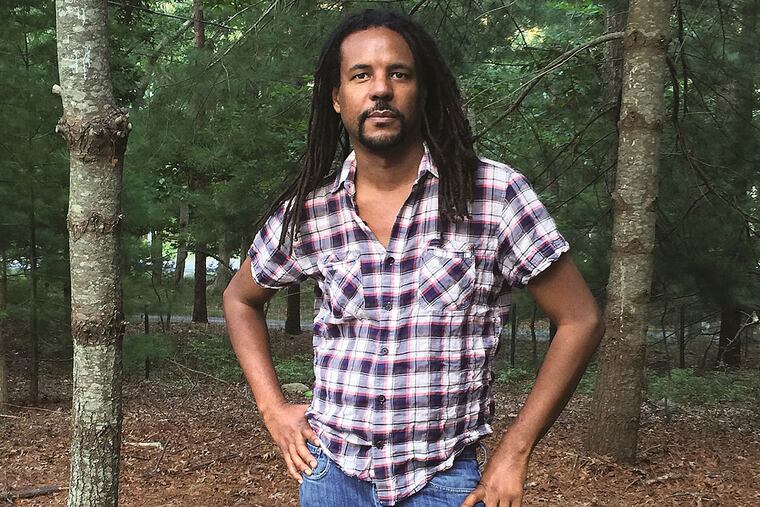
Colson Whitehead strikes me as a literary archaeologist. Famous for his chameleonlike ability to inhabit radically different tones, styles, and literary flavors with each book, he seems to dig deep into new genres to produce works that use their conventions while at the same time subverting them.
That's abundantly clear from the opening chapters of his new entry, The Underground Railroad, a richly textured historical novel about slavery that critics have hailed as his most important work.
Whitehead will discuss the book in a joint appearance with novelist Ron Rash (The Risen) at 7:30 p.m. Tuesday at the Free Library of Philadelphia.
Based on extensive research, The Underground Railroad follows the remarkable journey of Cora, a young woman born in slavery who flees her Georgia plantation for freedom in the North.
Yet for all its meticulous historical detail, the novel is constructed around an entirely fantastical, fictitious conceit: that runaway slaves actually traveled in railcars underground.
This touch of magic realism allows Whitehead to pursue an imaginative investigation of the American mythos.
If anything connects Whitehead's disparate works, it's this preoccupation with the various ways America continuously revises an image of itself, a myth that it presents its own people and the rest of the world.
His stunning 1999 debut, The Intuitionist, was a playful story about elevator examiners set in an alternative version of America. Yet it also managed to ask important questions about the nature of the civil rights movement. With Apex Hides the Hurt, Whitehead delivered a savagely funny satire about our new religion - consumerism - and his 2011 bestseller, Zone One, delivered an existentialist dialectic in the guise of a zombie thriller.
Released last month atop the New York Times best-seller list, The Underground Railroad already has outsold Whitehead's previous books, the author said in a recent interview. It's been mentioned by President Obama and has been picked for Oprah Winfrey's book club.
"I have been thinking about [the novel] on and off for 16 years," Whitehead, 47, said in a phone chat.
The writing didn't take as long.
"I had about 20 pages in January, and I did the rest of it between May and November [2015]," said Whitehead, whose previous book, The Noble Hustle: Poker, Beef Jerky, and Death, was a humorous report about the World Series of Poker in Las Vegas.
He had to shelve the comedy for this book, which is narrated for the most part by Cora. It took him some time to find her voice. It came to him while he was reading slave narratives.
"They had this deadpan way of talking so matter-of-factly about the world," he said. "A directness . . . [with] sentences that are straightforward and forceful as opposed to sinuous or complicated, as in the narrator in Zone One.
"You know, I'd read these accounts [that went like this], 'Master took my mother away and I never saw her again. The next day I started work in the fields.' "
It's a remarkable way to describe events that must have been deeply traumatizing.
"There's not a lot of emotional decoration here. And yet it contains a whole life," said Whitehead. "You know, this is the voice of an old man looking back at their childhood spent in bondage, and I thought this tone would work well in terms of the violence I was portraying."
Why publish an account of slavery now? Is Whitehead using the book to address a particular attitude, issue, or event in contemporary American society?
"Not really. The obvious example is to say it's about Ferguson, or that it's in reaction to Black Lives Matter," Whitehead said.
"I guess the fact that our country has a severe problem with police brutality is news to some people. It's not new to me as a 40-some-year-old African American male. So that kind of discussion isn't all that interesting to me."
He added, "I'm not trying to reinterpret the past according to the demands of the present. What I want is to present a story that's not just about slavery. Cora's story goes on over several decades, and it [explores] lynchings, Jim Crow laws, and the white supremacist movement."
Whitehead said the book is a reminder that despite our having passed civil rights laws and despite our having elected a black president, racism in American life has never been overcome.
The Underground Railroad contains remarkable debates between various 19th-century activists about the future that African Americans might hope to have once slavery ends. Several believe former slaves and their descendants will forever be stigmatized, that America will never be a true home for them.
"These conversations they're having are the same ones we're still having today," said Whitehead. "They ask if traumatized former slaves can become part of a new black middle class. It's echoed by our discussions about whether people who are so damaged by the inner city they can't pull their pants up can do it.
"My personal point of view and my hope for the future and my own optimism aren't necessarily the same as what you see in Cora's story."
"For now," he said, "I'm in a good mood" about the book's success. "Maybe the next one won't go as well. I just start from scratch each time and try to do the best I can."
215-854-2736
AUTHOR APPEARANCE
Colson Whitehead: "The Underground Railroad" with Ron Rash: "The Risen"
7:30 p.m. Tuesday at the Free Library, 1901 Vine St.
Admission: Free. Information: 215-686-5322 or www.library.org
EndText