Trip-hop pioneer Tricky tries a new trick in Philly Thursday
Tricky hates anything that's "too cool." "My music comes from being naive," he said. "Not because I think I'm the coolest dude on the planet."
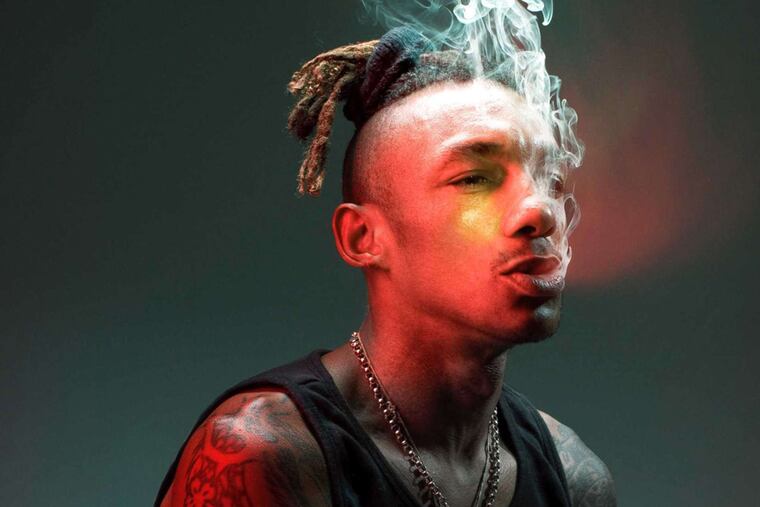
Tricky hates anything that's "too cool."
"My music comes from being naive," he said. "Not because I think I'm the coolest dude on the planet."
The 48-year-old born Adrian Thaws, often called a pioneer of trip-hop, moved from London to Berlin last year. He's comes to Philly on Thursday night as part of the Tricky Presents Skilled Mechanics tour behind his new, 10th album of the same name.
Born in Bristol, England, Tricky started out as a collaborator with Massive Attack, another major force in trip-hop, an electronic dance sound mixing hip-hop and soft rock that originated there. After releasing his solo album Maxinquaye in 1995, Tricky went on to release 11 albums and EPs. Songs like "Hell Is Around the Corner," "Overcome," "Black Steel," and "Boy" solidified him as a smooth yet darkly intense rapper and producer who tackled serious issues in his music. Throughout his career, he's collaborated with female singers such as Bjork and Grace Jones.
Last month, he released Obia, a seven-track EP featuring up-and-coming artists who've caught his attention, such as UK rapper CASisDEAD and Russian rapper Syava.
The Tricky Presents Skilled Mechanics tour is like nothing he's ever done before, he says. Typically, a female vocalist joins him on stage. For the first time, he's doing a majority of the singing and rapping. He's taking risks, accepting the challenges, and willing to be naive.
You said a few years ago that music is getting too conservative and that this is the worst time for music. Do you still feel that way?
Music has become modern-day minstrels. I come from the days where musicians talked about politics. You had Bob Marley and smaller bands like the Specials. I grew up on people like Rakim and Public Enemy. Your job was to talk about politics and the ruling elite, and that doesn't seem to matter now. No education in music anymore. Bob Marley educated me. Rakim educated me.
I've gone up and down in my career. I don't need a mansion. I don't have a car. I don't really drive. I can walk to the shop. I live a very simple life. I feel blessed that I can make music and do what I love. It's really celebrity culture.
Are there any artists today who give you hope?
There's this young guy in England called George the Poet. This kid is pretty amazing. It's actual poetry. It's mind-blowing, the stuff he's talking about. He surprises me quite a lot. He's only 26, and he has history, how hip-hop has been hijacked [by] business. Francesca Belmonte [a singer Tricky has collaborated with], she's got an old soul. It's out there, but, unfortunately, there's no support for them.
Anyone on the U.S. side?
Kendrick is really good. He's a one-off. He's the guy who can get through. There is a lot of talent out there, but a lot of them aren't going to be as lucky. You look at his stuff and you think, "How did he make it?"
Do you prepare yourself differently for an American crowd? Is it different from a U.K. crowd?
American crowds are usually always positive. Not saying that the English are negative. [American crowds] are less negative. In an English crowd, you might get someone who thinks they know better.
Americans are a bit more emotive.
Yes, exactly. And they're not so critical. America is the sort of place you could try something new. Sometimes, English people, we just have to say something. Rather than saying, "I didn't get it. I didn't see what he's trying to do," you get some cornball accountant saying, "I didn't rate it."
You've said you go to different places for different albums. Where did you go for Tricky Presents Skilled Mechanics?
My manager was saying, "People want to see you more on stage." His perspective was "when you're doing your thing it's dark and there's a vibe. When the girl comes on, the vibe changes." I thought about it, and, you know what? In all of my career, I've never done a show where it's just me doing the vocals. And I thought, whoa, that's a challenge, and a challenge means change. I did this album with not many singers on it. I'm coming with no female singer, and it's really risky.
The first show we did I did without a female singer. My manager said it's like theater now. It's tense. It's totally different.
You were really into it.
When I got the girl on stage, it makes me lazy. [Now], it's more tense and I have to work harder. I like that. I'm getting nervous again. I can't sit back now. I have to be present from beginning to end.
At this point in your career, it's almost like a reinvention.
If you don't keep challenging yourself, there's no point. If I put 100 percent of my soul in these shows, no one can say it wasn't a good show just because I didn't play their favorite songs. That's not my responsibility. My responsibility is to give 100 percent of my soul and make you feel something.