Broadway, Philadelphia theaters put race in the spotlight
The subject of race has emerged as a major theme in a place where themes are never planned: Broadway. Eight productions that opened last season dealt in some pointed or major way with race, and so far three more have opened this season.
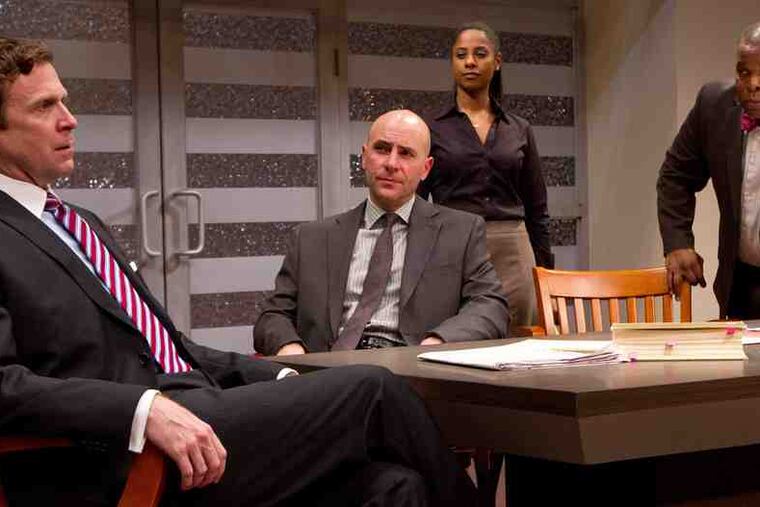
The subject of race has emerged as a major theme in a place where themes are never planned: Broadway. Eight productions that opened last season dealt in some pointed or major way with race, and so far three more have opened this season.
The energy generated among theater professionals and audiences grappling with race theatrically - many of whom see theater as an engine for provoking thought and discussion about issues - is reflected on Philadelphia stages.
Philadelphia Theatre Company is the first in the nation to produce David Mamet's Race since it closed an extended Broadway run in August, after almost 300 performances. The play, which opened Wednesday night after previews, is about a white man who seeks legal help when he is charged with raping a black woman. It examines racial perceptions in several ways, including fashion: The alleged victim was wearing a red sequined dress, which becomes a key element in both the plot and the discussion about race. The production runs through Feb. 13.
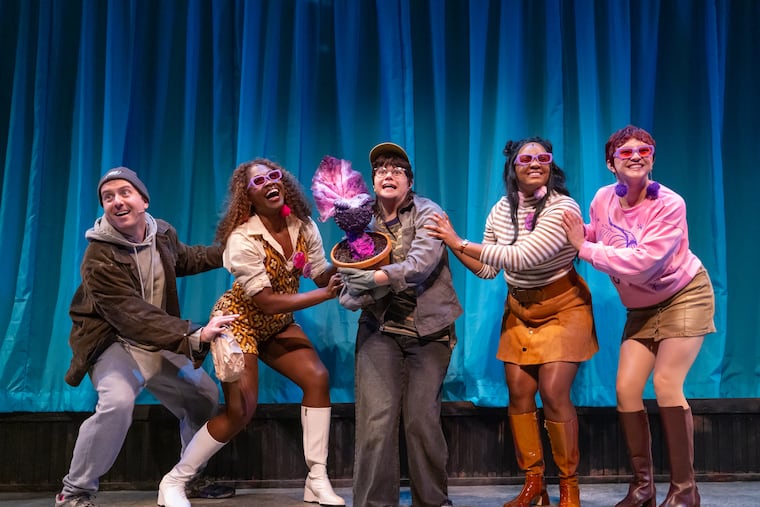
On March 3, the Arden Theatre Company begins previews for its production of Superior Donuts, a play by Tracy Letts (August: Osage County) that also ran on Broadway last season, and that parses the relationship between a young African American and the white, middle-aged man he works for at a doughnut shop in a changing Chicago neighborhood.
Sara Garonzik, Philadelphia Theatre Company's producing artistic director, says she went after the rights to Race as soon as she saw the Broadway production. "I thought it was fascinating." After seeing it, she read the script. "There's so much there, you can ponder it forever," she says. "A lot of people have different feelings about what Mamet's trying to say, and my current thought - I won't say that it won't change five months from now - is that the play is a kind of snapshot of race relations in America today.
"In my opinion - and I wouldn't speak for Mamet - he's created a complex story line to show that when you work through any exchange that involves race relations, there can be an awkwardness, a wariness, and sometimes a great deal of mistrust."
Broadway itself has entered the sort of major exchange involving race relations that Garonzik points to. Race and Superior Donuts take the subject into account in different ways; Mamet, among the nation's foremost playwrights, attacks it head-on, looking at slippery perceptions of race and also justice, while Letts focuses more on personal relationships.
That's reflective of the Broadway discussion on race during this season and last - theatrically, there seem to be countless ways of approaching it.
A superb revival of the musical Finian's Rainbow brought back the outrageous character of a racist white senator who wakes up one day as a black man - a turn of events that seemed almost as startling on Broadway in 2010 as it must have when the show first opened in 1947.
Memphis, last season's Tony-winning new musical, comes from history; it's the story of a brash white kid who decides to integrate music by blacks and whites on a Memphis radio station in the '50s, when the thought of "race" music coming into white living rooms was not even on the Tennessee radar.
The memory of the late August Wilson was honored in stellar performances by Denzel Washington and Viola Davis in a revival of Fences that was a sellout. The play, embellished by Branford Marsalis' original incidental music, is a powerhouse look at a black family scraping by in Pittsburgh, also in the '50s. Martin McDonagh's over-the-top A Behanding in Spokane starred Christopher Walken as a shadowy one-handed man who eventually one-ups a young couple trying to trick him - and in so doing provides a searing commentary on the way young black men should behave.
This season's A Free Man of Color and The Scottsboro Boys examined race by looking at America's past.
This proliferation of plays with racial themes was not the result of producers coming together beforehand - that's a preposterous notion on Broadway, where theater is commercial and producers are competitive and apt, in any case, to be risk-averse. But it does reflect the presence of a growing African American audience, and a change in America's willingness to talk more openly about race, especially since the election of an African American president.
"The political turn of events over the last couple of years - the election of Barack Obama - may have had an impact on the zeitgeist, on people's willingness to have a conversation about race, in maybe a way we haven't been willing to before," says Ed Sobel, the Arden's associate artistic director, who is staging the company's Superior Donuts. Sobel worked on Broadway last season as the dramaturge - the go-between who aids director and playwright in articulating the vision for a play and realizing it on stage - for Superior Donuts.
Sobel cites the speech about race Obama made in Philadelphia during his campaign. "To me," he says, "that speech was a part of opening up honest dialogue about race in the country."
Garonzik, too, says that "Obama provided the basic landscape that permitted this to happen" in the theater, and notes that Mamet cites his election as a motivating factor in writing Race. Mamet, she says, "is being an agent provocateur in that he's saying, 'Let's not delude ourselves that everything has changed.' "
Both companies are scheduling talks with audiences about issues in the plays. WURD, an AM talk station with a largely black audience, has joined Philadelphia Theatre Company for a public discussion, as have WHYY and the University of Pennsylvania's Civil Rights Law Project.
To make theater, Sobel says, "I must in some way believe it's possible to have a real voice in the way people think about things." He says asking people to come together for two hours and share an experience - about any issue - fosters that thought on the part of an audience.
Garonzik says that from what she's seen at the previews for Race, "people are really hungry to talk about this subject, and this is a rich opportunity. It's the kind of stuff we do, anyway, but this is like the mother lode. People don't leave the lobby - they stand around and talk."
Race
Through Feb. 13 at Philadelphia Theatre Company's Suzanne Roberts Theatre, 480 S. Broad St. Tickets: $52-$59. 215-985-0420 or www.philadelphiatheatrecompany.org.