Fringe arts festival gets a new name
Inside a gutted, century-old pumping station down by the Delaware River, plastic sheeting hanging from steel beams 30 feet up, a deep trench running through the center of the concrete floor, the Live Arts Festival and Philly Fringe died Monday.
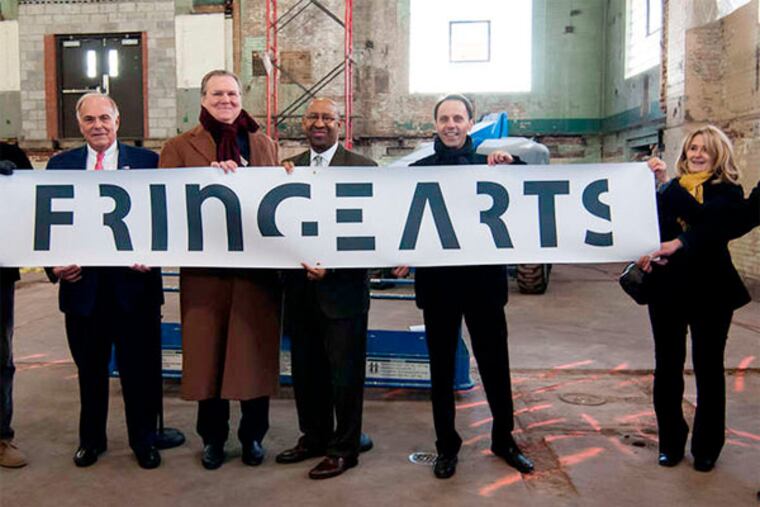
Inside a gutted, century-old pumping station down by the Delaware River, plastic sheeting hanging from steel beams 30 feet up, a deep trench running through the center of the concrete floor, the Live Arts Festival and Philly Fringe died Monday.
FringeArts was born.
At a groundbreaking and branding ceremony held inside the 110-year-old brick pumping house at Columbus Boulevard and Race Street, the 17-year-old festival celebrated what will be its first permanent home.
Unlike his initial, joking response when he first heard the name of the organization those many years ago - "Oh my gosh! Are there going to be arrests?" - Ed Rendell, former mayor and governor, hailed the festival as "crucially important" in revitalizing the city.
"I think it is literally making Philadelphia a beacon for young people," Rendell said.
Mayor Nutter, also on hand, said the Fringe festival, located right across the boulevard from parkland at Race Street Pier, is "helping to transform this part of the city."
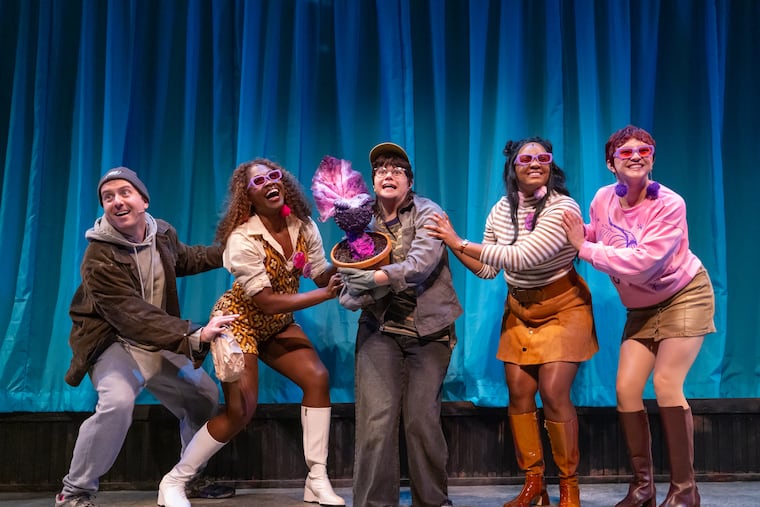
The object of such effusive official praise is a festival that has brought innovative theatrical and performance work to Philadelphia annually over several weeks in the fall.
But when the new headquarters facility opens in September this year, what is now FringeArts plans to go year-round.
The action will be centered on the 10,000-square-foot former pump house, acquired in June 2012 for $750,000.
After the $7 million renovation, already under way, the plastic sheeting and deep trench will be gone. Instead, visitors will find a 240-seat theater, a bar and restaurant, a rehearsal studio, rental space, and an outdoor plaza for events.
The building will also house administrative offices.
Nick Stuccio, Fringe president and producing director, said the festival generates about $8 million in economic activity annually, according to a survey conducted in 2010 by the Greater Philadelphia Cultural Alliance.
"We're poised to do even more," he said. "This building will be the catalyst."
City officials, including the mayor and Alan Greenberger, deputy mayor for economic development and city commerce director, emphasized the importance of the Fringe building in the drive to redevelop the waterfront as a whole.
Directly across Columbus Boulevard, Race Street Pier juts into the river with the Benjamin Franklin Bridge soaring beside it. Officials are counting on the park and the Fringe to help reanimate the waterfront and reconnect it to the city beyond I-95 - key goals of the Delaware River Waterfront Corporation and the waterfront master plan.
In fact, as Rendell noted, the waterfront corporation is paying for bathrooms in the Fringe building, and they will be available for public use during riverfront activities and concerts.
It was, Rendell said, an "easy sell" to persuade the state to put up $1 million in seed money to launch the facility.
In addition to the state, key funders include the William Penn Foundation, $1.75 million; the Wyncote Foundation, $1.65 million; ArtPlace, $350,000; the Fidelity Foundation, $100,000; and the Independence Foundation, $100,000.
The Fringe still needs to raise about $600,000.