Review: A celebratory Chamber Orchestra milestone
Though Chamber Orchestra of Philadelphia began its 50th-anniversary season amid fears within the music community that there may not be a 51st, the official half-century celebration arrived Sunday at Verizon Hall with many visiting dignitaries and an air of solidity, both artistic and financial. Enjoyment was buoyed by relief.
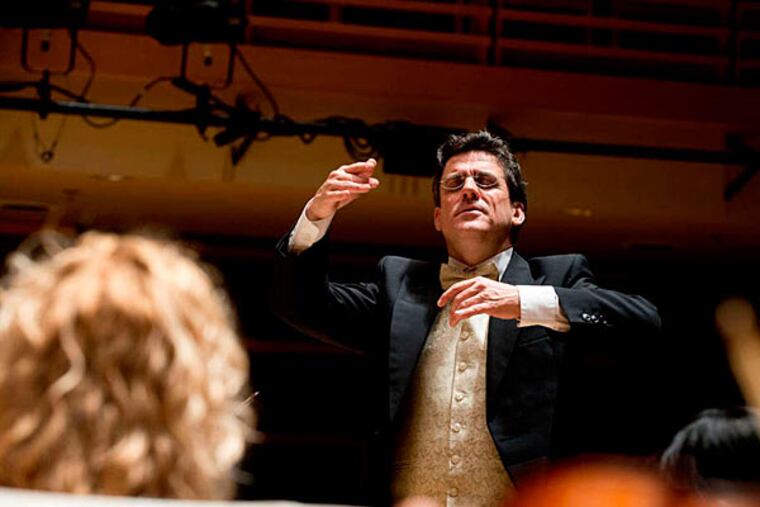
Though Chamber Orchestra of Philadelphia began its 50th-anniversary season amid fears within the music community that there may not be a 51st, the official half-century celebration arrived Sunday at Verizon Hall with many visiting dignitaries and an air of solidity, both artistic and financial. Enjoyment was buoyed by relief.
Music director Dirk Brossé promised an Organ Concerto but missed the deadline, and filled the slot with his own Philadelphia Overture and Barber's Toccata Festiva (with organist Alan Morrison often using demure tone colors to show just how wild this piece can be).
The concert was part awards ceremony. Dignitaries, including former Gov. Ed Rendell, were everywhere. The Belgian Brossé addressed Geert Bourgeois, minister-president of the government of Flanders, in Flemish. Individual sections and specific musicians of the orchestra were repeatedly cheered after Beethoven's Symphony No. 5. Founder Marc Mostovoy received an award. Conductor laureate Ignat Solzhenitsyn was piano soloist in Beethoven's Triple Concerto.
You could almost be disappointed that the concerto went so well. Nicknamed "the cripple concerto" because it's tough on cellists, the piece attracts urban legends, starting with Yo-Yo Ma nearly falling off his platform during one of the Kimmel Center's opening concerts. All-star soloist assemblages can be disastrous. Andre Previn counts his collaboration with Yehudi Menuhin and Mstislav Rostropovich among the worst concerts of his life.
Though Sunday's three soloists didn't play with a sense of long history with the concerto, cellist Marie-Elisabeth Hecker was most musically magnetic, her solos often emerging from the orchestral textures like islands of serene poetry. Solzhenitsyn's passagework was so elegant you wanted him to play Beethoven's Emperor Concerto for an encore. Soovin Kim's trademark tone and aristocratically inflected sense of musical purpose reminded you of all that was missing from Sarah Chang's Philadelphia Orchestra concerts last week. Brossé held everything together, and, typically, made it seem easy.
Brossé can be counted on for wild cards when conducting the Germanic classics - to him, the great composers are more like colleagues than idols. His views on Beethoven's 5th skewed more toward the classicism from which the symphony came than the Romantic Age it led to. The famous four-note motif wasn't underscored by differentiated tempos. Form framed content. Rarely is the piece played with such clean, non-interruptive lines. One exception was the first-movement oboe solo, played by Geoffrey Deemer with the expanse and detail of a Shakespearean soliloquy.
Most unusual of all, this was Beethoven's 5th without gravitas. I missed that at first. But this is music that can be viewed through endlessly varied lenses. The main drawback was that this essentially lyrical approach took a toll on overall rhythmic accuracy. Then again, the performance was strangely similar to some of the 1920s Beethoven recordings by the likes of Oskar Fried and Felix Weingartner. I never say "no" to musical time travel.