Astonishing triumph of a novel
Sprawling "2666" melds literary satire and a Mexican tragedy.
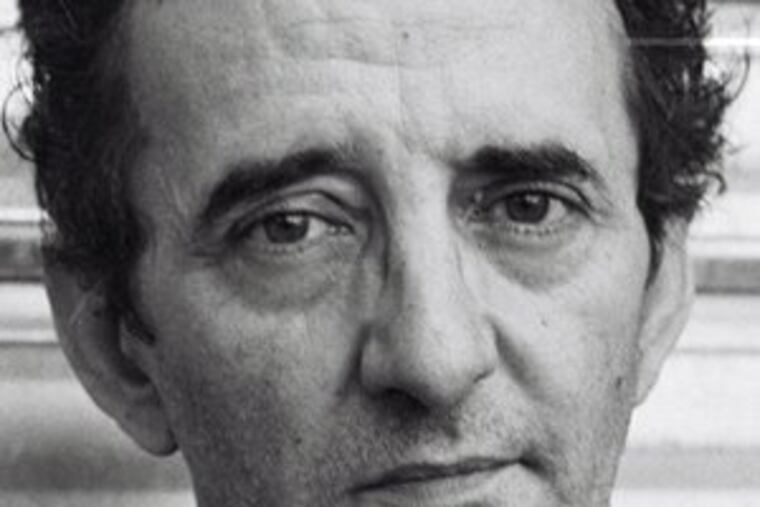
By Roberto Bolaño
Farrar, Straus & Giroux.
912 pp. $30.
Reviewed by John Timpane
Sprawling, shattering, one of the signal achievements in recent world literature,
2666
is the dumbfounding farewell of Roberto Bolaño, a Chilean/Spanish/Mexican novelist, poet, journalist and cultural warrior who died in 2003.
Bolaño was born in Chile in 1953, grew up in Mexico, returned to Chile in time to see the overthrow of Salvador Allende, returned to Mexico, and also lived in Spain and France before settling in Spain. Thus he is claimed by Europe and at least three of the pillars of the Spanish-speaking literary world. The hepatitis C that killed him is said to be a result of heroin use in young adulthood.
Ironically for U.S. readers, his meteoric flash across the skies is all posthumous. His 1999 novel
The Savage Detectives
appeared in the United States last year, translated, as
2666
is, by the creative and capable Natasha Wimmer. It sold tens of thousands of copies here and was much praised, as it had been for eight years worldwide. And now we have
2666
and must again catch up to the world's astonishment.
This work comprises five "parts," book-length sections Bolaño intended to publish singly; his heirs overrode that intention. The first part depicts four literature professors obsessed with finding the mysterious German novelist Benno von Archimboldi. Their quest takes them all over Europe, conference-hopping and bed-hopping, until they land in Santa Teresa, Mexico (based on the terribly real city of Ciudad Juárez).
In the second part, again in Santa Teresa, a man's psyche crumbles, largely out of anxiety over his daughter Rosa, surrounded by the
feminicidas
- the fearsome rape-murders of hundreds of women in and around the city.
Part 3 introduces Quincy Williams, whom colleagues nickname Oscar Fate, a U.S. journalist sent to cover a boxing match in Santa Teresa. Fate, who has a bad stomach, sees Mexico as a blurry, watery nightmare, the rape-murders as nightmares grafted onto a nightmare.
And that's how
2666
works: Step by step, we move closer to the pervading guilt and angst of the Juárez killings.
Those killings are the horror of Mexico and one of the great shames of the modern world. Since about 1993, in the area around Ciudad Juárez, just over the river from El Paso, Texas, more than 200 women (some say up to 800) have been raped and murdered, their bodies thrown in rubbish heaps, dumped on desert roads, or half-buried.
Mexican and U.S. authorities have proved impotent. The murders bear the bad taste of the North American Free Trade Agreement, because, soon after NAFTA's passage in December 1993, many quickly built
maquiladoras
(assembly factories), largely of offshore American companies, went up in the border region, and women traveled from all over Mexico to get jobs there. These women became the prey for the rapist-killer(s).
The sadness goes beyond existential. No one knows whether it's one man or many. There are arrests and imprisonments galore, and still the killings continue. As for the local and federal police, well, in a country where rule of law is but a veneer over social failure, the police are a joke, incompetent, corrupt, possibly complicit.
That's because another force, the strongest in all Mexico and the most violent, is suspected: narco-terrorism. As
2666
shows, an untouchable drug-lord state-within-a-state commandeers police, prisons, even the media.
What is the meaning of the murders? The greatest horror is that they may have none. As Baghdad to terrorists, so Juárez to psychopaths? What if these are but an endless string of meaningless slaughters by men with broken minds?
The fourth part, "The Part About the Crimes," is the grueling and yet morally persuasive climax of
2666
. It's unlike anything I've read.
This is the
Iliad
of women. Deaths of dozens and dozens of girls and women are delineated in the laconic drawl of police reports, along with glimpses into these ended lives. Much as Homer tells us a little about Bienor, Isos, Antiphos and others as they fall to Agamemnon's sword, we learn, for example, that María Sandra Rosales Zepeda, 31, was a prostitute, that she had "been born in a town in the state of Nayarit and at eighteen she had come to Santa Teresa, where she worked at the HorizonW&E maquiladora" and so on.
Around this relentless catalog of crime swirl stories of police, politicians and journalists groping for the truth in a world of rumor, lies, dead ends, and "the wait that begins and ends in neglect." It doesn't let up; it faces us with murder after murder as the police flounder, intimidate, arrest the wrong people, and close case after case for stupid, self-serving reasons.
In the final part, we finally do find Archimboldi. His is an absurd, funny, heartbreaking biography, this idiot savant who survives a career as a German soldier in World War II and goes on, somehow, to write novels that inspire crazy loyalty in a devoted group of readers. Novels about seaweed, about rivers! We see his publisher laughing uncontrollably at the latter! Archimboldi's story completes
2666
's satire - now gentle, now vicious - of the writer's life. He, too, will learn that he has a connection to the
feminicidas
.
All five parts amount to one monumental "open" novel. Such novels avoid the trim, manicured narratives one is used to. Bolaño was contemptuous of neat resolutions, consistent characters, inclusion of
only
relevant details. For him, these were lies writers tell the bourgeoisie so they'll buy lots of books. Bolaño's heroes thus were not Gabriel García Márquez or Isabel Allende, writers he couldn't stand, but rather Julio Cortázar and Jorge Luis Borges, who avoided the tidiness of standard Western realism.
"Open" novels can be unbearably beautiful. Two recent examples are
Divisadero
by Michael Ondaatje and
Out Stealing Horses
by Per Petterson. In wide-open
2666
, plotlines seem crucial then lead nowhere, or eddy into fascinating but unrelated stories. Stray details and thoughts intrude. People break out of character and likelihood. Resolutions are few.
True to itself,
2666
undermines even this. I count at least three happy love unions, at least one heroic rescue of a damsel in distress. Above all, we meet a gallery of irrepressible characters. There's Pelletier, Espinoza, Morini and Norton, the odd but lovable quartet in search of Archimboldi (get the joke, about France, Spain, Italy and England searching for Germany?).
There's the amazing Azucena Esquivel Plata, aging politician/sex goddess, with her resounding soliloquies on fate, friendship, truth ("the truth is a strung-out pimp in the middle of a storm") and, especially, the Mexico that so captured Bolaño's imagination. And of course, Archimboldi, more mysterious the more you know, both central to the tale and literally at its edges.
This gargantuan cast, drawn with so much reserve, so much passion, wraps around the heart of
2666
, the sorrow and righteous rage over killings that indict all the Americas. This novel comes to tell us that human beings, incompetent to determine their existence in an elusive world, are worthy of fascination, work and love. After I finished
2666
, I loved people more than ever.