Gorgeous prose - and way too much of it
Shades of the Brontes: Three sisters have created an imaginary world of fairies and demons, queens and minions. This place is Arnelle and its language is Arnish. Not surprisingly, many of the phrases have to do with sisterhood, bravery, loyalty, rescue: "Noma brava gig" translates as "my brave sister." And the eldest Story sister, Elv, is indeed the brave one. At the age of 11, she saved her youngest sister, Claire, 8, from a child molester by offering herself instead.
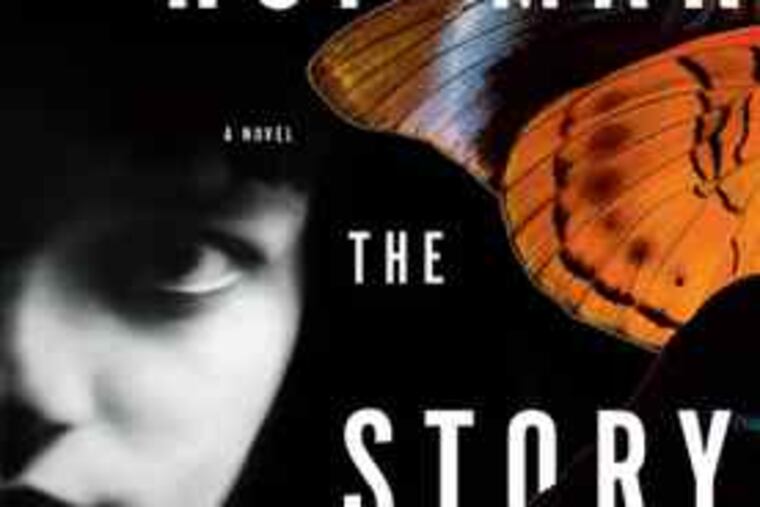
By Alice Hoffman
Crown. 325 pp. $25
nolead ends nolead begins
Reviewed by Susan Balée
Shades of the Brontes: Three sisters have created an imaginary world of fairies and demons, queens and minions.
This place is Arnelle and its language is Arnish. Not surprisingly, many of the phrases have to do with sisterhood, bravery, loyalty, rescue: "Noma brava gig" translates as "my brave sister." And the eldest Story sister, Elv, is indeed the brave one. At the age of 11, she saved her youngest sister, Claire, 8, from a child molester by offering herself instead.
Thus began the demonic fairy tale, and who better to tell it than Alice Hoffman, whose practical magic with narrative has animated 20 novels already?
The woman has a way with rendered scenes and symbolism.
"Claire stopped where she was. . . . There was a tiny bird in her path. Both sisters knelt. 'He fell out of his nest.' Elv picked up the fledgling. 'He's a robin.' . . . Claire was startled by how fragile the baby bird was. She could see through its skin to its beating heart. There were only a few stray, luminous feathers. . . . The girls went in search of the nest, but they couldn't find it in the dark. . . . Elv sat down in the wet grass. She looked so sad and beautiful. She was everything Claire wanted to be. . . . The Queen of Arnelle had decreed that this was to be. Water, sex, death. This was number three. There was no way to save him."
Hoffman is likewise good with sibling rivalry. Meg, the sister who does not share Claire and Elv's secret, keeps coming between them. Meg turns to books; Elv turns to drugs; Claire doesn't know what to do. Their mother, poor thing, is clueless. Her husband left her and now her tomato garden (on which far too much prose is spent) is going to seed. The day Elv was molested, moths came out and destroyed it.
When Charlotte Bronte and her siblings were children, they invented the worlds of Angria and Gondal. Their mother and two oldest sisters were dead; they lived in a cold, remote area of northern England, and they already knew far too much of alcoholism, illness, and death in their immediate family.
Hoffman's Story sisters endure their parents' divorce, but they also live in a comfortable house in a well-off neighborhood on Long Island. Their grandparents have homes in Manhattan and Paris, which they visit regularly.
Hoffman shows us how one tragedy can upend a family, but it somehow feels like overkill. What begins as a promising fairy tale turns into an epic. The evil consequences of Elv's destroyed innocence go on for hundreds of pages: meth, then heroin addiction; the suicide of a spurned suitor; the death of a main character in a car accident; leukemia descending on another main character; misery spinning out of control.
In short, the problem with The Story Sisters is that it goes on too long. Hoffman's prose is gorgeous, but she keeps repeating her symbols and key scenes - over and over we read about the dying garden, the dead bird, the fatal day, moths and vines and demon bugs and red leaves and Maxfield Parrish blue skies falling like ashes upon another dead day. Enough!
After 20 successful novels, most authors don't get the editing they still need, and that seems to be the case with Alice Hoffman.
The Story Sisters will make a great beach book for someone who reads only a few pages a day and forgets them. Hoffman will repeat the key points for such readers. But for the rest of us, this tale feels like a novella on steroids. Its beating, fragile - and, yes, beautiful - heart is swathed in too much fleshy prose.
Note to Alice: Less would be more. Maybe next book?